DTV Visa New Rules from 31 August 2026: Home-Country Embassy and Police Clearance Certificate
DTV DTVThaiVisa September 3, 2026 15 min read
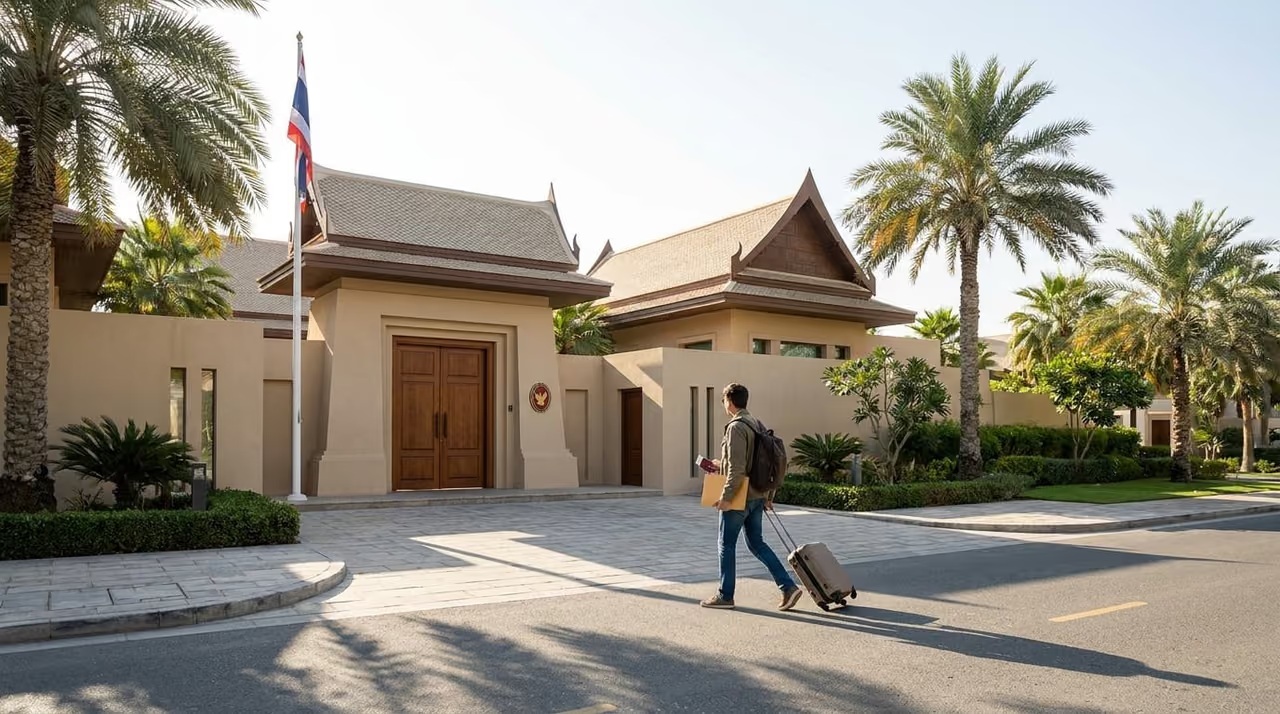
On 31 August 2026 Thailand quietly closed the door on "embassy shopping" for the Destination Thailand Visa (DTV). Two requirements now apply at Thai embassies and consulates worldwide: you must apply at the mission responsible for your country of nationality or permanent residence, and you must submit a police clearance certificate.
The popular third-country routes — Vientiane, Savannakhet, Penang, Ho Chi Minh City, Jakarta — are gone for everyone who is not a national or permanent resident there.
This guide is built from the embassies’ own notices (linked in every section) and from our application work since the change took effect. It explains who is affected, what counts as "permanent residence", how recent the certificate has to be at each mission, and the fastest way to get one in the UK, US, Germany, Australia and Canada.
What Changed on 31 August 2026
The change took effect at 00:00 Thailand time on 31 August 2026, according to the notice published by the Royal Thai Embassy in London. There is no single press release from the Ministry of Foreign Affairs; the rule was rolled out through the individual missions. The clearest wording comes from the Royal Thai Embassy in Vientiane, updated on 28 August 2026, which says that "new additional requirements for Destination Thailand Visa (DTV) applications will take effect worldwide from 31 August 2026" and lists two conditions for every applicant:
The two new DTV requirements (verbatim from the Vientiane notice)
Be a national or permanent resident of the country where the visa application is submitted.
Provide a certificate of criminal record clearance issued by the authorities of either the country of nationality or the country where the application is submitted.
Everything else about the DTV is unchanged: it is still a five-year multiple-entry visa with 180-day stays, the financial requirement is still 500,000 THB (London quotes £12,000), the three categories — Workcation (DTV1), Thai Soft Power activities such as Muay Thai and cooking courses (DTV2) and dependants (DTV3) — still exist, and the fee is unchanged. What changed is where you can apply and one extra document.
Rule 1: Apply Only at the Embassy for Your Nationality or Permanent Residence
Until August, the e-Visa system let you pick almost any Thai mission and prove your "current location" with a hotel booking, a rental contract or even an entry stamp. That is over. Under the new wording you must be a national or a permanent resident of the country whose Thai mission handles your file. In practice this means:
Who applies where
Citizens apply with the Thai embassy or consulate responsible for their passport country (Germans with Berlin, Munich or Frankfurt; Britons with London; Americans with Washington DC or the consulate for their state; Australians with Canberra or Sydney; Canadians with Ottawa or Vancouver).
Permanent residents of another country can apply there instead — but only with documented permanent status. The London embassy gives UK Indefinite Leave to Remain and Irish long-term residency as examples; Washington accepts a US visa or Permanent Resident card; Bern lists a Swiss residence permit; Paris asks for the latest tax return; the Thai missions in Japan want a resident register extract (住民票) issued within three months or a residence card for permanent residents.
Dual nationals can apply with the mission of either nationality, using that passport for the e-Visa and the police certificate from that country.
Tourist stamps, visa-exempt entries, hotel bookings, Airbnb receipts and rental contracts are not proof of permanent residence. A temporary status such as a student visa or a short work permit is judged by each mission — ask before you pay the fee, because the fee is not refunded.
What missions accept as proof of permanent residence (published checklists, September 2026)
Mission
Accepted proof of permanent residence
London (UK & Ireland)
Indefinite Leave to Remain, Irish long-term residency, or similar permanent status
Washington DC / Los Angeles
US visa or Permanent Resident card; a document showing current location is still listed
Munich / Frankfurt
Meldebestätigung (registration, not older than 6 months), Aufenthaltstitel or German ID card
Bern
Swiss residence permit
Paris
Latest income-tax return (avis d’imposition)
Japan (all missions)
Resident register extract or family register (max. 3 months old); residence card for permanent residents
Vientiane / Savannakhet
Lao nationality or Lao permanent residence only
Do You Have to Fly Home to Apply?
No. The DTV is still an online e-Visa filed through the official Thai e-Visa portal. None of the missions listed above ask you to appear in person, and the new rule regulates which mission receives your application, not where you sit while you submit it. From the applications we have filed since 31 August, the only hard condition is that you are outside Thailand while the application is pending: the portal does not accept applications from inside the country, and a DTV is issued for entry, not while you are already in.
So a German remote worker travelling in Bali, or a British freelancer in Lisbon, files with Berlin or London from where they are — with the residence and police documents of their home country. What you cannot do any more is sit in Chiang Mai, hop to Vientiane for two days and file there.
Rule 2: The Police Clearance Certificate
Every DTV application now needs a certificate of criminal record clearance — the document known as a police certificate (UK), FBI Identity History Summary (US), Führungszeugnis (Germany), casier judiciaire (France) or National Police Check (Australia). The certificate may come from your country of nationality or from the country where you apply; you do not need both. It applies to all three DTV categories, including the dependant visa.
The detail that trips people up is how recent the certificate must be. The missions do not agree, and the difference between a three-month and a six-month window decides when you have to order it:
Maximum age of the police clearance certificate by mission
Mission
Certificate must be issued within
Named issuer / notes
London
6 months
ACRO Police Certificate or Irish police certificate
Rome
6 months
Any national criminal record clearance
Frankfurt
6 months
Führungszeugnis from the Bundesamt für Justiz
Munich
3 months
Führungszeugnis; country of nationality or of application
Paris
3 months
Clean extract of the criminal record (casier judiciaire vierge)
Washington DC / Los Angeles
3 months
FBI certificate — state police checks are not listed
Thai missions in Japan
3 months
Certificate in English
Bern, Taipei, Helsinki, Savannakhet
Not stated
Order as late as your timeline allows and keep it under 3 months to be safe
Translation, notarisation and apostille
The certificate must be readable by the visa officer, which means English or Thai. A German Führungszeugnis, a French extract or a Korean certificate needs a certified English translation; the Thai Embassy in Dhaka spells this out as "the original language and an English translation". London and Los Angeles add that documents issued outside the host country and outside Thailand must be notarised by an embassy or a Ministry of Foreign Affairs.
An apostille is not on any DTV checklist we reviewed. Thailand only acceded to the Hague Apostille Convention on 30 June 2026, and the convention enters into force for Thailand on 28 February 2027 (see the HCCH notice), so no mission can currently demand one. Do not pay a legalisation agent for it unless your specific mission asks in writing.
Children and dependants
Dependants on a DTV3 need their own certificate as a rule. Exceptions are mission-specific: London lets children under 16 submit the principal applicant’s certificate; Frankfurt requires a certificate from age 14; the Japanese missions accept proof that the issuing authority does not issue certificates below a certain age. If your child is a teenager, ask your mission before ordering.
How to Get Your Police Clearance Certificate Quickly
Order the certificate first — it is the document with the longest lead time, and the three-month clock at several missions starts on the issue date. Fees and processing times below are taken from the issuing authorities’ own pages and are correct as of September 2026.
Country by country
United Kingdom — ACRO Police Certificate: standard service around 10–20 working days, premium service around 2–4 working days; fees start at about £55 (standard) and £95 (premium). London accepts it for six months.
United States — FBI Identity History Summary: $18; electronic requests via an FBI-approved channeler are usually returned within days, mailed requests take weeks. Washington DC and Los Angeles want the FBI certificate, not a state police check, issued within three months.
Germany — Führungszeugnis from the Bundesamt für Justiz: €13, ordered online with the ID-card function or at the Bürgeramt; the BfJ currently warns of longer processing times, so allow two to three weeks. Add a certified English translation. Frankfurt accepts six months, Munich three.
Australia — AFP National Police Check: A$56 (A$113 with fingerprints); most digital certificates arrive within days, manual reviews take 15–30 business days.
Canada — RCMP certified criminal record check: C$25 federal fee plus the fingerprinting agency fee; three business days if there is no match, up to 120 business days if a record has to be reviewed. Start early.
France — bulletin n°3 of the casier judiciaire, free online, usually issued within days; Paris wants it under three months old.
Transition Rules: Applications Filed Before 31 August and Existing DTV Holders
The Vientiane notice is explicit: applications that were "submitted and completed visa payment prior to 31 August 2026" are not affected. The Seoul embassy states the same for applications submitted before the date. Two consequences follow:
What the transition rule means for you
An application that was submitted and paid before 31 August is processed under the old checklist — no police certificate, no residence proof.
An e-Visa account, a saved draft or an unpaid application does not protect you. Those files fall under the new rules.
Applications filed from 31 August onwards at a mission where you are neither a national nor a permanent resident are refused, and the fee is lost.
Myth
Existing DTV holders now need a police certificate or lose their visa.
Fact
Nothing in the announcements touches visas that were already issued. Your five-year DTV, the 180-day entries, the extension at immigration and re-entry after a trip abroad all work exactly as before. The new rules apply only to new applications.
Who Is Affected Most
Digital nomads currently in Thailand
You can no longer stay on a visa exemption, book a two-day trip to Vientiane and come back with a DTV. You still have to leave Thailand to apply, but you can file from anywhere outside the country with your home-country documents. Plan the exit around the certificate’s validity window, and note that from 15 September 2026 the visa exemption for most Western nationalities drops from 60 to 30 days (see the TAT announcement), so the cushion for waiting inside Thailand is also shrinking.
The Vientiane, Savannakhet and Penang visa-run crowd
Those consulates accept DTV applications only from nationals and permanent residents of Laos or Malaysia now. Border runs remain possible for existing DTV holders who want a fresh 180-day entry; they are no longer a way to obtain the visa.
Long-term expats without a residence permit anywhere
This is the hardest case. If you have lived out of a suitcase for years, your only route is the mission of your nationality with a certificate from that country. Some missions ask their own citizens for a registration or tax document; check the checklist of the specific embassy before ordering anything.
Families
Dependants follow the principal applicant to the same mission and need the same residence proof. Budget an extra certificate per adult dependant and check the age rule for children (London: under 16 exempt, Frankfurt: from 14 required). Marriage and birth certificates still need to be legalised and translated as before.
Your Step-by-Step Checklist Under the New Rules
From zero to a filed DTV application
Identify your mission: the Thai embassy or consulate for your nationality, or for the country where you hold permanent residence.
Order the police clearance certificate from that country and, if needed, a certified English translation. Note the issue date.
Prepare the financial evidence: bank statements showing at least 500,000 THB for the past three months, in English or Thai.
Add the category documents: employment contract or portfolio for Workcation, course confirmation or medical appointment for Soft Power, marriage or birth certificates for dependants.
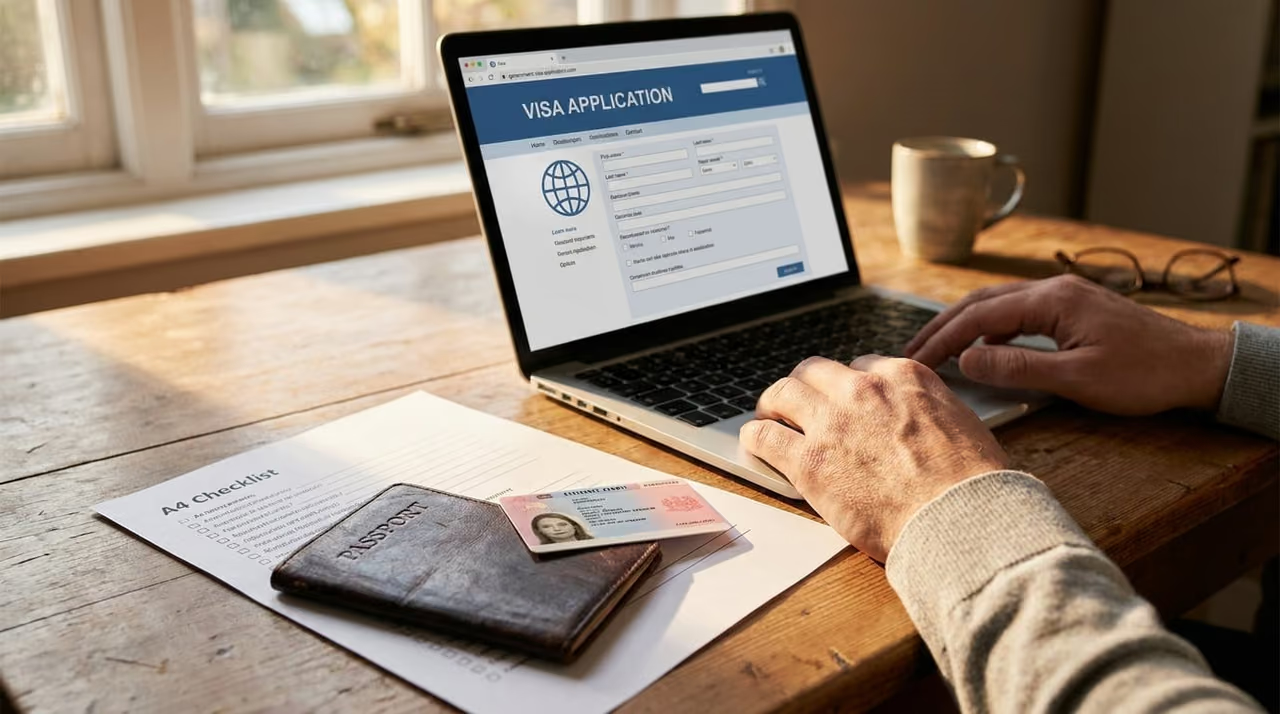
Leave Thailand if you are there, then file on the e-Visa portal, selecting the correct mission, and pay the fee.
Wait outside Thailand until the e-Visa is issued, then enter with the PDF.
Official Sources
Every statement in this article is taken from the missions’ own pages or the issuing authorities, last verified on 3 September 2026. We update the table above as further embassies publish their checklists.
Can I still apply for the DTV in Laos, Vietnam or Malaysia?
Only if you are a national or permanent resident of that country. Since 31 August 2026 the Thai missions in Vientiane and Savannakhet accept DTV applications from Lao nationals and Lao permanent residents only, and the same principle applies at every other mission.
Do I have to travel to my home country to apply?
No. The DTV remains an online e-Visa. You file with the mission responsible for your nationality or permanent residence from wherever you are — as long as you are not in Thailand while the application is pending.
Can I apply for the DTV while I am in Thailand?
No. That was never possible and has not changed. Leave Thailand — any destination works — file the e-Visa from outside the country and wait for the approval before you return.
Which police clearance certificate do I need?
A certificate from your country of nationality or from the country where you apply, whichever is easier. UK: ACRO Police Certificate; US: FBI Identity History Summary; Germany: Führungszeugnis; France: casier judiciaire bulletin n°3; Australia: AFP National Police Check; Canada: RCMP certified check.
How recent must the certificate be?
It depends on the mission: London, Rome and Frankfurt accept certificates issued within six months; Munich, Paris, Washington DC, Los Angeles and the missions in Japan require three months. Where no window is published, keep it under three months.
Does the police certificate need an apostille?
No DTV checklist we reviewed asks for an apostille, and Thailand’s accession to the Apostille Convention only takes effect on 28 February 2027. You do need an English (or Thai) certified translation if the certificate is in another language, and some missions notarise foreign-issued documents.
What counts as permanent residence?
A documented permanent status in the country of the mission: UK Indefinite Leave to Remain, a US Permanent Resident card or visa, a Swiss residence permit, a German registration with a residence title, a Japanese residence card. Tourist entries, hotel bookings and rental contracts do not count; temporary work or student permits are assessed case by case.
I have two passports. Which embassy do I use?
Either country of nationality. Use the same passport for the e-Visa, the police certificate and the entry into Thailand.
Do my spouse and children need their own certificate?
Adult dependants do. For children the rules differ by mission — London exempts children under 16 and lets them use the principal applicant’s certificate, Frankfurt requires one from age 14. Ask your mission before ordering.
My application was submitted before 31 August 2026. Am I affected?
Not if it was submitted and the fee was paid before that date; it is processed under the old requirements. A draft or an unpaid application is treated as new.
I already hold a DTV. Do I need to do anything?
No. Issued visas, 180-day entries, extensions at immigration and re-entry are unchanged. The new rules apply to new applications only.
Has the 500,000 THB financial requirement changed?
No. The financial evidence is the same as before — around 500,000 THB held for the last three months, shown on bank statements in English or Thai. London quotes the equivalent as £12,000.
Apply for the DTV under the new rules — with the right embassy from the start
We check your residence proof, police certificate and financials against the checklist of the mission responsible for you, then file the e-Visa. Packages from $139, 100% refund of our fee if denied (with Denial Protection).




 Immigration
 Immigration
 Immigration