Skip to content
Immigration

Thailand Visa Exemption Cut to 30 Days from 15 September 2026: Royal Gazette Confirmed, Who Is Affected and What to Do
DTV DTVThaiVisa September 3, 2026 13 min read
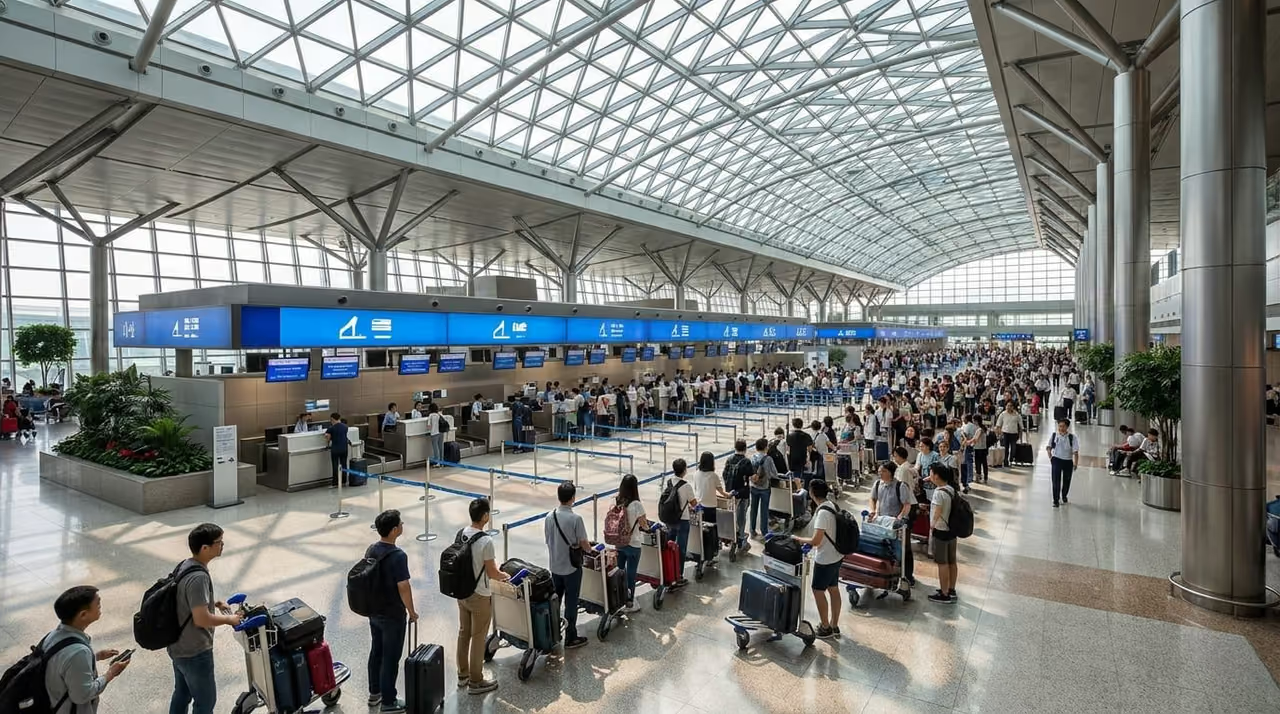
Arrivals hall at Bangkok Suvarnabhumi Airport with travellers queuing at passport control under large blue immigration signage, wide editorial view in daylight.

It is official. On 31 August 2026 the Royal Thai Government Gazette published four Ministry of Interior notifications that end the 60-day visa-free stay Thailand introduced in July 2024. From 15 September 2026 nationals of 60 countries — including the UK, the US, Germany, Australia, Canada, Japan and India — get 30 days on arrival, visa-free entries by land are limited to two per calendar year, and Visa on Arrival shrinks to three nationalities.

This article is based on the Gazette text itself, the Tourism Authority of Thailand’s official summary and the embassy pages that have been updated so far — every figure is linked to its source. It replaces our June 2026 report on the Cabinet decision, which described the plan before the country lists were final.

Below: what exactly changes, the full 30-day country list, who lost visa-free entry entirely, how the extension and the land-border cap work, what happens if you are already in Thailand on a 60-day stamp, and the visas that still allow a longer stay — including the Destination Thailand Visa (DTV), whose own rules changed two weeks earlier.

What the Royal Gazette Says

The change is not a press statement or a Cabinet intention any more — it is law. The Royal Gazette of 31 August 2026 (Volume 143, Special Issue 207 Ngor) contains four notifications, all dated 26 August 2026 and signed by Prime Minister and Interior Minister Anutin Charnvirakul:

The four notifications

  1. Notification 128702 repeals the 60-day exemption of 15 July 2024 (and the older 30-day notifications of 2019 and 2022).
  2. Notification 128703 grants a 30-day exemption for tourism to nationals of 60 countries and territories, with the land-border cap in Article 3.
  3. Notification 128705 grants a 15-day exemption to nationals of Seychelles and Mauritius.
  4. Notification 128704 limits Visa on Arrival to Azerbaijan, Belarus and Serbia.

One wording change matters beyond the number of days: the repealed 60-day scheme covered "tourism, work or short-term business contact". The new 30-day exemption is granted for tourism only. Anyone travelling for meetings, site visits or remote work no longer has that legal cover on a visa-exempt entry.

The New Visa-Exemption Structure at a Glance

Thailand entry without a visa from 15 September 2026

TierStay per entryWho
30-day exemption (unilateral)30 days, tourism only60 countries and territories — full list below
Bilateral agreements (unchanged)90 daysArgentina, Brazil, Chile, Peru, South Korea
Bilateral agreements (unchanged)30 daysChina, Hong Kong, Kazakhstan, Laos, Macao, Mongolia, Russia, Timor-Leste, Vietnam
Bilateral agreements (unchanged)14 daysCambodia, Myanmar (airports only)
15-day exemption15 daysMauritius, Seychelles
Visa on Arrival15 days, 2,000 THBAzerbaijan, Belarus, Serbia
Everyone elseVisa or e-Visa before travel

The 60 countries that get 30 days

Transcribed from Article 2 of Notification 128703 and matching the TAT list:

Australia, Austria, Bahrain, Belgium, Bhutan, Brunei, Bulgaria, Canada, Croatia, Cyprus, Czech Republic, Denmark, Estonia, Fiji, Finland, France, Georgia, Germany, Greece, Hungary, Iceland, India, Indonesia, Ireland, Israel, Italy, Japan, Jordan, Kuwait, Kyrgyzstan, Latvia, Liechtenstein, Lithuania, Luxembourg, Malaysia, Maldives, Malta, Netherlands, New Zealand, Norway, Oman, Philippines, Poland, Portugal, Qatar, Romania, Saudi Arabia, Singapore, Slovakia, Slovenia, South Africa, Spain, Sweden, Switzerland, Taiwan, Türkiye, Ukraine, United Arab Emirates, United Kingdom, United States.

Who lost visa-free entry

The 2024 scheme covered 93 countries; the new one covers 60. Kyrgyzstan is the only newcomer, so 34 nationalities drop out of the unilateral exemption:

What applies to them from 15 September

  • Fall back on a bilateral agreement (per the MFA list of bilateral visa-exemption agreements): Brazil, Peru and South Korea keep 90 days; China, Hong Kong, Macao, Kazakhstan, Laos, Mongolia, Russia and Vietnam keep 30 days; Cambodia 14 days. For Russians and Chinese the practical change is 60 → 30 days.
  • Now need a visa or e-Visa: Albania, Andorra, Colombia, Cuba, Dominica, Dominican Republic, Ecuador, Guatemala, Jamaica, Kosovo, Mexico, Monaco, Morocco, Panama, Papua New Guinea, San Marino, Sri Lanka, Tonga, Trinidad and Tobago, Uruguay, Uzbekistan.
  • Moved to 15 days: Mauritius (Seychelles stays at 15).
  • India: the May 2026 plan to move Indians to a paid Visa on Arrival was reversed by the Cabinet on 14 July 2026 — Indian passport holders get the free 30-day exemption.

Extension, Land-Border Cap and How Immigration Will Enforce It

The 30-day extension

The Gazette notifications regulate the exemption itself, not extensions — those are decided by the Immigration Bureau. The Royal Thai Embassy in Washington DC, updated on 1 September 2026, states that the 30-day stay "can be extended for another period not exceeding 30 days". The extension is applied for at an immigration office on form TM.7 with the long-standing fee of 1,900 THB, and it is granted at the officer’s discretion, not as a right. Realistic maximum without a visa: 60 days (30 + 30), down from 90.

Two visa-free land entries per calendar year

Article 3 of the 30-day notification limits visa-exempt entry through a land-border checkpoint (or a port adjoining a land border) to two times per calendar year. Nationals of Malaysia, Brunei, Indonesia and Singapore are exempt from the cap. The same limit appears in the 15-day notification. Air arrivals carry no numeric cap in the law — but that does not mean unlimited entries: since November 2025 the Immigration Bureau has been refusing entry to travellers with more than two visa-exempt "runs" without a valid reason, at airports as well as land borders (see the Government PR Department notice and our guide to the two-entry limit).

What officers check

Have these ready at the immigration desk

  • Proof of funds: 10,000 THB per person or 20,000 THB per family for visa-exempt entry (20,000 / 40,000 for visa holders), in cash or on a statement — per the TAT reminder of July 2026. Spot-checked, not universal, but refusals happen.
  • Onward or return ticket within the permitted stay, and the accommodation address you entered in the Thailand Digital Arrival Card (TDAC).
  • Your passport history: back-to-back exemptions, recent extensions and short exits are what the "visa-run" screening looks for. A clean purpose of visit and ties to your home country help.
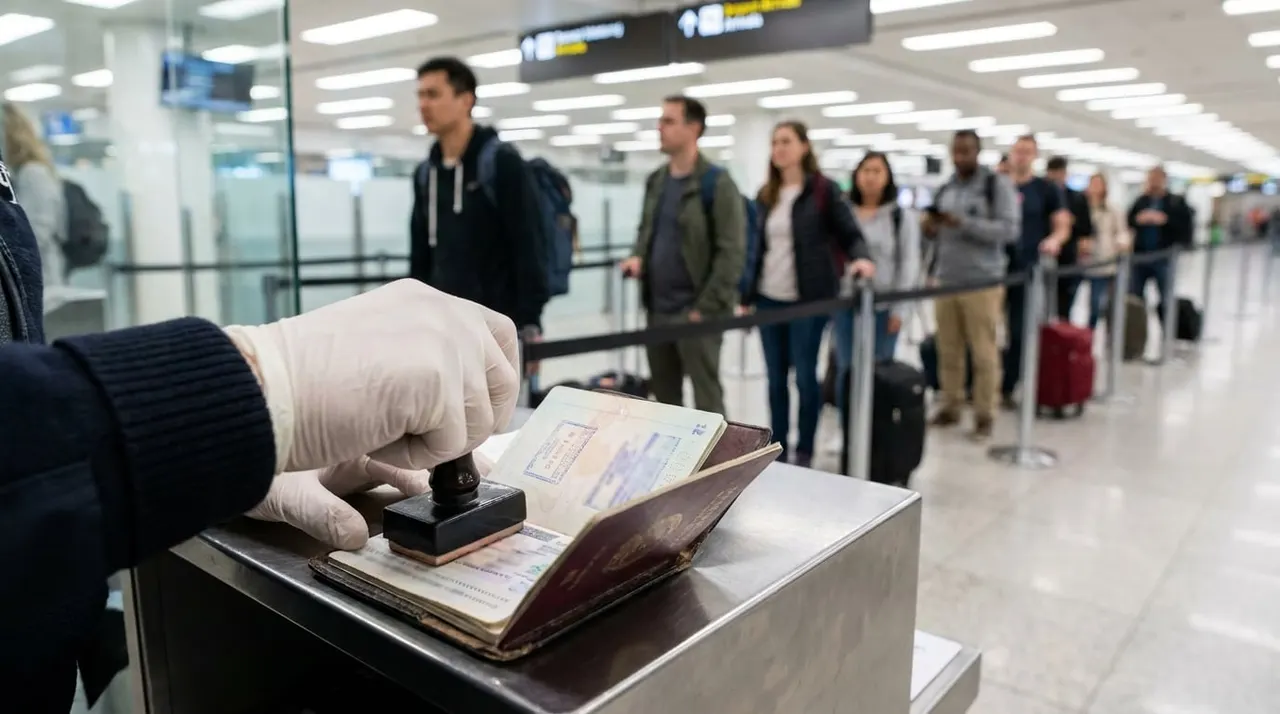
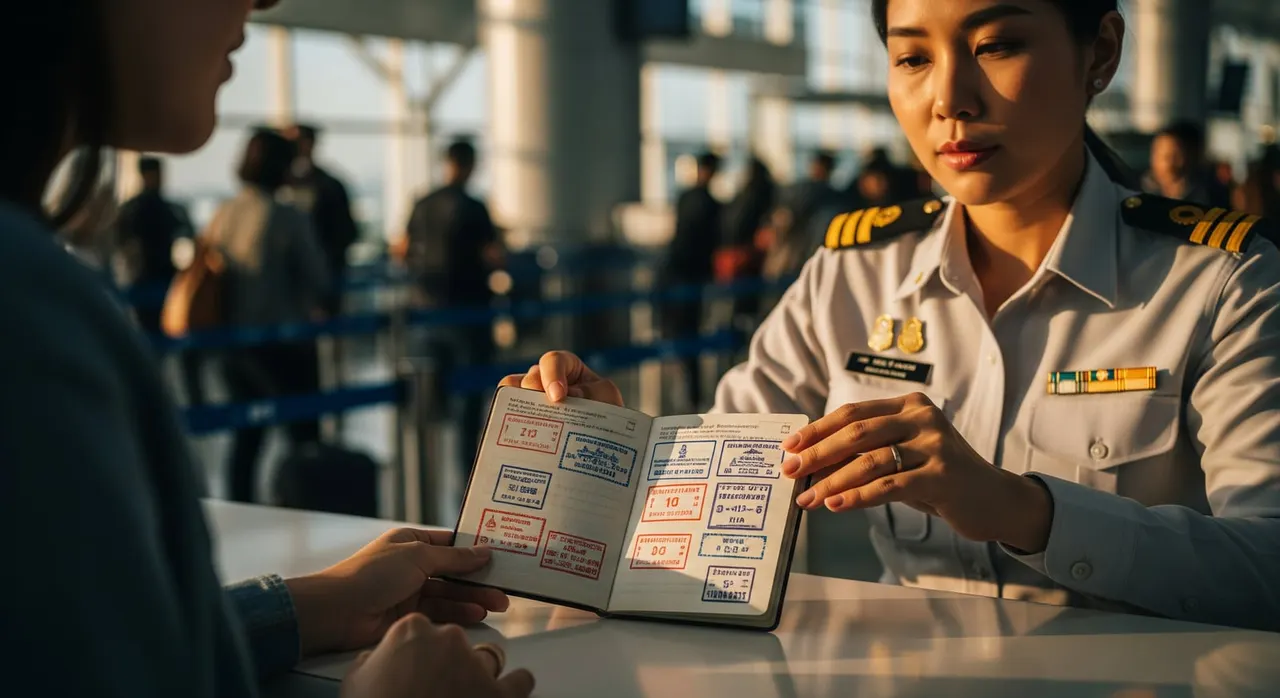
Thai immigration officer at an international airport checking a traveller’s passport under a sign showing a 30-day stamp icon, queues of arriving tourists in the background, bright terminal lighting.

Already in Thailand? The Transition Rules

The Ministry of Foreign Affairs’ transition guidance and the TAT summary agree: travellers admitted before 15 September keep the full period stamped on entry. A 60-day stamp issued on 10 September is valid until its printed date. Nobody’s stay is shortened retroactively.

What changes is the next entry. Leave and come back on or after 15 September and you receive 30 days — and if you re-enter by land, that entry counts towards the two-per-year cap.

Myth

On 15 September everyone in Thailand on a 60-day stamp is suddenly overstaying.

Fact

No. The notifications apply to entries from 15 September onwards. Existing 60-day stamps run to their printed expiry. Whether a 60-day stamp issued before the change can still be extended by 30 days after 15 September has not been addressed officially — if you need that extension, apply before the 15th or be prepared for a discretionary decision.

Who Is Affected Most

Before and after 15 September 2026, by traveller type

You are…Until 14 SeptFrom 15 SeptCleanest route now
A tourist on a 3–6 week holiday60 days on arrival30 days + discretionary 30Tourist Visa (TR) before travel for anything over 30 days
A digital nomad living on exemptions60 + 30, exit, repeat30 + 30; two land entries a year; tourism-only wordingDTV Workcation — 180 days per entry, 5 years
A snowbird spending the winter60 + 30 covered ~3 monthsMax 60 daysTR (60 + 30), METV, or Non-O retirement if 50+
A Muay Thai or cooking student60 + 30 for a camp30 + 30DTV Soft Power with a registered gym or school
Someone waiting in Thailand for a visa decisionUp to 90 days of buffer30 (+30) days; DTV cannot be filed from inside ThailandFile the DTV from outside Thailand with your home-country embassy
A business visitorExemption covered short-term business contactTourism onlyNon-Immigrant B or business e-Visa
A family on a two-week tripNo changeNo changeNothing to do — bring proof of funds and the TDAC

Your Options for Staying Longer Than 30 Days

Government base fees are in Thai baht; each embassy converts them locally (the UK figures below are from the Royal Thai Embassy London fee table).

Thailand visas for stays beyond 30 days (September 2026)

VisaStayFeeKey requirements
Tourist Visa (TR), single entry60 days + one 30-day extension1,000 THB base (London £30)Passport 6 months, funds, bank statements, accommodation, flights; applied for on the e-Visa portal from your country of residence
Multiple-Entry Tourist Visa (METV)6 months validity, 60 days per entry5,000 THB base (London £150)Residence in the consular district; tourism only
Destination Thailand Visa (DTV)5 years, 180 days per entry, extendable once per entry10,000 THB base (London £300)500,000 THB funds; remote work, Soft Power course or medical treatment; from 31 Aug 2026 filed only with the embassy of nationality or permanent residence, plus a police clearance certificate
Non-Immigrant O (retirement)90 days, then 1-year extensionsLA consulate: US$80 single / US$200 multipleAge 50+, 800,000 THB in a Thai bank or 65,000 THB monthly income
Education (ED)90 days + 90-day extensions2,000 THB baseLicensed school or gym, 80% attendance, single entry
Long-Term Resident (LTR)10 years50,000 THBUS$80,000 income or equivalent wealth / skills tracks (BOI)
Thailand Privilege (Elite)5–20 yearsFrom 650,000 THB (Bronze)Membership fee, background check

For most people reading this — remote workers, freelancers, long-stay travellers under 50 — the DTV is the only option that gives 180 days per entry for five years at a one-off fee. Two things changed on 31 August 2026: the application must go to the Thai embassy responsible for your country of nationality or permanent residence, and a police clearance certificate is required. You do not need to travel home to file — the e-Visa is submitted online — but you must be outside Thailand while it is processed. We cover both rules in detail in DTV Visa New Rules from 31 August 2026.

Remote worker with a laptop and a coffee at a quiet co-working desk overlooking green hills in northern Thailand, a passport and a printed visa document beside the keyboard, soft morning light.

Why Thailand Is Doing This

The notifications give the reason in one sentence: the rules were revised "taking into account national security and economic considerations as well as the promotion of tourism". The government’s 14 July 2026 Cabinet statement describes the principle as "one country, one entitlement" — ending overlapping schemes where a nationality could choose between a bilateral agreement, a unilateral exemption and Visa on Arrival — and says the review "is not meant to reduce tourism opportunities but to adjust the system to be more appropriate, clear, and verifiable".

Officials have been explicit about what they want to stop: 60-day stays used for unauthorised work, nominee businesses and scam operations, and repeated short-stay entries used as de-facto residence. The government’s own ThailandNOW briefing notes that the average foreign tourist stays about nine days and roughly 90% leave within 30 days — the 30-day tier covers genuine tourism; everyone else is being pushed towards a visa that matches their purpose.

What to Do Now: Checklist by Situation

If you arrive before 15 September

  1. You get 60 days. Note the printed expiry — it stands. If you want the 30-day extension, apply before the 15th to avoid a discretionary decision under the new regime.

If you arrive on or after 15 September

  1. Check your tier: 30 days (60 countries), bilateral (90/30/14), 15 days, Visa on Arrival, or e-Visa required.
  2. Longer than 30 days planned? Get a Tourist Visa before you fly, or the METV for repeat trips.
  3. Carry proof of funds, an onward ticket and your TDAC confirmation.
  4. Entering by land? Count it — two visa-free land entries per calendar year.

If you want to stay for months

  1. DTV: order the police clearance certificate first (3–6 months validity depending on the embassy), gather 3 months of bank statements showing 500,000 THB, prepare the category documents.
  2. Leave Thailand before filing; submit the e-Visa with the embassy for your nationality or permanent residence.
  3. Wait outside Thailand for approval, then enter with the e-Visa for 180 days.

Official Sources

All facts verified on 3 September 2026 against the documents below. We update this page as further embassies publish their guidance.

Royal Gazette and Thai government

Embassies, immigration and visa programmes

Frequently Asked Questions

How long can I stay in Thailand without a visa from 15 September 2026?

30 days per entry if you hold a passport from one of the 60 listed countries (including the UK, US, EU states, Australia, Canada, Japan and India); 90 days for Brazil, Argentina, Chile, Peru and South Korea under bilateral agreements; 30 days for China, Russia, Vietnam and other bilateral partners; 15 days for Mauritius and Seychelles. Everyone else needs a visa.

Is Thailand still 60 days visa-free?

Only for arrivals up to and including 14 September 2026. From 15 September the 60-day exemption is repealed by Royal Gazette Notification 128702.

I am in Thailand on a 60-day stamp. What happens on 15 September?

Nothing changes for your current stay — you keep the full period stamped on entry. Your next entry after 15 September will be 30 days.

Can I extend the 30-day exemption?

Yes, once, by up to 30 days, at an immigration office (form TM.7, fee 1,900 THB), subject to the officer’s approval — confirmed by the Royal Thai Embassy in Washington DC. Practical maximum without a visa: 60 days.

How many times can I enter Thailand visa-free per year?

By land: two visa-exempt entries per calendar year (Article 3 of the 30-day notification), unless you are Malaysian, Bruneian, Indonesian or Singaporean. By air the law sets no number, but immigration refuses entry to travellers with more than two visa-exempt "runs" without a valid reason.

Can I still do a border run to Laos or Malaysia after 15 September?

You can leave and re-enter, but each land re-entry gives only 30 days and counts towards the two-per-year cap. Cambodia’s land crossings have been closed since June 2025. Border runs are no longer a way to live in Thailand.

Do I need a visa for a 45-day trip?

Yes, in practice: apply for a single-entry Tourist Visa (60 days, extendable by 30) on the Thai e-Visa portal before you travel, rather than relying on a discretionary extension of the 30-day exemption.

Which countries lost visa-free entry to Thailand in 2026?

34 nationalities left the unilateral list. Twelve fall back on bilateral agreements (Brazil, Peru, South Korea at 90 days; China, Hong Kong, Macao, Kazakhstan, Laos, Mongolia, Russia, Vietnam at 30; Cambodia at 14). Twenty-one — among them Mexico, Colombia, Uruguay, Morocco, Sri Lanka, Uzbekistan, Andorra and Monaco — now need a visa. Mauritius moved to 15 days.

Did Visa on Arrival change?

Yes. From 15 September only Azerbaijan, Belarus and Serbia can obtain a Visa on Arrival (15 days, 2,000 THB). The previous 31-country list is repealed; India, which was to be moved to Visa on Arrival, stays on the free 30-day exemption instead.

How much money do I need to show at Thai immigration?

The TAT reminder of July 2026 cites 10,000 THB per person or 20,000 THB per family for visa-exempt entry, and 20,000 / 40,000 THB for visa holders — cash or a bank statement. Checks are selective but real.

Can I apply for the DTV while I am in Thailand on the 30-day exemption?

No. The DTV e-Visa is filed from outside Thailand, and since 31 August 2026 only with the Thai embassy responsible for your nationality or permanent residence, with a police clearance certificate. You do not need to fly home — any country outside Thailand works.

Is the DTV affected by the 15 September change?
No. DTV holders keep 180 days per entry for five years. The exemption cut only affects visa-free entries.

30 days is not enough? Get the 5-year DTV

We check your documents against the checklist of the embassy responsible for you — including the new police clearance rule — and file the e-Visa. Packages from $139, 100% refund of our fee if denied (with Denial Protection).

Start your DTV application
Tags:#thailand-visa-exemption#visa-free-30-days#thailand-immigration#royal-gazette-2026#thailand-visa-run#border-run#digital-nomad-thailand#dtv-visa#destination-thailand-visa

Comments

Be the first to leave a comment.