Skip to content
Immigration

Thailand Visa Run Limit: Only 2 Visa-Free Entries a Year (2026)
DTV DTVThaiVisa June 2, 2026 10 min read
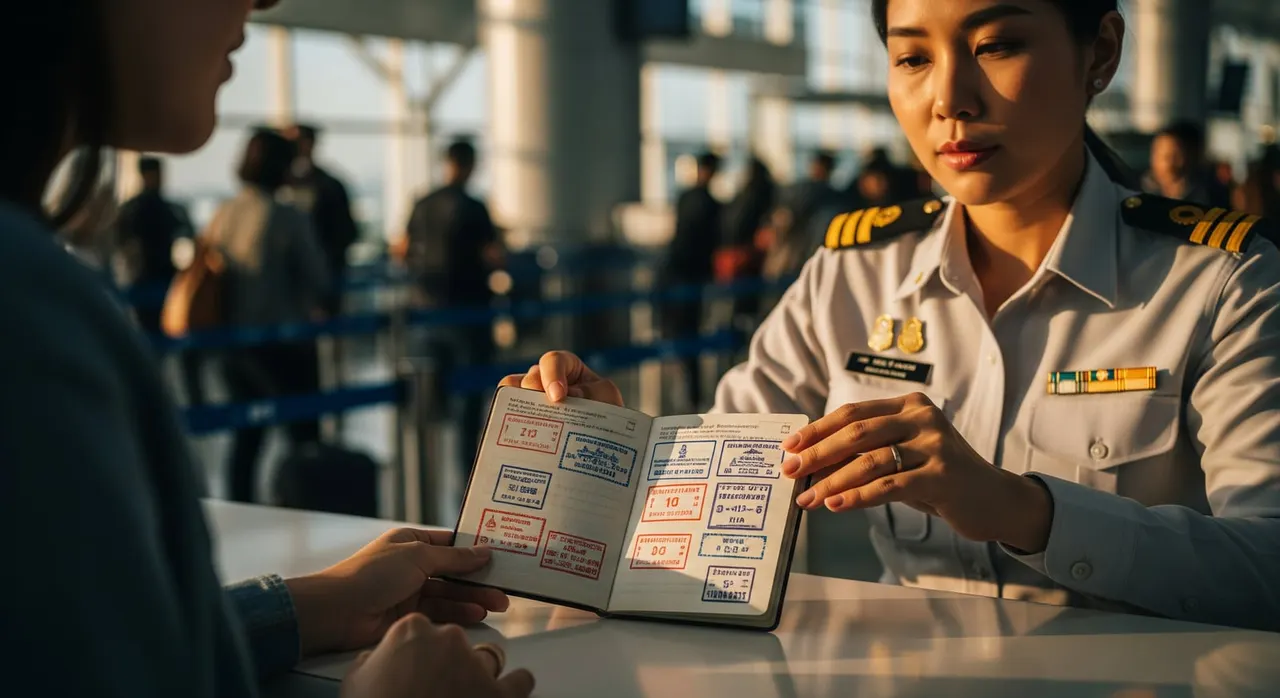
A Thai immigration officer reviewing a foreign traveller's passport at a busy airport arrivals desk in Bangkok, with passport stamp pages visible under desk lighting.

The border-run treadmill is finally catching up with the people who relied on it. Since 12 November 2025 , Thailand limits foreigners to a maximum of two visa-exempt 'visa runs' per calendar year without a justifiable reason — and exceeding that pattern can lead to denial of entry . It is an official measure announced by the Thai Government Public Relations Department (PRD), and it applies at both international airports and land border checkpoints , with the strictest enforcement at land borders. If your stay in Thailand has been built on hopping out and back to reset a visa-free stamp, this is the article to read before your next trip — and the strongest case yet for a stable, long-stay solution such as the Destination Thailand Visa (DTV) .

What Changed on 12 November 2025

According to official Thai government announcements, from 12 November 2025 the Public Relations Department (PRD) confirmed a tightened approach to visa-exempt entries. Foreigners who enter Thailand without a visa — under the visa-exemption scheme — are now expected to keep these 'visa runs' to a maximum of two per calendar year unless they can show a justifiable reason for entering more often. Cross that line and you risk being refused entry at the border.

This is not a vague warning. Officials have pointed to enforcement that was already well under way: roughly 2,900 foreigners had been refused entry over visa-run patterns since early 2025 , according to the PRD figure cited alongside the measure. In other words, the two-entry threshold formalises a crackdown that immigration officers had already been applying in practice.

The Important Nuance: Discretion, Not a Hard Number
Here is where careful reading matters — and where a lot of online summaries get it wrong. The number 'two' is best understood as a discretionary enforcement threshold , not a hard statutory cap written into the Immigration Act. There is no new line in the law that says 'every foreigner may make exactly two visa-free entries and no more.' Instead, immigration officers retain discretion and review your full passport history when deciding whether to admit you.

That discretion is rooted in existing law: Section 12 of the Immigration Act B.E. 2522 , which sets out grounds on which a foreigner may be refused entry, and Police Order 327/2557 . The November 2025 measure essentially tells officers to apply that long-standing discretionary power more firmly against repeat visa-exempt entries. So 'two' is the practical line at which scrutiny sharply increases — not a guarantee that two is always fine or that a third is always refused.

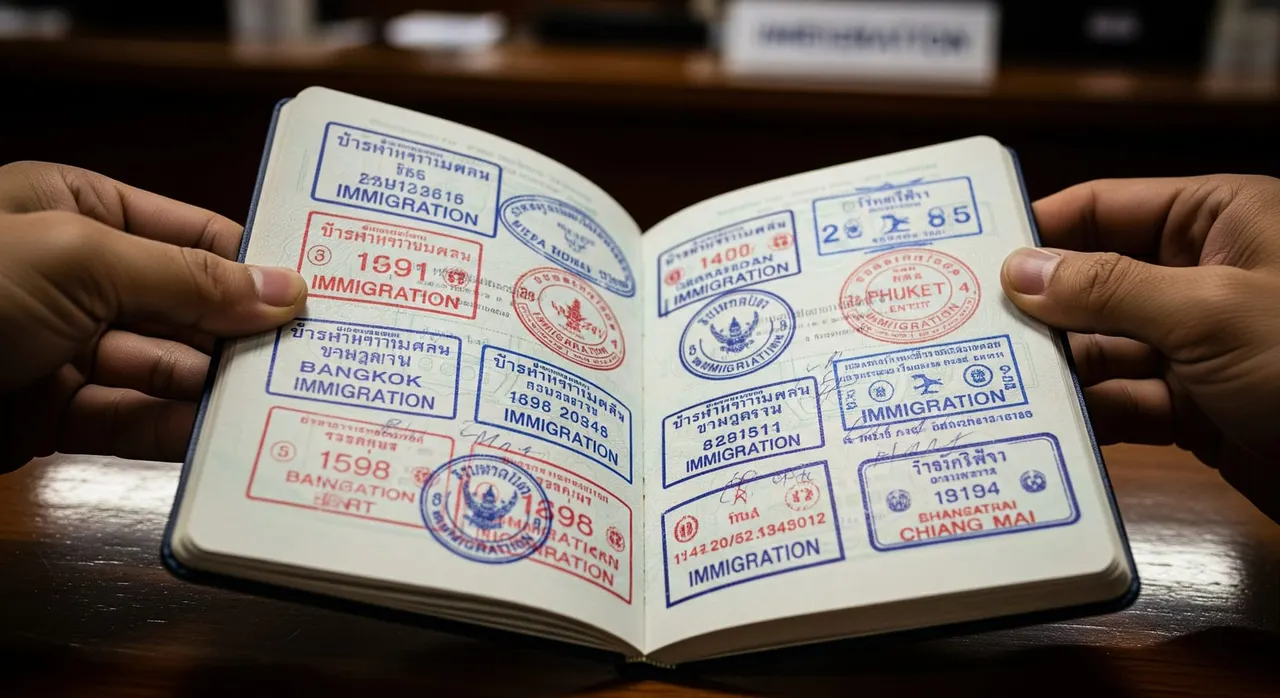
Close-up of a passport open to pages filled with Thailand entry and exit stamps, held above a wooden immigration counter.

Airports vs Land Borders: The Difference That Matters

The measure applies at both international airports and land border checkpoints — but the experience is not identical. Enforcement is reported to be strictest at land borders , which is exactly where classic 'border bounce' runs happen. The traditional model of driving out to a land crossing, stepping across and walking back with a fresh visa-exempt stamp is the precise behaviour this measure is designed to discourage.

Air arrivals are not exempt from scrutiny, but it is important to be precise about what is and is not confirmed. There is no official numeric cap on visa-free air arrivals in the way some blogs suggest. What exists for air entrants is the same discretionary visa-run threshold — officers can still refuse entry to someone whose passport shows a clear pattern of visa-exempt runs. Any specific 'maximum air entries per year' figures circulating online are unofficial and should not be relied upon.

Visa-exempt entries: airport vs land border (as of June 2026)

AspectInternational airportLand border checkpoint
Two-run discretionary threshold Applies Applies
Enforcement intensity Scrutiny applied Strictest
Official numeric cap on entries None confirmed None confirmed (threshold is discretionary)
Extension of a visa-exempt stay Limited extensions possible Cannot be extended at immigration
Risk for repeat 'visa runs' Moderate to high Highest

Extensions: What You Can and Cannot Do

How you entered Thailand changes what you can do once you are inside. This is one of the clearest practical differences in the current rules:

Visa-exempt extension rules

  • Land-border visa-exempt entries CANNOT be extended at immigration.
  • Air arrivals may get limited extensions — the first for up to 30 days.
  • A second extension for an air arrival is shorter, only 7 days.
  • Extensions are capped at two per year.

The takeaway is straightforward: a visa-exempt stamp — especially one taken at a land border — is a short, finite stay with little flexibility built around it. Stacking entries and extensions to manufacture long-term residence is exactly the pattern that now invites refusal. If your life in Thailand is meant to last months or years, a visa-exempt stamp was never the right tool, and it is an even worse fit now.

Who Is Actually the Target

It is worth being calm and accurate about who this affects. Genuine short-term tourists and proper long-term visa holders are not the target of this measure. Someone who visits Thailand for a holiday once or twice a year has nothing to worry about. Likewise, anyone holding an appropriate long-stay visa — such as the DTV, a work visa, a retirement visa or a student visa — is operating in a completely different category and is not affected by the visa-run threshold at all.

The people genuinely exposed are the 'permanent tourists': foreigners effectively living in Thailand on a rolling series of visa-exempt entries and border runs, with no underlying long-stay visa. For that group, the message from immigration is now explicit — the visa-free scheme is for visiting, not for residing, and the door will not keep reopening indefinitely.

Myth

I can live in Thailand indefinitely on back-to-back visa-free entries.

Fact

Visa-exempt entry is designed for genuine short visits. Since 12 November 2025, repeated visa-free 'visa runs' beyond a discretionary two-per-year threshold can lead to denial of entry, with officers reviewing your full passport history. A proper long-stay visa is the only reliable way to actually reside in Thailand.

Things Are Changing: Check the Latest Before You Travel
Thailand's entry rules are in active flux, so treat any single article — including this one — as a snapshot. A separate set of changes affecting visa-exempt stays was approved by the Thai cabinet on 19 May 2026 , including a reported move to cut the standard visa-exempt stay from 60 days to 30 days. Crucially, those changes are not yet legally in force : they take effect 15 days after publication in the Royal Gazette, and as of the publication of this article the 60-day rule still applies at the border . We cover that proposal in detail in our piece on the visa-free stay being cut to 30 days .

The same caution applies to related updates many travellers are asking about, including changes to visa-on-arrival for Indian nationals and the renewed enforcement of proof-of-funds checks at the border . None of these moving parts change the core point of this article: relying on visa-free entries to live in Thailand has become risky, and the risk is trending in one direction.

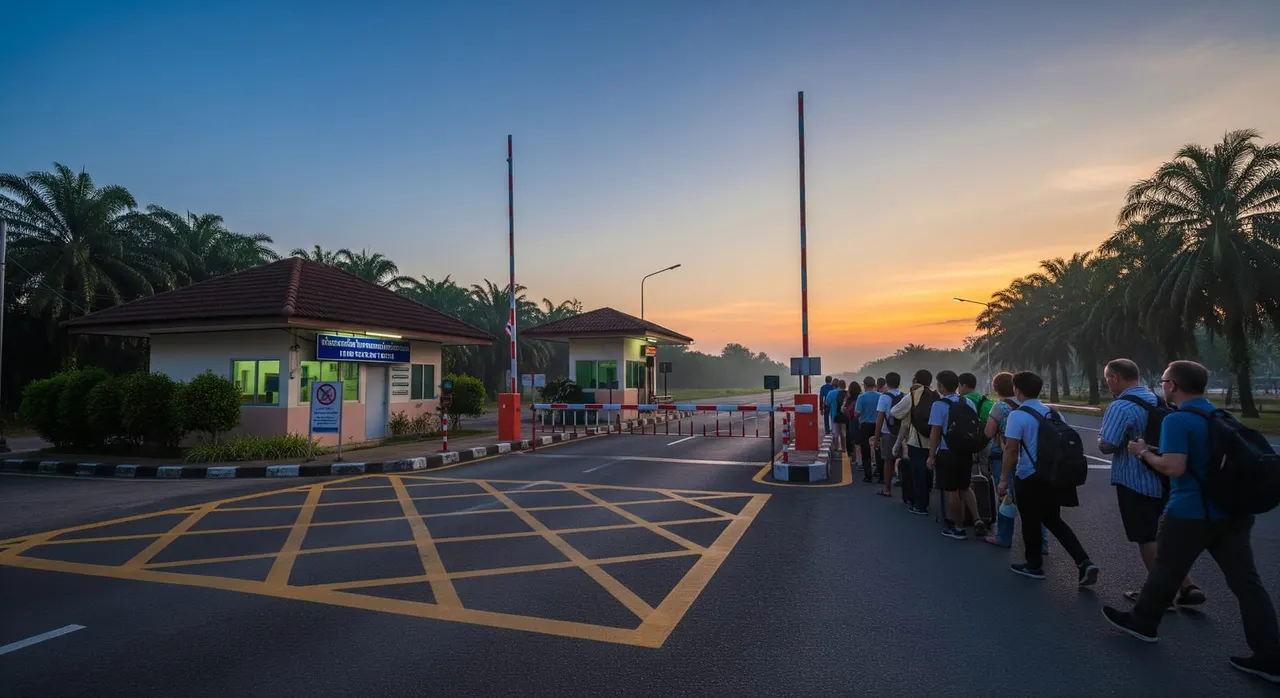
A land border checkpoint between Thailand and a neighbouring country at dawn, with a barrier gate, a queue of travellers on foot, and a small immigration building.

How to Stay on the Right Side of Immigration

Practical steps if you currently rely on visa-free entries

  1. Count your visa-exempt entries for the calendar year. If you are approaching two, assume the next one will be scrutinised — especially at a land border.
  2. Do not plan a long-term stay around stacking entries and extensions; land-border visa-exempt stamps cannot be extended at immigration, and air extensions are limited and capped at two per year.
  3. If you have a genuine, justifiable reason for entering more than twice, be ready to evidence it; officers review your full passport history and exercise discretion.
  4. Check the current rules through official Thai government announcements or the Tourism Authority of Thailand before each trip, since the broader visa-exempt rules are changing.
  5. If Thailand is your base rather than a holiday, move to a proper long-stay visa — the most direct way to remove border risk entirely.
  6. Not sure where you stand? Run a free eligibility check to see whether the DTV fits your situation.

The Permanent Fix: The Destination Thailand Visa

The two-entry measure is, at heart, the end of the border-run treadmill for anyone using it to live in Thailand. The Destination Thailand Visa (DTV) was built for exactly the remote workers, freelancers and long-stay visitors who used to depend on visa-free runs. It removes any need to visa-run at all: instead of counting entries and watching the calendar, you hold one long-validity visa and travel on your own schedule.

The DTV is applied for online through the official Thai e-Visa portal; our team prepares and submits the application on your behalf, so you are not navigating the process alone. Because it grants up to 180 days per entry with multiple entries over five years, the visa-run threshold becomes irrelevant — your right to stay no longer depends on how immigration officers read a stack of visa-free stamps. You can compare it against other routes on our DTV overview , or explore requirements by nationality on our country pages .

Why DTV holders are unaffected by the two-entry limit

  • No visa-exempt entries to count — the two-per-year threshold simply does not apply to you.
  • Up to 180 days per stay, extendable by a further 180, instead of short visa-free stamps.
  • Multiple entry over 5 years, so you can leave and return without resetting anything.
  • No passport history of back-to-back visa runs for officers to question.
  • A documented, predictable status suited to remote work and family life.

Frequently Asked Questions

Is there really a limit of two visa-free entries to Thailand per year?

Since 12 November 2025, the Thai Government PRD has applied a discretionary threshold of two visa-exempt 'visa runs' per calendar year without a justifiable reason. Exceeding it can lead to denial of entry. Importantly, the 'two' is an enforcement threshold rooted in existing discretion (Section 12 of the Immigration Act B.E. 2522 and Police Order 327/2557), not a hard statutory cap — officers review your full passport history and decide case by case.

Does this two-entry limit apply at airports as well as land borders?

Yes, the measure applies at both international airports and land border checkpoints, with enforcement reported to be strictest at land borders. That said, there is no confirmed official numeric cap on visa-free air arrivals — air entrants face the same discretionary visa-run scrutiny rather than a fixed number. Any specific 'maximum air entries' figures online are unofficial.

Can I extend a visa-exempt stay if I enter more than twice?

It depends how you entered. Land-border visa-exempt entries cannot be extended at immigration. Air arrivals may get limited extensions — the first up to 30 days and a second of only 7 days — capped at two extensions per year. None of this is a substitute for a proper long-stay visa if Thailand is your base.

Am I affected if I'm just a normal tourist or hold a long-stay visa?

No. Genuine short-term tourists and proper long-term visa holders are not the target of this measure. It is aimed at people effectively residing in Thailand on a rolling series of visa-free entries. If you visit occasionally on holiday, or hold a visa such as the DTV, you are not affected by the visa-run threshold.

How does the DTV remove the visa-run problem?
The Destination Thailand Visa is valid for 5 years, allows multiple entry and grants up to 180 days per entry (extendable by a further 180). Because you are not making visa-exempt entries at all, the two-per-year threshold does not apply to you. It requires proof of 500,000 THB (around $15,000), is applied for online via the Thai e-Visa portal, and our team can prepare and submit it from $139 — with a 100% refund if denied, only with the optional paid Denial Protection add-on.

End the visa-run treadmill with the 5-Year DTV

Stop rationing visa-free entries. Configure your package with live pricing — apply from $139, with a 100% refund if denied (only with the optional paid Denial Protection add-on).

Start your application
Tags:#thailand-visa-run#visa-exempt-entry#denial-of-entry#border-run#thailand-immigration#dtv-visa#digital-nomad-thailand

Comments

Be the first to leave a comment.