Thailand's 20,000 Baht Proof-of-Funds Rule on Arrival Is Being Enforced Again
DTV DTVThaiVisa June 1, 2026 10 min read
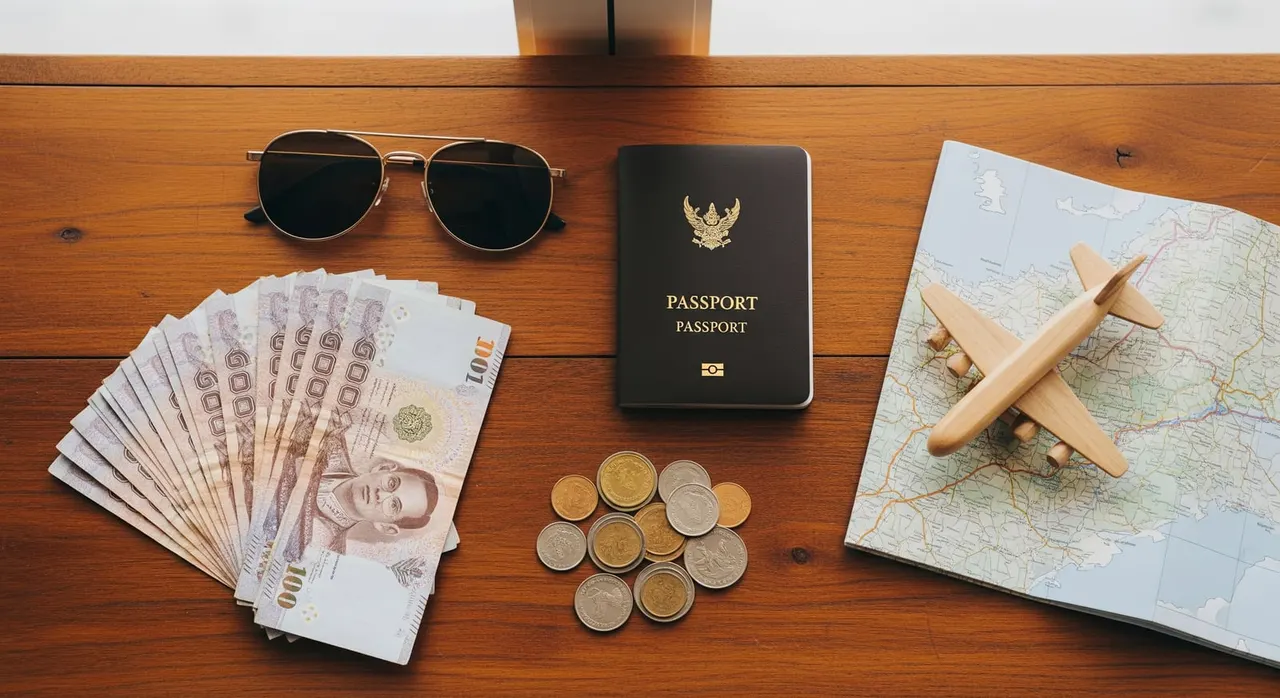
If you are planning a trip to Thailand in 2026, there is a long-standing rule you may have forgotten about — because for a couple of years almost nobody was asked about it. Thailand is once again enforcing its proof-of-funds-on-arrival requirement for tourists. For travellers entering under a visa exemption or a tourist visa, that means being able to show roughly 20,000 THB per person (or the foreign-currency equivalent) if an immigration officer asks. The crucial point to understand up front: this is not a new tax, a new fee, or a 2026 increase. The figure has been on the books for years. What changed is that, after being relaxed in late 2023, the checks have come back — and in early 2026 they are being applied at officers' discretion at airports including Bangkok. In this guide we explain exactly what you need to carry, who is most likely to be stopped, and why holding a proper long-stay visa such as the Destination Thailand Visa (DTV) sidesteps the whole problem.
What Changed: An Old Rule Back in Force
Thailand has, for many years, reserved the right to ask arriving tourists to demonstrate that they can support themselves during their stay. This is standard practice in many countries and is written into the public-service pages of several Royal Thai Embassies. During the post-pandemic push to revive tourism, the requirement was effectively relaxed or dropped from around November 2023 , and most arrivals sailed through without ever being asked to open their wallet.
That window has now closed. According to reporting on Thai immigration practice, the proof-of-funds requirement was reinstated from around May 2025 , and heightened, discretionary enforcement has continued into 2026. In other words, the rule never disappeared from the rulebook — it simply stopped being checked, and now it is being checked again.
How Much Money You Need to Show
The amount depends on how you are entering Thailand. For travellers using a visa exemption or a tourist visa , the figure is 20,000 THB per person (or 40,000 THB per family travelling together). For those using Visa on Arrival , the threshold is lower: 10,000 THB per person (or 20,000 THB per family). In every case, the foreign-currency equivalent is accepted.
Proof-of-funds amounts by entry type
Entry type
Per person
Per family
Visa exemption
20,000 THB
40,000 THB
Tourist visa
20,000 THB
40,000 THB
Visa on Arrival
10,000 THB
20,000 THB
One caveat worth knowing: a few official embassy pages quote slightly differing figures, so there is some inconsistency in the published numbers. To stay safely on the right side of any officer's interpretation, the sensible figure to carry is 20,000 THB per person for a visa-exempt or tourist-visa entry. Carrying that amount means you are covered regardless of which version of the guidance an officer is working from.
Is This a New Fee? No — and Here's Why
This is the single most misunderstood part of the story, so it is worth being blunt: you do not pay this money to anyone . It is not a fee, a charge, a deposit, or a tax. Nobody collects it. The requirement is simply that you can show you have access to sufficient funds for your stay if an officer asks. The money stays in your pocket, your bank account, or on your card — it is yours throughout the trip.
Myth
Thailand introduced a new 20,000 baht entry fee in 2026.
Fact
There is no new fee and no 2026 increase. The 20,000 THB figure is a long-standing proof-of-funds threshold that you only need to demonstrate, not pay. The only thing that changed is that immigration resumed enforcing it after a relaxed period; the amount itself is unchanged.
Because the figure is unchanged, anyone framing this as a 'price hike' or a 'new cost of entering Thailand' is mistaken. The headline is about enforcement resuming , not about a higher number. Keep that distinction front of mind when you read alarming social-media posts about it.
Who Actually Gets Checked
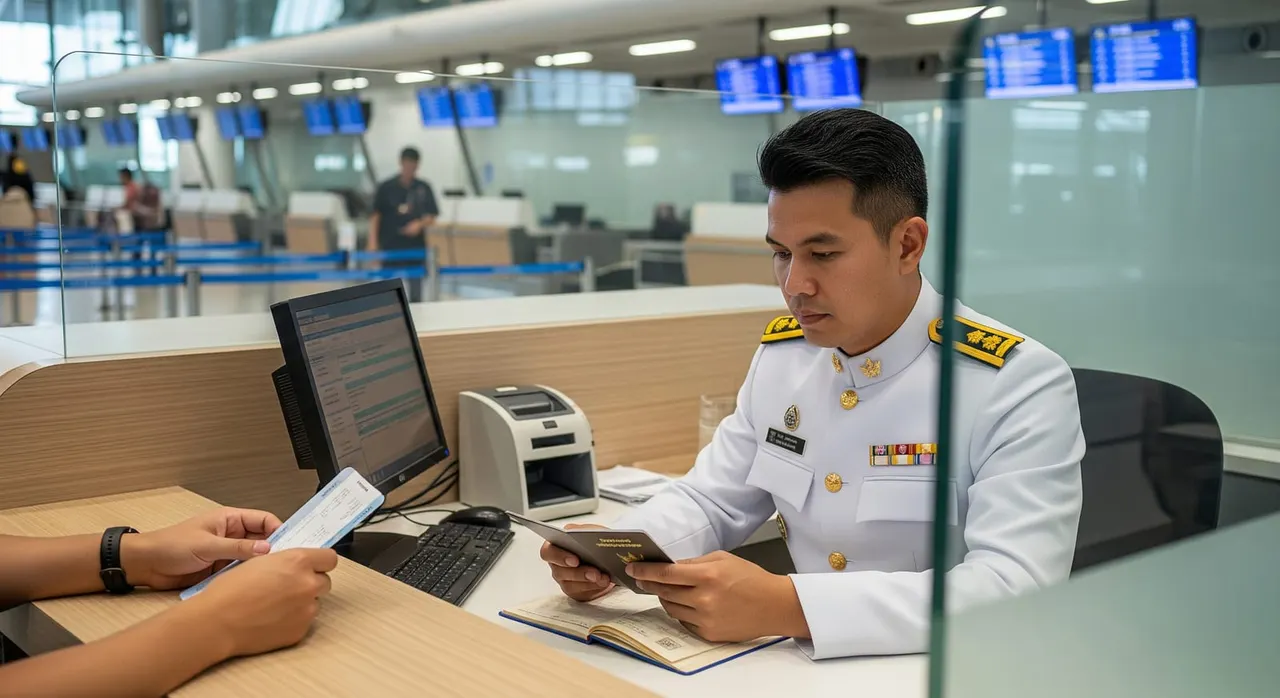
Here is the reassuring part: enforcement is discretionary, not universal . The vast majority of arrivals are still waved through without being asked to prove anything. Officers use the rule selectively, focusing on the profiles that, in their judgment, warrant a closer look.
Profiles more likely to be asked for proof of funds
Solo travellers, who tend to draw more scrutiny than families or couples.
Arrivals with a one-way ticket or only a limited or vague onward itinerary.
Passports with sparse travel history that don't paint a clear picture of the traveller.
Visitors with repeated back-to-back tourist entries, who may look like de facto residents.
Anyone whose answers at the booth raise doubts about funds or intended length of stay.
If none of those describe you — say, a couple with a return flight, a hotel booking and a normal travel record — the odds of being asked are low. But 'low' is not 'zero', and the consequence of being caught short can be severe, which is exactly why preparing is so cheap relative to the downside.
A Real Case: Refused Entry at Don Mueang
This is not merely theoretical. In early December 2025 , a woman was refused entry at Don Mueang Airport in Bangkok for failing to show sufficient funds on arrival. The case, reported in the Thai press, is a clear illustration that the checks have teeth: failing one does not just mean a stern warning — it can mean being turned around at the border and sent back.
“An arriving traveller was refused entry at Don Mueang Airport in early December 2025 for being unable to demonstrate the required funds — a concrete reminder that the rule is being enforced, not just published.”
The lesson is straightforward. Even if the probability of being checked is modest, the cost of failing — a cancelled trip, a return flight at your own expense, and a refusal stamp that can complicate future entries — is high enough that no traveller should gamble on not being asked.
What Counts as Acceptable Proof
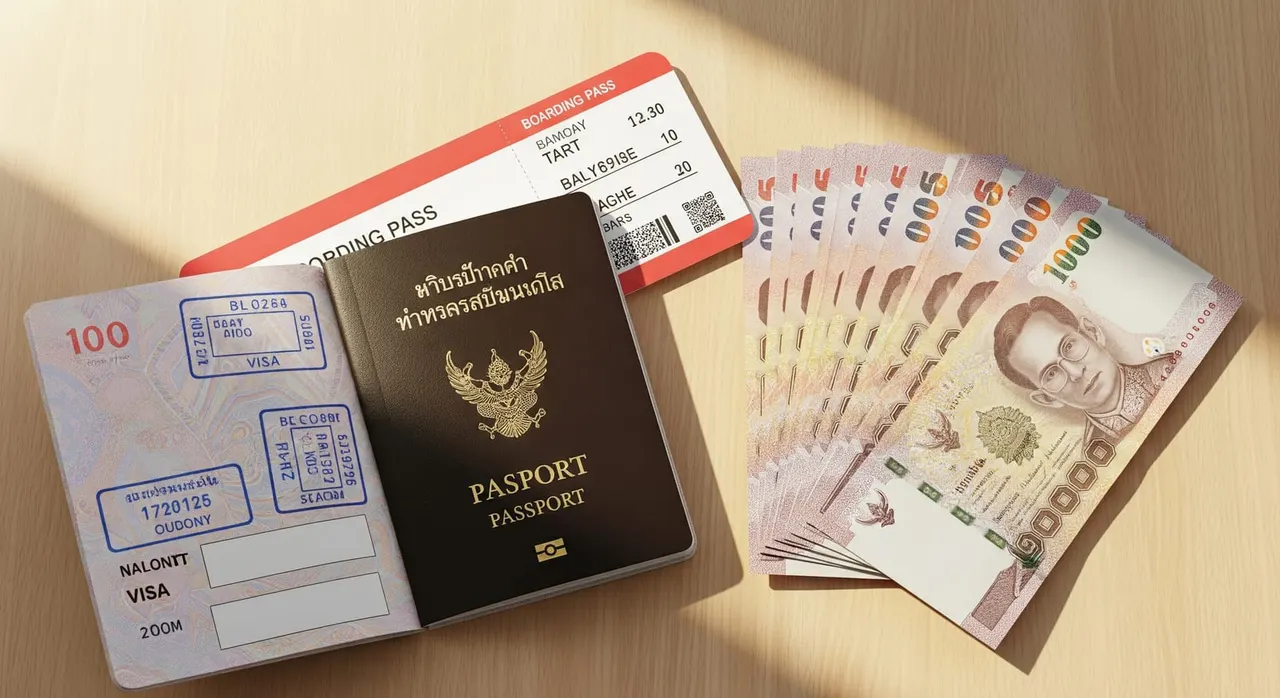
Official Royal Thai Embassy public-service pages list several forms of evidence — including bank statements, bank passbooks and credit-card statements alongside cash. In practice, however, cash is the most reliable form of proof , ideally in Thai baht (or an accepted foreign currency at the equivalent value). It is immediate, tangible and leaves no room for an officer to question whether the funds are genuinely available.
To be clear, 'cash is safest' is practical guidance , not an absolute legal rule — documentary proof is officially recognised. But because enforcement is discretionary and you cannot predict which officer you'll meet or how they'll interpret your documents, carrying the cash equivalent removes the uncertainty entirely. Think of it as the belt-and-braces option for the one time you actually get asked.
How to Prepare Before You Fly
A simple pre-flight checklist
Carry the cash equivalent of 20,000 THB per person for a visa-exempt or tourist-visa entry (10,000 THB per person for Visa on Arrival), in baht or an accepted foreign currency.
Bring backup documentary proof as well — a printed bank statement, passbook or credit-card statement — but treat it as secondary to cash.
Avoid relying solely on a banking-app screenshot, which may be rejected.
Have a confirmed onward or return ticket and accommodation details ready, especially if you are travelling solo or on a one-way ticket.
If you enter Thailand often on short tourist stamps, consider whether a long-stay visa would remove the recurring risk altogether.
The Bigger Picture: Thailand's Tightening Entry Rules
The return of proof-of-funds checks does not exist in a vacuum. It is part of a broader tightening of Thailand's entry and tourist-stay rules through 2025 and into 2026, as authorities move to curb people effectively living in the country on a rolling series of tourist entries. The clearest sign of this direction is a set of cabinet-approved changes that, while not yet in force, point firmly toward stricter conditions for visa-free visitors.
We cover those proposed changes in detail in our companion guides on the 60-to-30-day visa-free cut , the 15-day Visa on Arrival for India , and the reported two-entry limit on visa runs . Read together, the message is consistent: the era of casually stacking tourist entries is ending, and travellers who want to spend serious time in Thailand are better served by a proper long-stay visa.
The Stress-Free Alternative: The DTV
If you intend to stay in Thailand for more than a quick holiday, the cleanest way to make proof-of-funds checks irrelevant is to hold a visa that already demonstrates your financial standing. That is precisely what the Destination Thailand Visa (DTV) does. DTV applicants prove 500,000 THB (~$15,000) when applying for the visa, so a border-side spot-check for 20,000 THB is simply not a concern.
Beyond avoiding funds checks, a DTV replaces the whole tourist-entry treadmill: no counting down 30 or 60 days, no anxious passport-control conversations about onward tickets, and no exposure to the rule changes now sweeping through Thailand's short-stay system. You apply once and settle in.
Why DTV holders don't worry about arrival funds checks
Financial standing is already proven at the application stage (500,000 THB).
A long-validity visa removes the need for repeated tourist entries that draw scrutiny.
Your right to stay doesn't depend on satisfying an officer at the booth each trip.
You are insulated from tightening short-stay rules such as the proposed 30-day cut.
Up to 180 days per entry, extendable by another 180 — no monthly border maths.
Frequently Asked Questions
How much money do I need to show on arrival in Thailand in 2026?
For a visa-exemption or tourist-visa entry, the figure is 20,000 THB per person (or 40,000 THB per family), or the foreign-currency equivalent. For Visa on Arrival it is lower — 10,000 THB per person (or 20,000 THB per family). A few official pages quote slightly different figures, so carrying 20,000 THB per person for a visa-exempt or tourist entry is the safe choice.
Is the 20,000 baht a new fee or a 2026 increase?
No. It is neither new nor higher. You do not pay it to anyone — it is a long-standing proof-of-funds threshold that you only need to be able to show. The only thing that changed is that immigration resumed enforcing it after a relaxed period, reportedly from around May 2025, with discretionary checks continuing into 2026.
Will I definitely be asked to prove funds at the airport?
Probably not. Enforcement is discretionary, and most arrivals are not asked. Checks tend to target solo travellers, one-way or limited-itinerary tickets, sparse passport history, and people with repeated back-to-back tourist entries. Because the downside of being caught short is high, it is still wise to be prepared even if you expect to be waved through.
What is the best proof of funds to carry?
Cash is the most reliable, ideally in Thai baht. Official embassy pages also list bank statements, passbooks and credit-card statements, so documentary proof is recognised — but a bank-app screenshot may be rejected. 'Cash is safest' is practical guidance rather than an absolute legal rule, but it removes uncertainty when you can't predict which officer you'll meet.
Can I really be refused entry for failing the check?
Yes. In early December 2025 a woman was refused entry at Don Mueang Airport in Bangkok for failing to show sufficient funds. A refusal can mean a cancelled trip, a return flight at your own expense, and a stamp that may complicate future entries — which is why carrying the funds is worth the minor inconvenience.
How does the DTV avoid this problem entirely?
DTV applicants prove 500,000 THB (~$15,000) when applying for the 5-year, multiple-entry visa, so a border-side check for 20,000 THB is a non-issue. The DTV allows up to 180 days per entry (extendable by another 180) and is applied for online via the Thai e-Visa portal — our team prepares and submits it for you, from $139, with a 100% refund if denied (only with the optional paid Denial Protection add-on).
Skip the border-side funds checks for good
Configure your 5-year DTV with live pricing — apply from $139, with a 100% refund if denied (only with the optional paid Denial Protection add-on). Not sure you qualify? Run a free eligibility check first.



 Immigration
 Immigration
 Immigration