Skip to content
Where you apply · Kenya

Apply for the DTV at the Thai Embassy in Nairobi

Apply online for the 5-year Destination Thailand Visa (DTV) from Nairobi, Kenya. Learn about required documents, proof of 500,000 THB (~$15,000), and local tips.

Royal Thai Embassy 📍 Nairobi, KenyaDTV applied for online

If you’re living in Kenya and dreaming of an extended stay in the Land of Smiles, the Destination Thailand Visa (DTV) is your gateway. The Royal Thai Embassy in Nairobi serves as the diplomatic mission covering applicants in Kenya and several neighbouring countries, but you never need to visit in person —the entire application is lodged online through Thailand’s central e-Visa portal. This guide helps you navigate the process from Nairobi, from preparing local bank statements to understanding what this embassy’s oversight means for your application. With a little foresight, you’ll be working poolside in Chiang Mai or mastering your Muay Thai skills in no time.

Who the Nairobi Mission Covers and What That Means
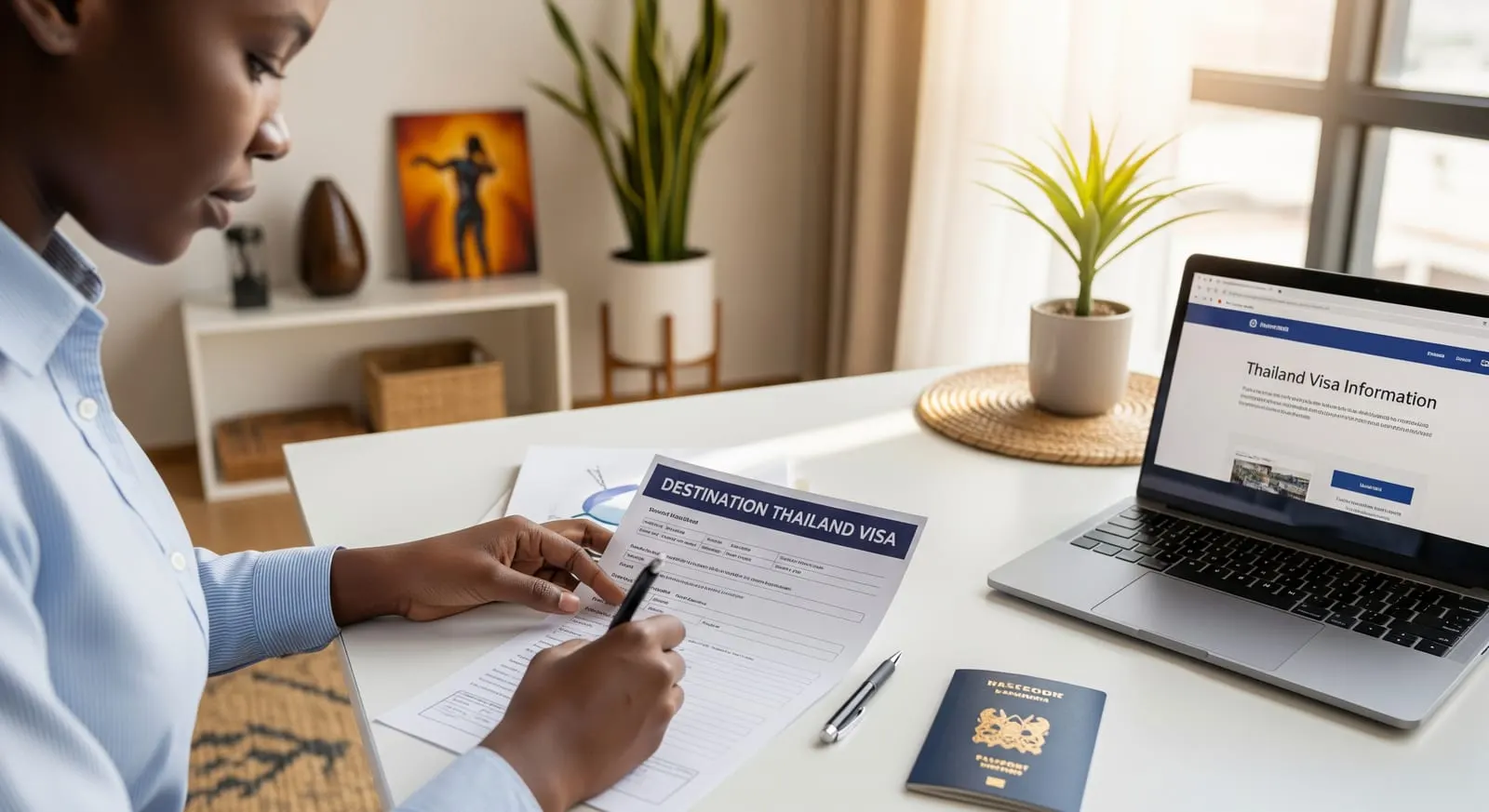
The Royal Thai Embassy in Nairobi is accredited to Kenya, and typically extends its consular jurisdiction to several East African nations, including Somalia, Eritrea, and South Sudan. For DTV applicants, this simply means that when you select your “location” on the Thai e-Visa portal, you’ll choose this mission if you legally reside in one of these countries. Your application will be reviewed by consular staff at this embassy, who are familiar with local documents and economic conditions. This can work to your advantage, as they understand Kenyan bank statements, mobile-money records, and employment norms.

Because the embassy is based in Nairobi, you can expect communication in English, and you’ll receive email notifications from the embassy's official consular email address for any follow-ups—no need to worry about time-zone confusion during business hours, as Nairobi shares a similar working day with the embassy staff.

Nairobi — applying for the Destination Thailand Visa from Kenya

Nairobi’s digital nomad scene is buzzing—from iHub to Nairobi Garage, the city has become a hub for remote workers across Africa. Many Kenyans and expats already enjoy a location-independent lifestyle, making the DTV a natural next step. Thailand is just a short hop eastward: direct flights from Jomo Kenyatta International Airport (NBO) to Bangkok Suvarnabhumi (BKK) take around 9–10 hours, with Kenya Airways and codeshare partners offering regular connections. The time difference is a manageable +4 hours ahead in Thailand, so you’ll rarely be up at odd hours for virtual meetings with local clients.

Financially, the DTV requirement of 500,000 THB (~$15,000) might feel substantial, but compared to Nairobi’s expat-friendly neighbourhoods like Westlands or Kilimani, Thailand’s cost of living is often lower—a studio in Bangkok’s trendy districts can cost far less than a similar pad in Nairobi.

How Kenyan Bank Statements and Documents Usually Work

Kenya’s banking sector is well-regulated and digital-savvy. Most major banks—Equity, KCB, Co-operative, NCBA—issue monthly statements in English with clear transaction histories, exactly what’s needed for DTV financial proof. The common request is a 6-month bank statement showing a steady balance of at least 500,000 THB (~$15,000). If your funds are in Kenyan Shillings, they’ll be converted at prevailing rates by the embassy; there’s no need to open a foreign-currency account. Mobile money (M-Pesa) statements are also widely used but should be accompanied by a formal bank letter if possible, as consular officers may prefer traditional banking records.

Employment letters in Kenya, typically on company letterhead with a physical stamp, are standardised. If you’re self-employed, your business registration certificate from the eCitizen portal is recognised, and a letter from your accountant or a tax-compliance certificate adds weight. Kenyan documents are issued in English, so translation is rarely required—a big plus compared to many other countries.

Who applies through this office

  • Applicants residing in Kenya and the areas covered by this mission. See the full guide: DTV visa for Kenya .
  • The DTV is applied for online — there is no in-person lodgement at this office, and our team can prepare and submit it for you.

How to apply for the DTV from Kenya

  1. Confirm you qualify: The DTV is designed for remote workers, freelancers, and those engaging in Thailand’s soft power activities (Muay Thai, Thai cooking, medical treatment, etc.). If you work from your laptop in Nairobi and can prove it, you’re likely a fit.
  2. Secure your financial proof: You need evidence of at least 500,000 THB (~$15,000). In Kenya, this typically means 6 months of bank statements or an investment/term-deposit certificate. Keep the money in place until your visa is granted—don’t shift it between accounts suddenly.
  3. Prepare category-specific documents: For remote work, you’ll submit an employment contract or a letter from your employer/client, plus company registration if you’re a freelancer. For soft-power pursuits, gather enrolment confirmations, receipts, or a personal statement outlining your plans. The embassy may expect these in PDF format, so scan neatly.
  4. Hand it to our team: using your passport details, we prepare and submit your application on the Thai e-Visa portal (thaievisa.go.th) for you, selecting the Royal Thai Embassy in Nairobi as the correct mission and uploading all required documents within the portal's file size limits and naming conventions.
  5. We double-check every page: A single missing field can trigger a “Request for Further Document” (RFD) from the embassy, so before we submit our team reviews employment dates, names matching your passport, and bank balances.
  6. We answer any RFD thoroughly: If the embassy asks for more paperwork, our team replies through the portal for you. Common requests include fresh bank statements, clarification of income source, or evidence of ongoing remote work — we respond quickly and accurately to avoid delays.
  7. Have our team review your application: For added confidence, our DTV experts can check your complete package before submission—starting from $139. We’ll ensure that Kenyan-specific documents and formats meet Thai standards.

Frequently asked questions

Do I need to visit the Thai Embassy in Nairobi to apply for the DTV?

No. The DTV is applied for entirely online via the Thai e-Visa portal. The Royal Thai Embassy in Nairobi does not accept in-person lodgements and you should not travel to the embassy just to submit documents. All communication happens by email.

What documents does the Nairobi embassy commonly ask for in a DTV application?

While each case is different, applicants from Kenya often report being asked to provide: 6-month bank statements from a Kenyan bank showing 500,000 THB (~$15,000) or equivalent, a detailed employment verification letter, and sometimes a copy of your Kenyan residence permit if you’re not a citizen. They may also request a flight itinerary to Thailand, though this is not mandatory upfront.

Can I use M-Pesa statements as proof of funds for the DTV?

M-Pesa statements can supplement your application but are rarely accepted as the sole proof of funds. Consular officers prefer official bank statements because they are easier to verify. If you rely heavily on mobile money, combine it with a formal letter from your bank or a chartered accountant.

I’m a Kenyan citizen working remotely for a US company. Will my documents pass?

Yes, this is a common scenario. Provide your employment contract, recent pay slips, and a bank statement showing salary deposits. If the company doesn’t have a Kenyan presence, a signed letter from your HR department explaining the remote arrangement helps. The embassy is accustomed to cross-border employment.

How long does it take to get the DTV once my application is submitted from Nairobi?

Processing times vary. The embassy reviews applications in the order received, and your e-visa may come through in a matter of weeks. If they ask for additional documents, the timeline stretches. Our best advice: have us submit well before your intended travel date, and we keep an eye on the email for you.

Are there any specific requirements for soft power applicants in Kenya?

For activities like Muay Thai or Thai cooking, you’ll need evidence of enrolment or interest. Nairobi has a small but active Thai community—the embassy itself occasionally hosts cultural events. You could include a receipt from a local Thai restaurant that offers cooking classes, or a letter from a gym in Thailand. The key is to show genuine intent.

What if I hold a foreign passport but live in Kenya? Can I apply from here?

Yes, as long as you have legal residence status in Kenya—typically a work permit, dependent pass, or permanent residency—your application can go through the Nairobi mission. Just send us your Kenyan residence document and we upload it for you, with your current address shown in Kenya.

Apply for your 5-year DTV the easy way

We prepare, submit and follow up your application — apply from $139, with a 100% refund if denied (with the optional Denial Protection add-on).

Start your application

General guidance only — not legal advice. The DTV is applied for online via the Thai e-Visa portal; mission jurisdictions and requirements change over time. Confirm details on the official portal or let our team handle it for you.

Documents this office commonly asks for

Whichever office reviews your application, these are the requests applicants see most — and how to answer them: