Skip to content
Where you apply · Philippines

Apply for the DTV at the Thai Embassy in Manila

Apply for the Thailand DTV from Manila online. Learn how the Royal Thai Embassy in Manila covers your application, the required proofs, and local Filipino tips.

Royal Thai Embassy 📍 Manila, PhilippinesDTV applied for online

If you’re based in the Philippines and eyeing Thailand’s new 5-year Destination Thailand Visa (DTV), the Royal Thai Embassy in Manila is the diplomatic mission that covers your application. The entire process is handled online through the official Thai e-Visa portal — there’s no need to visit the embassy in person, and this office does not issue or adjudicate the DTV. Instead, it’s your referral point if questions arise or if the embassy requests extra documents during the review. You simply apply from your home or co‑working space in Makati, Cebu, or Davao, and our team ensures your paperwork aligns with what the Manila mission expects.

Who the Royal Thai Embassy in Manila Covers
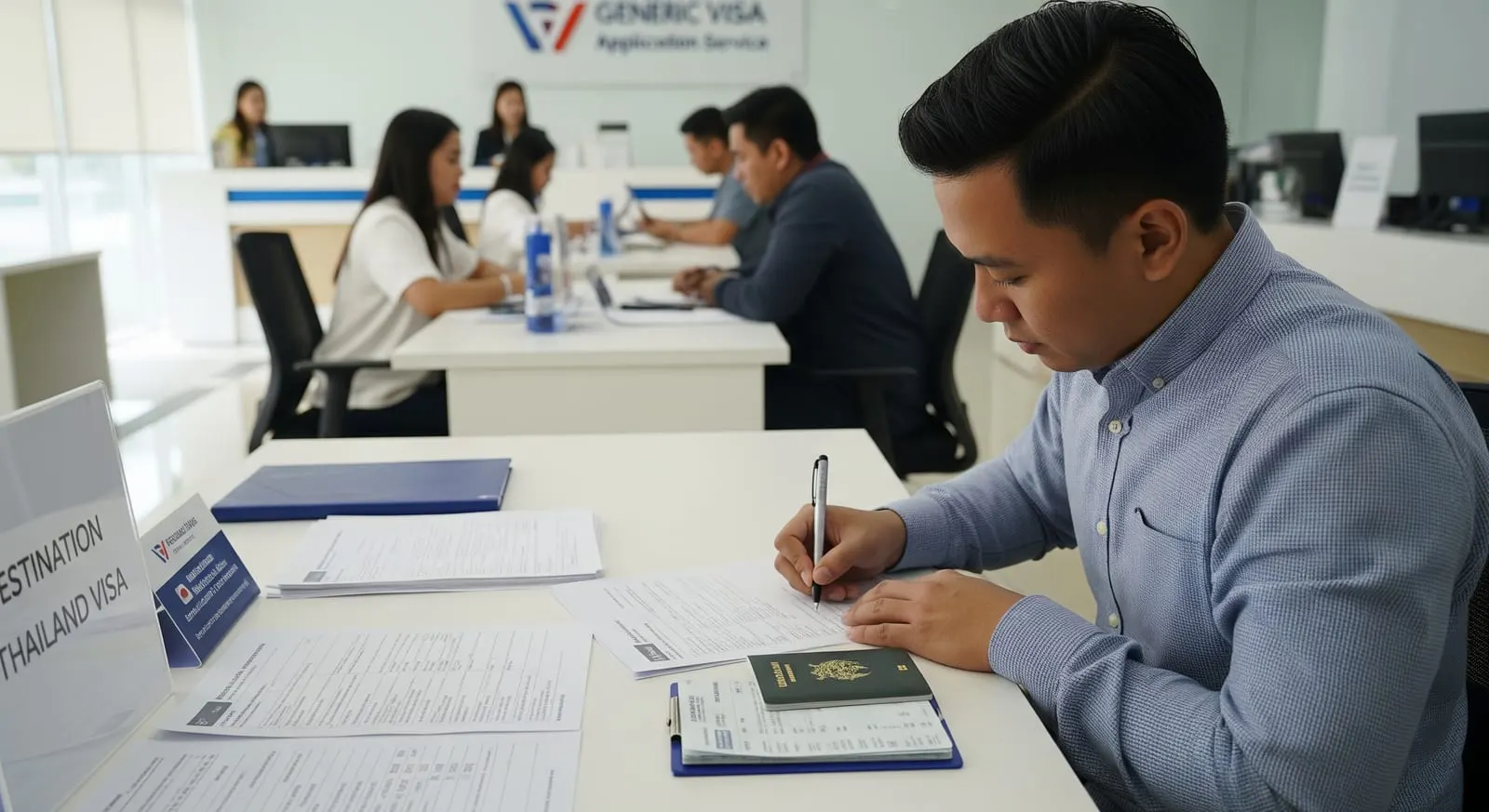
The Royal Thai Embassy in Manila serves all applicants residing in the Philippines — from Luzon to Mindanao. There is no separate consulate handling DTV applications; this single mission covers the entire country. Because the process is entirely online, you don’t travel to Makati or line up at the embassy. However, all communication and potential document requests will stem from this office, so you need to know what locally‑issued documents might catch their attention.

Filipino nationals and legal foreign residents in the Philippines can apply. If you’re an expat living in the Philippines with a valid residence permit, the embassy expects your current visa status to be clear in your application. You’ll upload Philippine bank statements, employment letters from Filipino or foreign companies, and any soft‑power activity evidence. The embassy staff are familiar with local documents, so you can submit documents in English without extra translation.

Manila — applying for the Destination Thailand Visa from Philippines

The Philippines shares the same time zone (UTC+8) with Thailand, which makes remote work seamless. You can work for a Manila‑based company or clients in Asia while enjoying Thailand’s lower cost of living. Frequent direct flights from Manila (MNL) to Bangkok (BKK) and Chiang Mai (CNX) — often under 3.5 hours — mean you can hop back for family events or business meetings. Budget carriers and full‑service airlines regularly offer deals, so commuting is realistic even on a DTV.

Filipino digital nomads already flock to Chiang Mai and Bangkok. The DTV formalizes that lifestyle, allowing up to 180 days per entry. You’ll find a strong support network of Pinoys in expat groups, making the transition easier. The embassy understands that many applicants are freelancers or remote employees, so presenting a coherent digital nomad profile is key.

Local Document Norms That Matter for Your DTV

For the mandatory proof of funds — at least 500,000 THB (around ₱820,000) — Philippine bank statements or passbooks are accepted. Most major banks (BDO, BPI, Metrobank) issue statements that clearly show six months of activity and a current balance. Filipino applicants often supplement savings with a certificate of deposit, but ensure the document is dated within a month of your application.

Employment verification can be a company ID, contract, or letter from your Filipino employer stating you work remotely. If you’re a freelancer, a service agreement and a portfolio of recent gigs help. For soft‑power activities like Muay Thai, cooking, or music, certificates from registered Philippine institutions work, but the embassy may want to see clear evidence of enrollment or past achievement — not just intent. Attestation by the DFA or notarization isn’t typically required for DTV, but keep documents professional.

Who applies through this office

  • Applicants residing in Philippines and the areas covered by this mission. See the full guide: DTV visa for Philippines .
  • The DTV is applied for online — there is no in-person lodgement at this office, and our team can prepare and submit it for you.

How to apply for the DTV from Philippines

  1. Confirm you qualify for one of the DTV categories: digital nomad/remote worker, soft‑power activity (such as Muay Thai, Thai cooking, or music), or medical treatment. Most Filipino applicants fall under the remote worker category.
  2. Prepare proof of at least 500,000 THB (approximately ₱820,000). This can be a Philippine bank statement, passbook, or a combination of savings and a fixed deposit. The balance must be sustained for at least three months, and the document should be recent.
  3. Gather your supporting evidence: employment contract, freelance portfolio, or business registration if you’re a digital nomad; enrollment in a Thai course or a workshop confirmation if you’re a soft‑power applicant. Make sure everything is in English.
  4. Our team lodges your application on the official Thai e‑Visa portal (thaievisa.go.th) for you, completing the DTV application form, selecting “Royal Thai Embassy, Manila” as the covering mission, uploading all documents and handling the visa fee.
  5. If the embassy issues a Request for Further Document (RFD), we respond promptly with exactly what they ask for. This might mean a clearer bank statement or an updated employment letter. Ignoring it would lead to rejection, so we handle it for you.
  6. Our team double-checks every detail before you hit submit. We know what the Manila mission tends to scrutinize — from the way funds are presented to the wording in your employment letter. Book our service starting from $139 and apply with confidence.

Frequently asked questions

Can I apply for the DTV in person at the Royal Thai Embassy in Manila?

No. The DTV is exclusively applied for online through the Thai e‑Visa portal. The Royal Thai Embassy in Manila does not accept physical applications for this visa, and you won’t need to visit the embassy at any stage.

How long does it take to get the DTV after I apply from the Philippines?

Processing times vary and are at the discretion of the Royal Thai Embassy in Manila. While we cannot quote exact days, typical e‑Visa reviews can take several weeks. Ensure your application is error‑free to avoid delays. We help you submit a polished application from the start.

Is Philippine peso (PHP) accepted when showing 500,000 THB?

You must show the equivalent of 500,000 THB, which is roughly ₱820,000 depending on the exchange rate. Your Philippine bank statement will display the balance in PHP. The embassy will convert it using the rate at the time of review. Keep a comfortable buffer.

Do I need to translate my Philippine documents into Thai?

No. Since English is an official language in the Philippines and widely used in official documents, all your submissions (bank statements, employment letters, certificates) can be in English. The Thai embassy in Manila does not require Thai translation for DTV applications.

Can I work while in Thailand on the DTV as a Filipino citizen?

You can work remotely for an overseas employer or clients, but you cannot take local Thai employment. Most Filipino DTV holders are digital nomads employed by companies in the Philippines or international firms. Ensure your income comes from outside Thailand.

What if the embassy asks for more documents after I apply?

You’ll receive an email from the Royal Thai Embassy in Manila with a Request for Further Document. Reply within the given timeframe and upload exactly what they specify. Our support team can help you interpret the request and prepare a solid response.

Is the DTV cheaper than a long‑stay tourist visa for Filipinos?
Over five years, the DTV can be far more cost‑effective than repeated tourist visa runs. It grants multiple entries and no need for constant extensions. Our service fee starts from $139, and we guide you through avoiding costly mistakes that could lead to rejection.

Apply for your 5-year DTV the easy way

We prepare, submit and follow up your application — apply from $139, with a 100% refund if denied (with the optional Denial Protection add-on).

Start your application

General guidance only — not legal advice. The DTV is applied for online via the Thai e-Visa portal; mission jurisdictions and requirements change over time. Confirm details on the official portal or let our team handle it for you.

Documents this office commonly asks for

Whichever office reviews your application, these are the requests applicants see most — and how to answer them: