Skip to content
Where you apply · Switzerland

Apply for the DTV at the Thai Embassy in Bern

Apply for Thailand's DTV from Switzerland: the online process, Swiss document tips, and how the Thai Embassy in Bern fits in. Your 5-year remote-work and culture visa.

Royal Thai Embassy 📍 Bern, SwitzerlandDTV applied for online

As a Swiss resident, your journey to obtaining Thailand’s new Destination Thailand Visa (DTV) starts online, not at a counter. The Royal Thai Embassy in Bern is the diplomatic mission covering all cantons of Switzerland and its residents, but there’s no need for an in-person visit. The DTV is applied for through the central Thai e-Visa portal — our team prepares and submits your application for you, so there’s no embassy queue or in-person appointment; the Bern embassy’s role is to oversee applications from its jurisdiction and potentially issue a Request for Further Document if needed. This guide walks you through the process from a Swiss perspective—covering local document readiness, lifestyle fit, and how our consultants prepare and lodge your application.

Your Local Mission: The Royal Thai Embassy in Bern
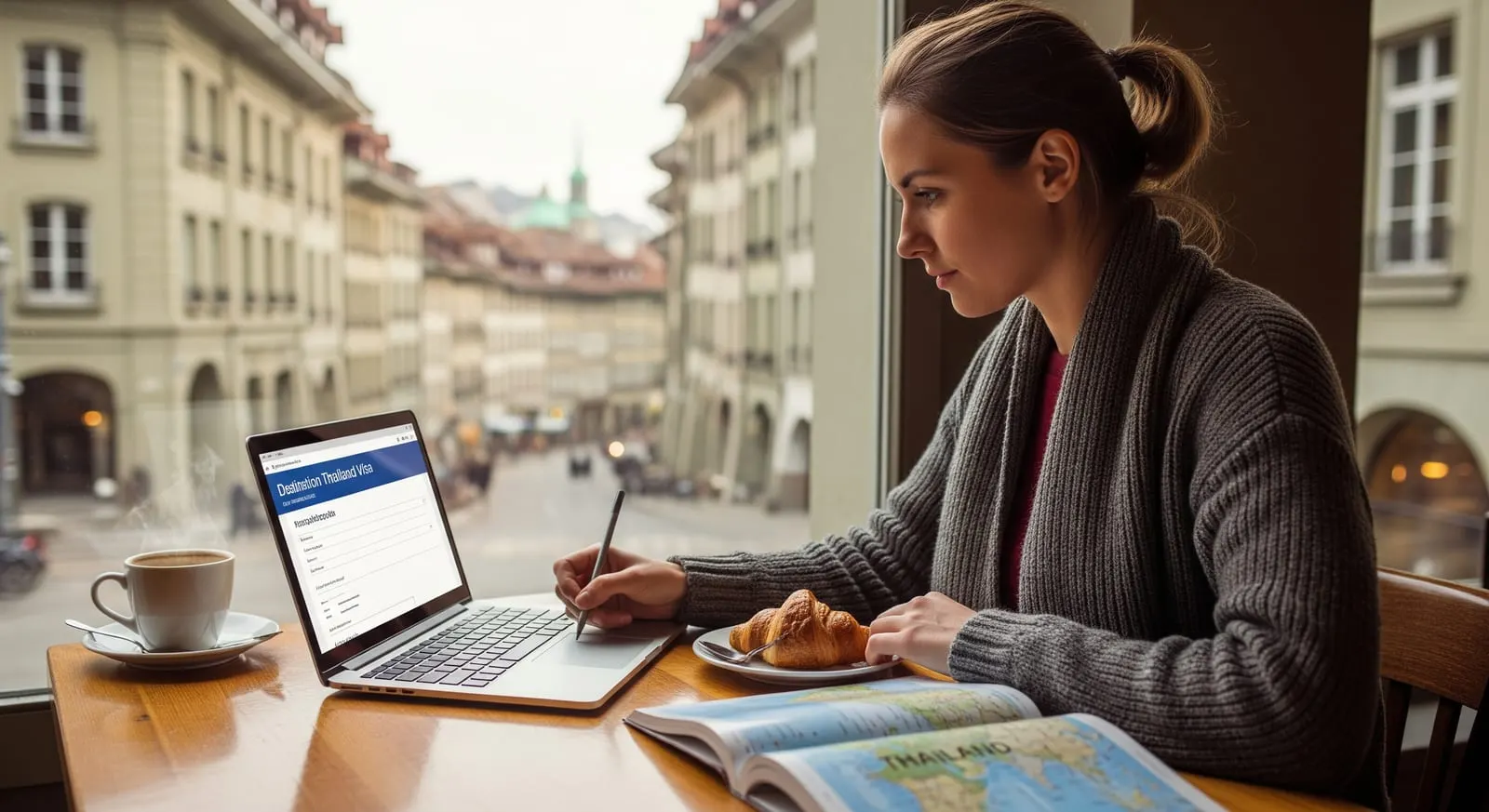
The Royal Thai Embassy in Bern is the sole Thai diplomatic mission in Switzerland, responsible for Swiss residents and also accredited to the Principality of Liechtenstein. Its consular section addresses general visa inquiries, but importantly, the DTV is not lodged or processed over the counter . Instead, the embassy acts as the competent authority that monitors applications submitted via the e‑Visa platform for people living within its consular district. If anything is unclear, the embassy may reach out electronically for additional documents—so it’s wise to prepare your paperwork with the Swiss precision they’d expect.

Knowing which mission covers you is simple: if you’re a Swiss citizen or a legal resident with a valid permit (B, C, L, etc.), the Bern embassy is your designated post. The digital-first approach means you never sit in a waiting room, but the embassy’s presence still matters—your application is effectively routed to them for oversight, so understanding local document norms helps avoid back-and-forth.

Bern — applying for the Destination Thailand Visa from Switzerland

Swiss Lifestyle & Why the DTV Fits

Switzerland’s high standard of living and strong currency make the DTV an attractive option for those looking to blend remote work with a tropical change of scenery. The time zone difference is forgiving: Switzerland is 5 or 6 hours behind Thailand depending on daylight saving, so a Swiss remote worker can enjoy mornings in Zurich and afternoons online with Asia-based clients. Direct flights from Zurich and Geneva to Bangkok (with Swiss and Thai Airways) make the journey routine, and once in Thailand, high-speed internet and co‑working spaces abound.

For Swiss freelancers, digital nomads, and part-time residents, the DTV’s flexibility hits the spot. Whether you’re a consultant wintering in Chiang Mai or an artist honing your craft in Bangkok, the visa allows you to stay for extended periods without the constant border runs that mark the tourist tread. And with the cost of living in Thailand significantly lower, the financial requirement of 500,000 THB (~$15,000) is well within reach for Swiss professionals.

Document Norms for Swiss Applicants

Swiss applicants enjoy a head start: most financial professionals and companies issue bank statements and payslips in English, and official registers like the Handelsregister are accessible online. For the DTV, you’ll need a recent bank statement (from UBS, PostFinance, Raiffeisen, etc.) showing the equivalent of 500,000 THB, roughly CHF 13,000, maintained over the last three months. Joint accounts are generally acceptable with a letter of authority, but individual accounts are cleaner.

If you’re employed, a letter from your Swiss employer confirming your remote work arrangement is standard. This doesn’t need notarization; a digitally signed PDF on company letterhead usually suffices. Freelancers can show a Handelsregister excerpt, SVA registration, or tax statements—anything that proves you’re actively running a business. Swiss notaries are known for their thoroughness, but for DTV purposes, you won’t need an apostille unless the embassy specifically requests it. Keep your documents ready in PDF under 2 MB each, and you’ll be well prepared.

Who applies through this office

  • Applicants residing in Switzerland and the areas covered by this mission. See the full guide: DTV visa for Switzerland .
  • The DTV is applied for online — there is no in-person lodgement at this office, and our team can prepare and submit it for you.

How to apply for the DTV from Switzerland

  1. Check your eligibility: The DTV is designed for remote workers, freelancers, and those pursuing soft‑power activities like Muay Thai, cooking, or medical treatment. Ensure your planned stay aligns with one of these categories. You’ll also need to meet the financial threshold—maintaining a balance of at least 500,000 THB (about $15,000) in a bank account for three consecutive months before applying.
  2. Prepare your proof of funds: Request a recent statement from your Swiss bank showing the required balance in your account(s) over the past three months. The amount can be in CHF, EUR, or other convertible currencies; the system will recognise the equivalent. If you hold multiple accounts, consolidate them into one statement or attach a simple explanation letter.
  3. Gather category-specific evidence: Remote employees should provide an employment contract and a signed letter from the HR department or manager that explicitly allows working from abroad. Swiss freelancers and business owners can use a Handelsregisterauszug, SVA membership confirmation, recent invoices, and a portfolio. If you’re joining a soft‑power activity, secure an acceptance letter from a recognised Thai institution.
  4. Scan your travel document and photo: Your Swiss passport must be valid for at least six months beyond your intended entry date. Digitise the data page clearly, and take a passport photo that meets Thai e‑Visa specifications (white background, no smile, recent).
  5. We apply online through the Thai e‑Visa portal: once your documents are ready, our team completes and submits your application on the official Thai e‑Visa portal for you, selecting “Royal Thai Embassy, Bern” as the correct mission, uploading all prepared documents in the required sections and handling the visa fee. You’ll receive confirmation once it is lodged.
  6. Monitor for a Request for Further Document (RFD): After submission, the Bern embassy reviews remotely. If they need more information—such as clarifying a source of income or requesting a different file format—they’ll send an RFD to your registered email. Respond exactly, uploading only what is asked, within the given timeframe to keep your application moving.
  7. For extra peace of mind, let our team handle your file: Before we submit on your behalf, our consultants at DTVThaiVisa.com check every document for compliance and consistency. Our service starts from $139, giving you confidence that your Swiss‑prepared application sails through first time.

Frequently asked questions

Is the DTV processed and issued by the Thai Embassy in Bern?

No. The DTV is applied for through the centralised online e‑Visa system, which handles all administrative processing. The Royal Thai Embassy in Bern covers Swiss and Liechtenstein residents but only springs into action if your application needs a follow‑up—they never accept walk‑in DTV lodgements.

Do I need to translate my Swiss documents into Thai or English?

The e‑Visa portal accepts documents in English, and most Swiss documents (bank statements, employment contracts) are already in English or easily obtainable in that language. If you hold a residence permit or SVA registration in German, French, or Italian, an unofficial translation to English is recommended only if the embassy asks; they typically understand multilingual Swiss documentation.

How do I prove the 500,000 THB requirement as a Swiss resident?

You need a bank statement from a recognised Swiss financial institution showing the equivalent amount in a freely convertible currency (e.g., CHF, EUR, USD) and that the balance has been maintained for at least three months. The sum roughly equates to CHF 13,000. An easily accessible savings or current account is cleanest, though fixed-deposit or other statements can also work as long as the balance is clearly shown.

I live in Liechtenstein. Can I still apply through Bern?

Yes. The Royal Thai Embassy in Bern is also accredited to the Principality of Liechtenstein, so residents there follow the same online process and our team selects the Bern mission on the e‑Visa portal when we submit for them. Your Liechtenstein-issued documents are treated identically to Swiss ones.

What kind of employment letter do Swiss remote workers need for the DTV?

A signed and dated letter on company letterhead from your employer confirming your role, salary, and permission to work remotely from Thailand is the standard. It doesn’t require notarisation, but Swiss HR departments typically include such language readily. If you’re a freelancer, substitute this with a Handelsregister excerpt and recent client contracts.

Can I apply for the DTV while I’m already in Thailand on a tourist visa?

No, the DTV must be applied for from outside Thailand. As a Swiss resident, you can submit your application while physically present in Switzerland (or anywhere else outside Thailand) and then travel to Thailand once your e‑Visa is approved. If you’re already in Thailand, you’ll need to exit and apply from abroad.

How can DTVThaiVisa.com help me avoid a document request?
We specialise in the DTV and know exactly what the e‑Visa system and the Bern embassy look for. From $139, our Swiss‑aware team reviews your entire package—making sure your bank letter, remote‑work proof, and category evidence are clear and compliant. We also guide you through any RFD that may arise, reducing the risk of mistakes that cause delays.

Apply for your 5-year DTV the easy way

We prepare, submit and follow up your application — apply from $139, with a 100% refund if denied (with the optional Denial Protection add-on).

Start your application

General guidance only — not legal advice. The DTV is applied for online via the Thai e-Visa portal; mission jurisdictions and requirements change over time. Confirm details on the official portal or let our team handle it for you.

Documents this office commonly asks for

Whichever office reviews your application, these are the requests applicants see most — and how to answer them: