Skip to content
Where you apply · India

Apply for the DTV at the Thai Consulate-General in Mumbai

Apply for Thailand’s DTV from Mumbai, India. See how the Royal Thai Consulate-General fits into your online Destination Thailand Visa application. Expert help from $139.

Royal Thai Consulate-General 📍 Mumbai, IndiaDTV applied for online

Applying for the Destination Thailand Visa (DTV) from India? The Royal Thai Consulate-General in Mumbai is the diplomatic mission covering your region, but there’s no need to visit in person. The entire DTV application is lodged online through Thailand’s official e-Visa portal. This guide explains how the Mumbai consulate fits into the process, what to prepare as an Indian applicant, and how to submit a flawless application. With direct flights from Mumbai and a time zone difference of just 1.5 hours, Thailand is an ideal destination for Indian digital nomads, freelancers, and soft-power enthusiasts seeking a 5-year multi-entry visa.

Jurisdiction of the Royal Thai Consulate-General, Mumbai
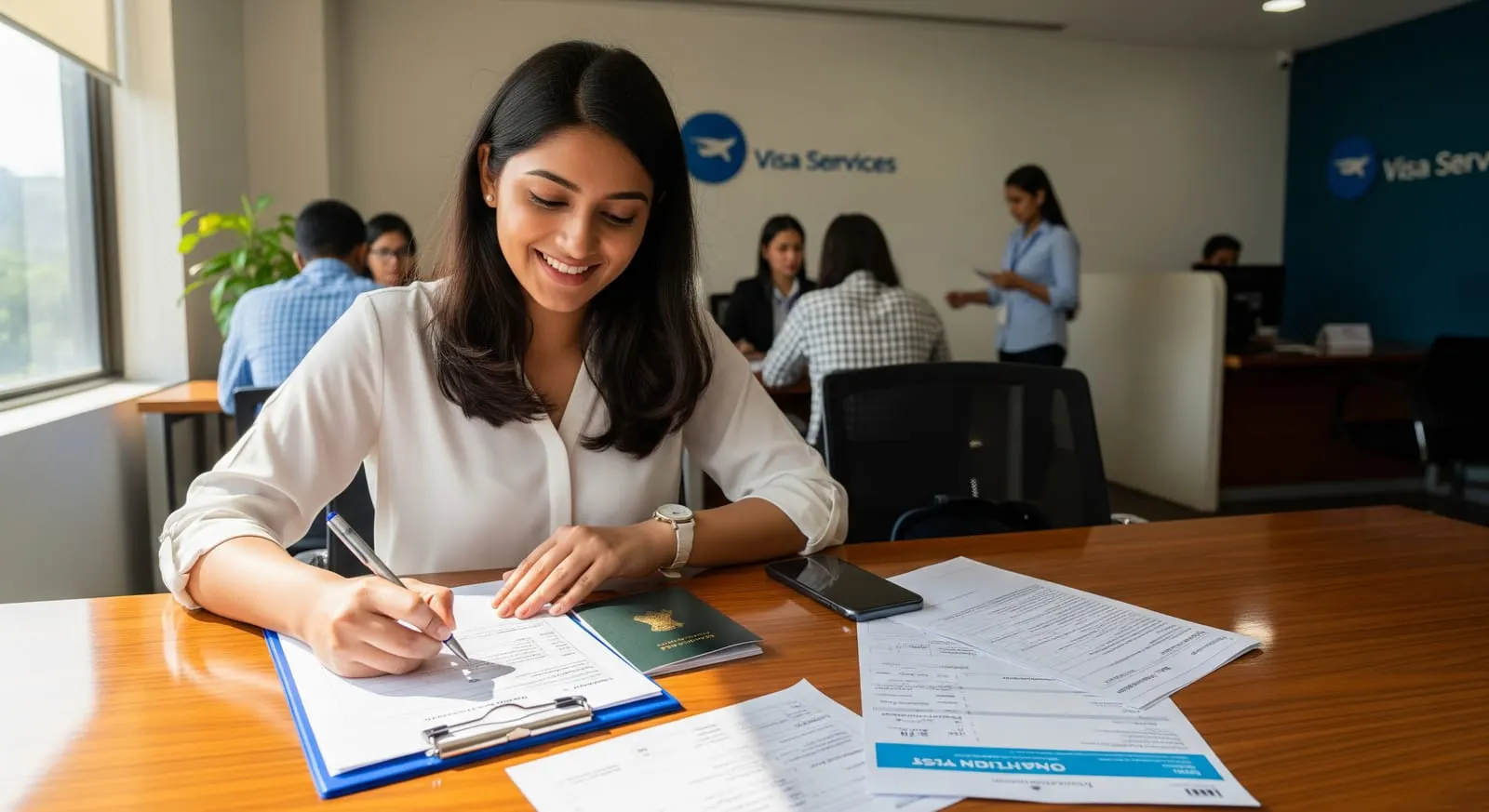
The Royal Thai Consulate-General in Mumbai covers applicants residing in western and central India. This includes the states of Maharashtra, Gujarat, Goa, Madhya Pradesh, and the union territories of Dadra and Nagar Haveli, Daman and Diu. If you hold a passport from India and live anywhere in this area, you should select this mission on the e-Visa portal. The consulate’s role is purely administrative: all DTV applications are processed online, and the consulate may request additional documents electronically.

Mumbai — applying for the Destination Thailand Visa from India

Mumbai to Thailand: Connectivity and Lifestyle

Mumbai’s Chhatrapati Shivaji Maharaj International Airport offers multiple daily direct flights to Bangkok, Phuket, and other Thai cities. Airlines like Thai Airways, IndiGo, and SpiceJet make the journey in about 4–5 hours. The time difference is just 1 hour and 30 minutes ahead of India, so you can sync your workday comfortably with clients back home. For Indian digital nomads, Thailand’s lower cost of living – affordable street food, co-working spaces in Chiang Mai, and budget accommodation – makes it a top choice. The DTV lets you stay for up to 180 days per entry, perfect for long-term stays.

Indian Document Norms for the DTV

When applying from India, your financial proof can be a bank statement from any scheduled Indian bank (like SBI, HDFC, or ICICI) showing a balance equivalent to at least 500,000 THB (~$15,000). Many Indian banks provide stamped balance certificates, which are readily accepted. For employment proof, a letter from your Indian employer confirming your remote work status, recent payslips, and employment contracts work well. Freelancers can use client contracts, invoices, and Income Tax Returns. All documents should be in English or Thai; scanned copies are usually sufficient, but ensure they are clearly legible.

Who applies through this office

  • Applicants residing in India and the areas covered by this mission. See the full guide: DTV visa for India .
  • The DTV is applied for online — there is no in-person lodgement at this office, and our team can prepare and submit it for you.

How to apply for the DTV from India

  1. 1. Confirm you qualify for the DTV: You must either be a remote worker, freelancer, or digital nomad employed by a company outside Thailand, or planning a soft-power activity (e.g., Muay Thai training, Thai cooking course, medical treatment). Review the official categories to ensure you meet the criteria.
  2. 2. Prepare proof of funds: Obtain a bank statement or fixed deposit certificate showing a balance of at least 500,000 THB (~$15,000). Indian banks like SBI, HDFC, and ICICI can issue this in English. If using a joint account, include a letter of authorization from the other holder.
  3. 3. Gather your category-specific evidence: For remote workers, get a letter on company letterhead confirming your employment and remote arrangement, plus recent payslips. For freelancers, compile client contracts, invoices, and your latest ITR. For soft-power activities, secure a confirmed enrollment letter from the Thai institution.
  4. 4. Send us your documents and our team completes and submits the online application on the Thai e-Visa portal for you, selecting the Royal Thai Consulate-General, Mumbai as your mission and uploading all documents as clear PDFs or JPEGs. Double-check that your passport is valid for at least 6 months.
  5. 5. Respond to document requests: If the consulate sends a “Request for Further Document” via email, answer precisely and promptly. Do not resubmit your entire application; only provide what they ask for.
  6. 6. Let DTVThaiVisa.com review your application: Our experts know exactly what the Mumbai consulate looks for. For a service fee starting from $139, we’ll check every detail to minimise the risk of rejection.
  7. 7. Receive your DTV e-Visa: Once approved, you’ll get a digital visa. Print it out and carry it with your passport when you travel to Thailand.

Frequently asked questions

Do I need to visit the Royal Thai Consulate-General in Mumbai to submit my DTV application?

No. The DTV is lodged entirely online via Thailand’s e-Visa platform. The Mumbai consulate is the diplomatic mission that covers your geographical region, but you do not need to go there in person. All communication, including any document requests, will be handled electronically.

Which Indian states fall under the Mumbai consulate’s jurisdiction for the DTV?

The Royal Thai Consulate-General in Mumbai covers applicants residing in western and central India, including Maharashtra, Gujarat, Goa, Madhya Pradesh, and the union territories of Dadra and Nagar Haveli, Daman and Diu. If your address falls in any of these regions, select this mission on the e-Visa portal.

Is a bank statement from an Indian nationalised bank accepted as financial proof?

Yes. A statement or balance certificate from any scheduled Indian bank – such as State Bank of India, HDFC, ICICI, Bank of Baroda, etc. – is acceptable, as long as it clearly shows a deposit of at least 500,000 THB (~$15,000) in your name (or a joint account with a letter of consent). Ensure the document is in English and clearly legible.

How can I prove my remote work status as an Indian employee?

You can submit a letter from your employer on official letterhead stating your designation, date of joining, and that you are permitted to work remotely. Supporting documents like recent salary slips, your appointment letter, or a remote work agreement also help. Freelancers may use contracts, invoices, and Income Tax Returns.

What are the flight options from Mumbai to Thailand?

Mumbai’s international airport offers multiple daily direct flights to Bangkok (BKK and DMK), Phuket, and sometimes Chiang Mai. Airlines include Thai Airways, IndiGo, SpiceJet, and Vistara. Flight time is approximately 4–5 hours. The time in Thailand is just 1 hour 30 minutes ahead of India, making it easy to stay connected with Indian colleagues or clients.

Can I extend my stay in Thailand beyond 180 days with the DTV?

Each entry on the DTV allows a stay of up to 180 days. You can extend once per entry for an additional 180 days at the local immigration office in Thailand (subject to a fee, which is set by Thai authorities). After that, you must leave and re-enter to start a new 180-day period. The visa itself is valid for 5 years.

Do I need to notarize my Indian documents for the DTV?
Generally, notarization is not required for documents issued in English, such as bank statements or employment letters from Indian entities. However, if your documents are in a language other than English or Thai, you may need certified translations. The consulate may request additional verification, so it’s best to keep original documents handy.

Apply for your 5-year DTV the easy way

We prepare, submit and follow up your application — apply from $139, with a 100% refund if denied (with the optional Denial Protection add-on).

Start your application

General guidance only — not legal advice. The DTV is applied for online via the Thai e-Visa portal; mission jurisdictions and requirements change over time. Confirm details on the official portal or let our team handle it for you.

Documents this office commonly asks for

Applicants through this office most often see these requests. Here is exactly how to answer each one: