Skip to content
Europe

DTV Visa for Swiss Citizens
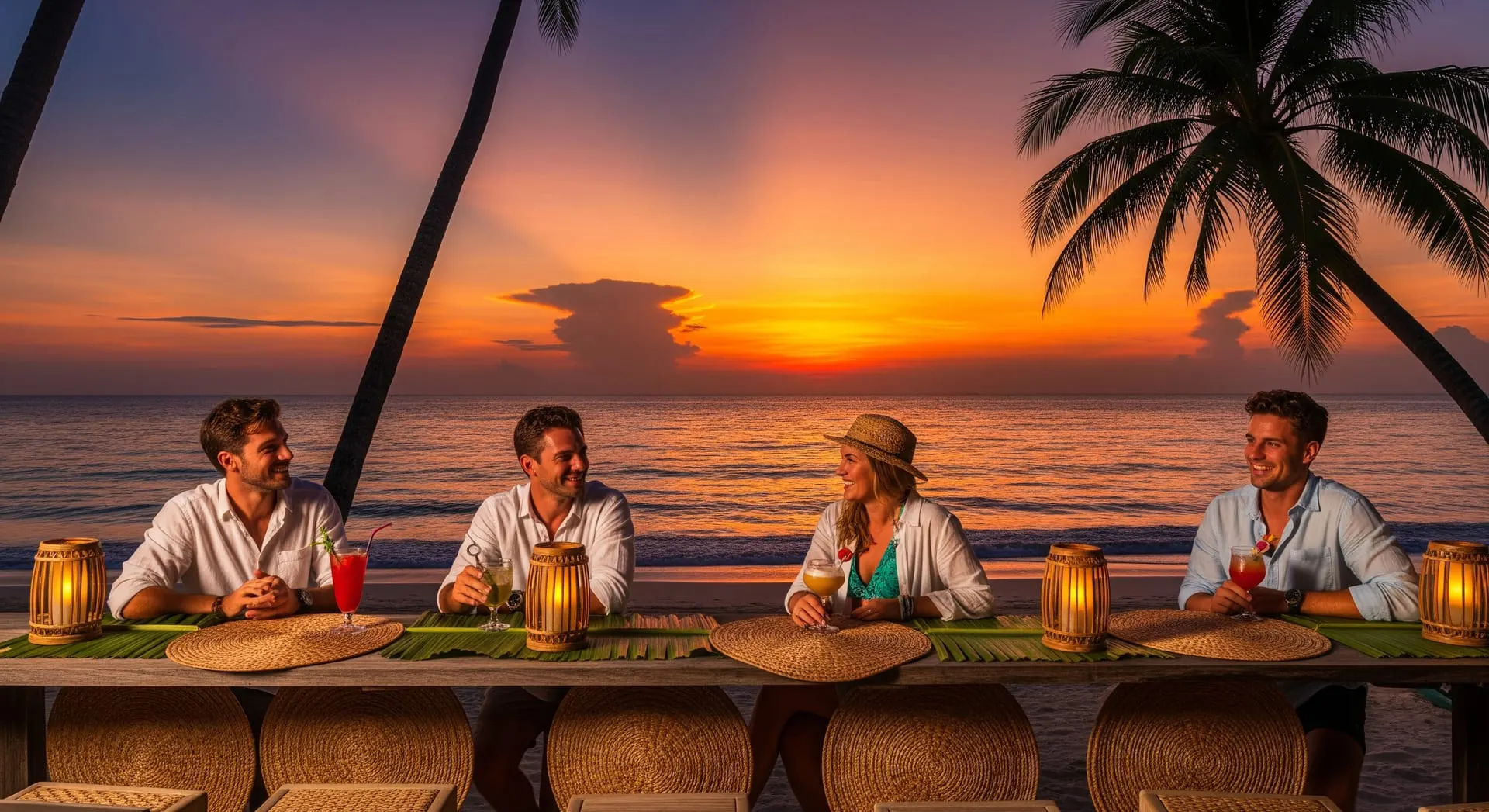
Imagine swapping Switzerland's soaring living costs and long Alpine winters for a life where your franc stretches several times further, without sacrificing quality. The Destination Thailand Visa (DTV) gives Swiss citizens a five-year, multiple-entry route to long-stay living in the Land of Smiles, with stays of up to 180 days per entry. Whether you are a Zurich-based digital nomad, a retiree from Geneva, or an entrepreneur from Lugano, Thailand pairs warm weather and a famously low cost of living with fast internet and a long-established Swiss community. We prepare and submit your entire application from outside Thailand, so the paperwork never gets in the way of the move.

Every Swiss citizen is eligible to apply

5

Years validity

180

Days per entry

500k

THB proof of funds

$139

Service fee from

100%

Refund if denied*

Why Swiss citizens choose Thailand

Living in Thailand from Switzerland

Section 01

Why Swiss citizens are choosing Thailand

Switzerland is consistently ranked among the most expensive countries on earth, and anyone who has paid Zurich or Geneva rents knows the squeeze first-hand. Thailand flips that equation. The same income that covers a modest one-bedroom flat in Switzerland can fund a modern condominium with a pool and gym in Bangkok, daily meals out, and household help, with money left over. The tropical climate, the beaches of the Andaman and the Gulf, and a culture built around hospitality make the lifestyle upgrade feel effortless.

The DTV is built for this kind of long-term move. It is a five-year, multiple-entry visa that lets you stay up to 180 days per entry, extendable once on the ground for a further 180 days. You are not tied to one job or sponsor, which suits remote employees, freelancers, and self-employed founders who bill clients back in Switzerland or across Europe while living in Thailand.

DTV at a glance for Swiss applicants

Five-year multiple-entry visa; up to 180 days per entry, extendable once for another 180 days. You must show proof of 500,000 THB (~$15,000) in personal funds. You apply from outside Thailand, and we prepare and submit the full application for you. Service starts from $139, with a 100% refund if your application is denied when you add the optional Denial Protection.

Section 02

Cost of living: Switzerland vs Thailand

This is where the move pays for itself. In Zurich or Geneva, a central one-bedroom apartment routinely runs CHF 2,000 to CHF 3,000 a month; in Bangkok's Sukhumvit or Sathorn districts, a comparable modern condo with a pool typically costs CHF 600 to CHF 1,000, and far less in Chiang Mai. A restaurant lunch that might set you back CHF 25 to CHF 35 at home is often CHF 3 to CHF 6 in Thailand, and a plate of street food can be under CHF 2. Even imported goods, private health cover, and domestic help land well below Swiss benchmarks.

  • Rent: a city-centre one-bed condo in Bangkok averages roughly 20,000 to 35,000 THB (about CHF 600 to CHF 1,000); Chiang Mai is often 30 to 40 percent cheaper.
  • Eating out: Thai street food from 50 to 80 THB a dish; a mid-range restaurant meal for two around 600 to 1,000 THB.
  • Transport: Bangkok BTS/MRT fares from 17 to 62 THB; metered taxis start near 35 THB.
  • Coffee and groceries: a flat white at a specialty cafe is roughly 90 to 130 THB, a fraction of a Swiss cafe bill.
  • Health cover: comprehensive private insurance and treatment cost far less than equivalent care in Switzerland.

Budgeting in francs

Many Swiss residents find a comfortable mid-range lifestyle in Thailand for CHF 1,500 to CHF 2,500 a month, including a quality condo, eating out regularly, transport, and private health cover. That is often less than rent alone in a Swiss city. Keep an eye on the CHF/THB rate, as the franc's strength directly improves your day-to-day purchasing power.

Section 03

Getting to Thailand from Switzerland

Switzerland is well connected to Bangkok. SWISS operates direct flights from Zurich (ZRH) to Bangkok Suvarnabhumi (BKK), taking roughly 10.5 to 11 hours; Thai Airways has historically served the same route. From Geneva (GVA), Basel (BSL), or Bern, a quick hop to Zurich or a one-stop connection via a hub such as Frankfurt, Munich, Doha, Dubai, or Istanbul gets you to Bangkok comfortably in a single travel day. Total journey times on one-stop routings are typically 13 to 16 hours depending on the layover.

Once you land, Thailand's domestic network makes it cheap and easy to reach Chiang Mai, Phuket, Krabi, or Koh Samui, so you can scout several bases before committing to one.

Managing the time difference

Thailand runs on UTC+7, so it is 5 hours ahead of Switzerland in summer (CEST, UTC+2) and 6 hours ahead in winter (CET, UTC+1). This works in your favour for remote work: start your day early, overlap with Swiss and European colleagues through the morning, and keep your afternoons free for temples, markets, or the beach. Many Swiss remote workers wrap up by mid-afternoon local time.

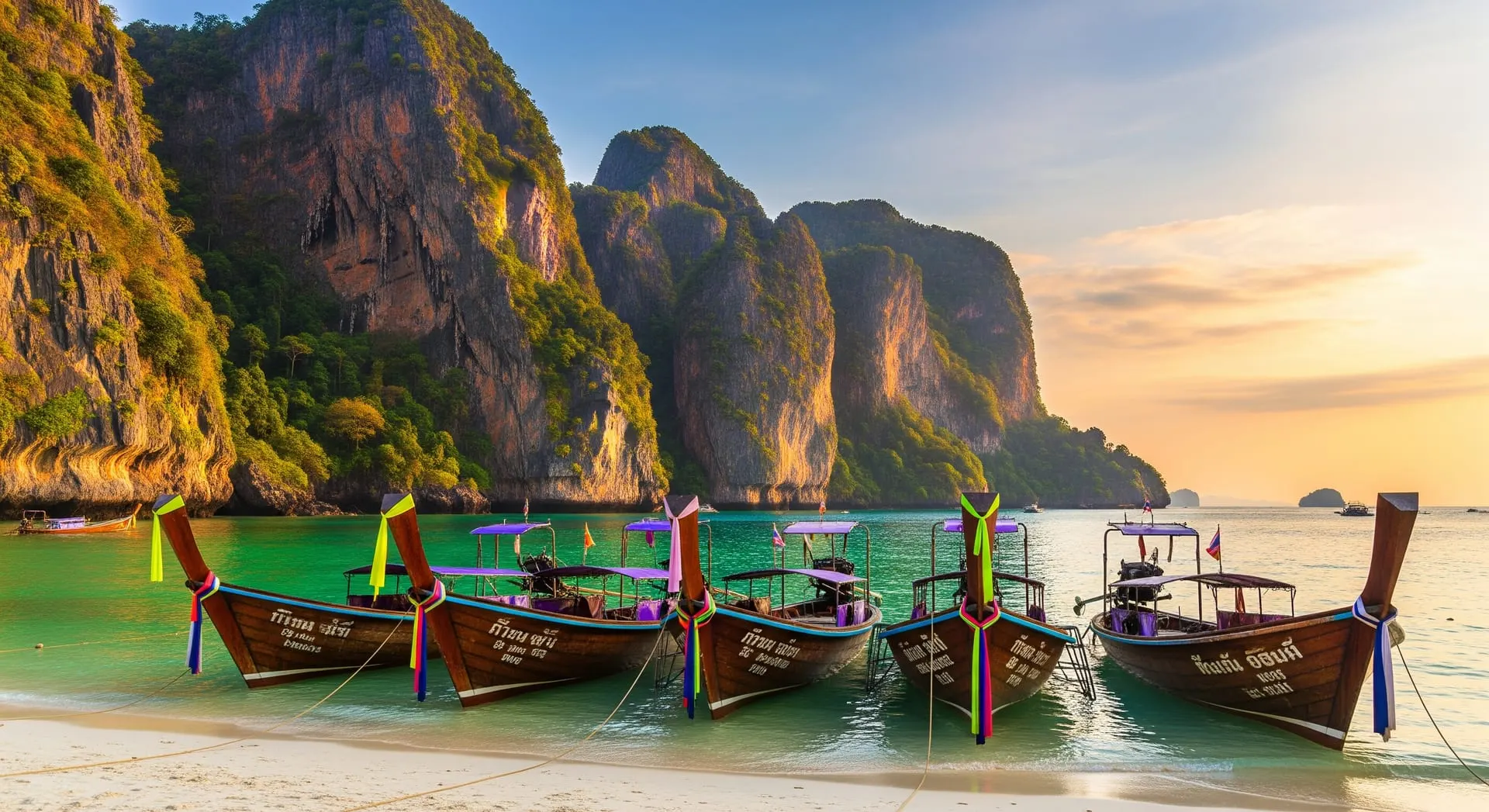
Daily life in Thailand — where Swiss citizens settle on the DTV
Life in Thailand — your home base on the 5-year DTV
Section 04

Where Swiss expats settle

  • Bangkok: the cosmopolitan capital with world-class private hospitals such as Bumrungrad and Samitivej, an international dining scene, and direct flights to Zurich.
  • Chiang Mai: a relaxed northern city with the lowest cost of living of the major hubs, a huge digital nomad community, and cooler mountain air.
  • Phuket: Andaman island life with strong beaches, a long-standing Swiss and European presence, marinas, and wellness retreats.
  • Hua Hin: a calm seaside town within easy reach of Bangkok, popular with retirees who want quiet and good golf.
  • Koh Samui: a Gulf island favourite for those wanting beach living with a steady expat scene.

Bangkok suits those who want big-city amenities and the best hospitals; Chiang Mai appeals to remote workers and anyone watching their budget; Phuket and Samui win on beaches and an outdoor lifestyle. Because the DTV allows multiple entries over five years, plenty of Swiss expats split their time, spending the cooler months up north and the rest by the coast.

Section 05

Money and banking

The Thai baht (THB) is the local currency, and Thailand remains largely cash-friendly at street level even as PromptPay and card payments grow. ATMs are everywhere, though Thai banks charge a withdrawal fee of around 220 THB per foreign-card transaction, so larger, less frequent withdrawals or a multi-currency travel card (such as Wise or Revolut) usually work out cheaper. Your Swiss bank and cards continue to work for online life, and the strong franc generally gives you a healthy exchange rate.

For the DTV itself, the financial requirement is straightforward: proof of 500,000 THB (~$15,000) in personal funds, which can be held in your Swiss account in CHF at the equivalent value. We advise you on exactly how to present these statements when we prepare your file.

Everyday spending tip

Carry some cash for markets, street food, and taxis, but use PromptPay QR payments and cards in malls, supermarkets, and restaurants. To dodge repeated 220 THB ATM fees, withdraw larger amounts at once or pair a Thai account (once settled) with a low-fee multi-currency card from home.

Section 06

Documents and translation

Switzerland's official languages are German, French, Italian, and Romansh rather than English, so your bank statements and supporting documents may need a certified English or Thai translation to be accepted smoothly. This is routine, and we tell you precisely which documents to prepare and translate as part of your application package, so nothing is rejected for a formatting or language technicality.

The core of the DTV process is simple: you stay outside Thailand while we prepare and submit everything on your behalf. You gather your funds proof and identity documents, we handle the forms and the submission, and you keep your focus on planning the move rather than on bureaucracy.

  • Valid Swiss passport with adequate validity remaining.
  • Proof of 500,000 THB (~$15,000) in personal funds, in CHF equivalent if held in a Swiss account.
  • Supporting documents (such as bank statements) with certified English or Thai translation where they are in German, French, or Italian.
  • Recent photo and the standard application details, which we collect and complete for you.
Section 07

Daily life and community

Daily life in Thailand blends comfort with adventure. Private healthcare is a genuine highlight, with English-speaking doctors and modern facilities at a fraction of Swiss prices. Internet is fast and widely available, co-working spaces are plentiful in Bangkok and Chiang Mai, and the food scene runs from legendary street stalls to Michelin-listed restaurants. Add temples, islands, mountains, and night markets, and weekends never get dull.

The Swiss community is well established, with thousands of Swiss nationals living across the kingdom. Groups such as the Swiss Society Bangkok host regular events, and you will find Swiss-run restaurants, clubs, and business networks in Bangkok, Phuket, and Chiang Mai. It is easy to keep a touch of home while living somewhere that feels like a permanent holiday.

Switzerland — your starting point before relocating to ThailandSwitzerland
From Switzerland to Thailand

Make the move from Switzerland

Trade Switzerland for up to five years in Thailand on the DTV. We prepare and submit your entire application from wherever you are — proof of funds, category evidence and passport — so you can focus on the move, not the paperwork.

Check eligibility
Step by step

How Swiss citizens apply for the DTV

1

Check you qualify

Almost every nationality can apply. Take our free 60-second eligibility checker to confirm your route — remote work, soft power, medical or family.

2

We prepare everything

We assemble and review your documents: proof of 500,000 THB (~$15,000), your category evidence and passport — so nothing gets rejected.

3

We submit for you

You apply from outside Thailand. We file at a Thai embassy or consulate (such as Hanoi, Ho Chi Minh, Jakarta, Vientiane or London) within one business day.

4

Get approved & move

On approval you get the 5-year, multiple-entry DTV — up to 180 days per stay, extendable once. Then make Thailand home.

Questions

DTV FAQ for Swiss citizens

How long can Swiss citizens stay in Thailand with the DTV?

The DTV is a five-year, multiple-entry visa. Each entry allows a stay of up to 180 days, which you can extend once for another 180 days. Over the five years you can come and go as often as you like, which is ideal for splitting time between Thailand and Switzerland.

Can I work remotely for a Swiss company while in Thailand?

Yes. The DTV is designed for digital nomads, remote employees, and freelancers whose income comes from outside Thailand. You can work from your laptop while living in Thailand, and the 5 to 6 hour time difference lets you overlap with Swiss and European business hours in the morning.

What are the financial requirements for Swiss applicants?

You need to show proof of 500,000 THB (~$15,000) in personal funds. This can be held in your Swiss account in Swiss francs at the equivalent value. We guide you on exactly how to present your statements when we prepare your application.

Do I have to apply from Switzerland?

No. The DTV application must be submitted from outside Thailand, but not necessarily from Switzerland. We prepare and submit everything on your behalf, so you can apply from home or from anywhere else you have legal status.

Do my Swiss documents need to be translated?

Likely yes. Because Switzerland's official languages are German, French, Italian, and Romansh rather than English, supporting documents such as bank statements will usually need a certified English or Thai translation to be accepted. We tell you exactly what to prepare so nothing is rejected on a technicality.

How much does the DTV service cost?

Our service starts from $139. We prepare and submit your full application from outside Thailand, and with the optional Denial Protection add-on you get a 100% refund if your application is denied.

How much money do I need to live comfortably in Thailand?

Many Swiss residents live comfortably on CHF 1,500 to CHF 2,500 a month, covering a quality condo, regular dining out, transport, and private health cover. That is often less than rent alone in Zurich or Geneva, and Chiang Mai can be cheaper still.

How do I get from Switzerland to Thailand?

SWISS flies direct from Zurich to Bangkok in around 10.5 to 11 hours. From Geneva, Basel, or Bern, a connection via Zurich or a European or Gulf hub (such as Frankfurt, Doha, or Dubai) typically gets you to Bangkok in 13 to 16 hours total.

Is there a Swiss community in Thailand?

Yes. There is a well-established Swiss expat network, especially in Bangkok, Phuket, and Chiang Mai. The Swiss Society Bangkok organises events, and you will find Swiss-run restaurants, clubs, and business networks that make settling in easier.

Can I bring my family on the DTV?

Yes. Eligible dependents can be included so the family relocates together. We will advise on the documents needed for spouses and children as part of preparing your application.

Where you apply

The Thai mission for Switzerland

You submit the DTV online via the Thai e-Visa portal — but the office below covers applicants in Switzerland and may review your file.

Ready to move to Thailand from Switzerland?

Check your eligibility in under a minute, or let our team prepare and submit everything — with a 100% refund if your application is denied (with the optional paid Denial Protection add-on).