
Skip to content
Europe

DTV Visa for Portuguese Citizens
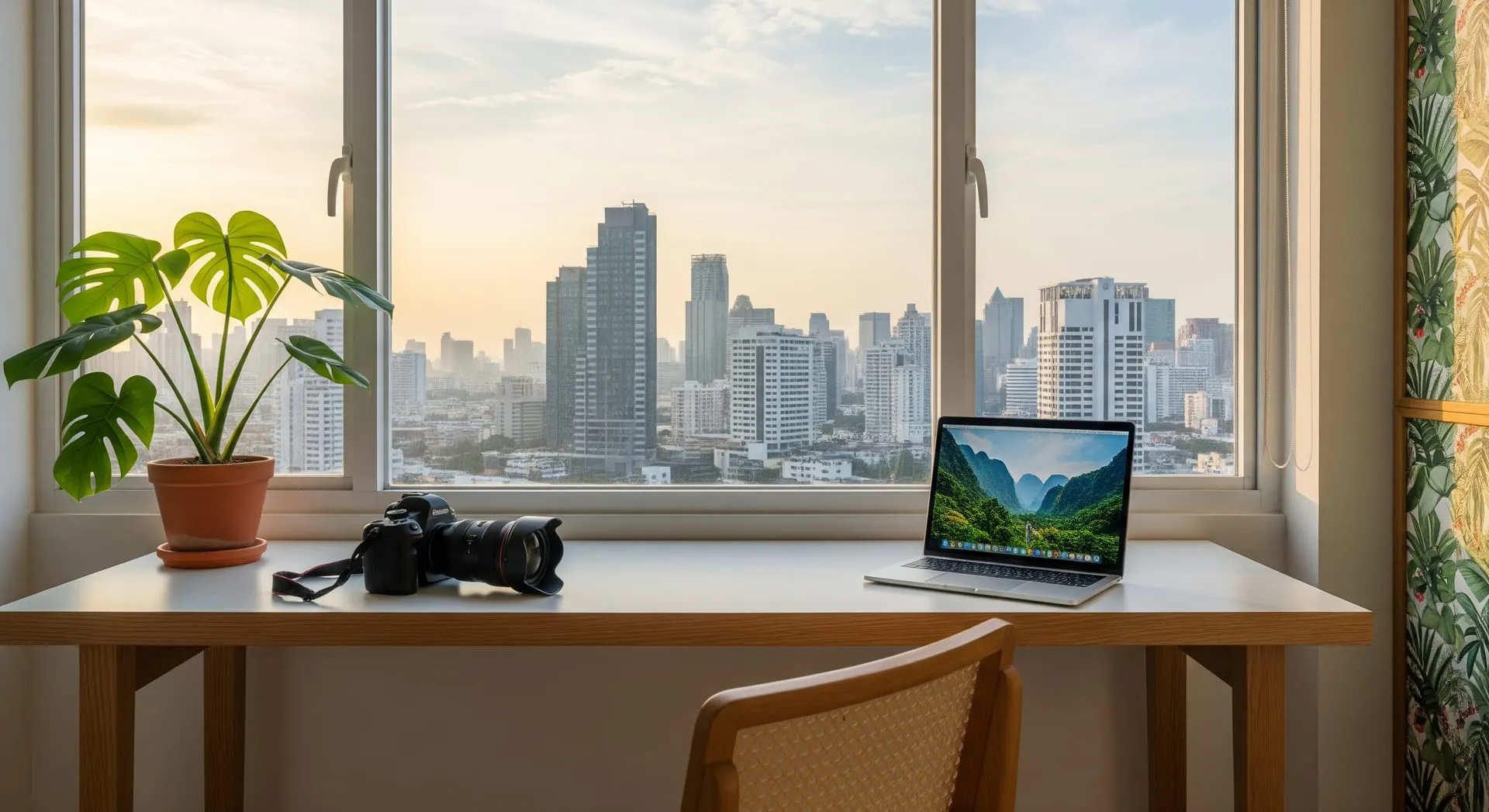
Imagine swapping the cobbled streets of Lisbon for the golden beaches of Phuket, or trading Porto's Douro Valley for the misty mountains of Chiang Mai. For a growing number of Portuguese citizens , the Destination Thailand Visa (DTV) is the key to a flexible, affordable, sun-soaked life in the Land of Smiles. Whether you are a remote worker, freelancer, or simply looking for a long-term tropical base, Thailand offers a vibrant alternative with a markedly lower cost of living and a welcoming international community. The DTV is a 5-year multiple-entry visa that lets you stay up to 180 days per entry (extendable once for a further 180 days), and our service handles the entire application from start to finish.

Every Portuguese citizen is eligible to apply

5

Years validity

180

Days per entry

500k

THB proof of funds

$139

Service fee from

100%

Refund if denied*

Why Portuguese citizens choose Thailand

Living in Thailand from Portugal

Section 01

Why Portuguese Citizens Are Moving to Thailand

Portugal's mild climate and relaxed lifestyle are genuinely enviable, but Thailand takes the allure a step further. Portuguese expats are drawn by year-round warmth, affordable comfort, and a digital-nomad scene that rivals anywhere in the world. The catch back home is cost: rents in Lisbon and Porto have surged faster than salaries over the past decade, squeezing freelancers and remote workers. Thailand offers an escape valve. From tropical islands to dynamic cities, it serves up an exotic, safe, and culturally rich environment where your euros stretch two to three times further. With the DTV, you are not tied to costly 90-day visa runs or short tourist stamps; you get a stable five-year base from which to build a life, run an online business, or simply slow down and enjoy the tropics.

The DTV at a Glance

Validity: 5-year multiple-entry visa Stay: up to 180 days per entry, extendable once (+180 days) Financial proof: 500,000 THB (~$15,000) in personal funds Where you apply: from outside Thailand — we prepare and submit everything for you Service: from $139, with a 100% refund if denied (optional Denial Protection add-on)

Section 02

Cost of Living: Portugal vs Thailand

The single biggest reason Portuguese expats make the move is value for money. While Portugal remains one of Western Europe's more affordable countries, day-to-day costs in Lisbon and Porto now rival pricier capitals, and rental scarcity drives prices ever higher. In Thailand, the same monthly budget buys a far more comfortable lifestyle: a modern condo with a pool and gym, frequent restaurant meals, and regular weekend trips. A solo remote worker can live well in Bangkok on roughly €800–1,000 a month, and even more cheaply in Chiang Mai, where €700 is comfortable.

Typical Monthly Costs: Lisbon vs Bangkok (in EUR)

Rent, 1-bed city centre: Lisbon ~€1,250 vs Bangkok ~€500 Meal at a casual restaurant: Lisbon ~€12 vs Bangkok ~€2.50 Coworking hot desk: Lisbon ~€180 vs Bangkok ~€90 Monthly transport pass: Lisbon ~€40 vs Bangkok ~€30 Utilities + fast internet: Lisbon ~€130 vs Bangkok ~€65 Domestic beer (0.5L): Lisbon ~€2 vs Bangkok ~€1.80

Section 03

Getting to Thailand from Portugal

There are no direct flights between Portugal and Thailand, so reaching Bangkok means one connection. From Lisbon (LIS) or Porto (OPO) , the most convenient one-stop routes run through Gulf and Turkish hubs: Qatar Airways via Doha, Emirates via Dubai, and Turkish Airlines via Istanbul. Total journey time typically falls between 16 and 20 hours , depending on the layover. Once you land at Bangkok's Suvarnabhumi (BKK) or Don Mueang (DMK), low-cost domestic carriers reach Chiang Mai, Phuket, or Koh Samui in under two hours. The time-zone gap is easy to live with: mainland Portugal runs on WET (UTC+0) in winter and WEST (UTC+1) in summer, while Thailand stays on ICT (UTC+7) all year — a 6- or 7-hour difference . A later start in Thailand gives you a clean afternoon overlap with Portuguese business hours.

Jet Lag Tip for Portuguese Travellers

Fly the eastbound leg overnight and aim to arrive in Bangkok in the late morning; the tropical heat and bright daylight help reset your body clock fast. Choosing a Gulf hub keeps the longer second leg manageable and lets you stretch your legs mid-journey.

Daily life in Thailand — where Portuguese citizens settle on the DTV
Life in Thailand — your home base on the 5-year DTV
Section 04

Where to Settle in Thailand

  • Bangkok — the capital and beating heart of the country, with endless coworking spaces, international dining, fast transit (BTS/MRT), and the best healthcare and connectivity in Thailand.
  • Chiang Mai — Northern Thailand's digital-nomad capital, beloved for its very low cost of living, mountain temples, café culture, and laid-back pace.
  • Phuket — beaches, snorkelling, and a fast-growing remote-worker scene; the natural choice if you miss the coastal living of Portugal's Algarve.
  • Koh Samui and Koh Phangan — tropical island life with a slower rhythm, popular with freelancers, divers, and wellness fans.
  • Pattaya — about two hours from Bangkok, with strong infrastructure, a long beachfront, and a well-established expat network.
Section 05

Money & Banking

Moving euros from a Portuguese bank to Thailand is simple thanks to modern fintech. Most expats use Wise or Revolut for low-cost transfers at the real exchange rate, far cheaper than a traditional SWIFT wire from a high-street bank. Once you are settled, many banks will let you open a local Thai account, which removes foreign-transaction fees and makes paying rent and bills easier. Cash is still essential for street food, markets, and rural areas, but contactless cards and Thailand's PromptPay QR system are accepted almost everywhere in the cities. One thing to plan for: Thai ATMs charge a flat fee of around 220 THB per withdrawal on foreign cards, so it pays to withdraw larger amounts less often, or rely on a multi-currency card.

Banking Tip

Keep your Portuguese bank account active and reachable while abroad — you will use it to demonstrate the 500,000 THB (~$15,000) in personal funds for your DTV, and for ongoing transfers. A Wise or Revolut card paired with a local Thai account is the combination most expats settle on.

Section 06

Documents & Translation

Because Portugal's official language is Portuguese , supporting documents for your DTV — such as bank statements, an employment or freelance contract, or proof of funds — that are not already in English will likely need a certified English (or Thai) translation . This is a routine requirement and nothing to worry about; it simply ensures your file can be read and verified without ambiguity. The advantage of using our service is that you do not navigate any of this alone: you apply from outside Thailand, and we prepare and submit the complete, correctly assembled application on your behalf, flagging exactly which documents need translating before anything is filed.

  • Valid passport with at least six months' validity beyond your intended stay.
  • Proof of personal funds: 500,000 THB (~$15,000), typically shown via recent bank statements.
  • Evidence of remote work or freelance activity, such as a contract, client letters, or portfolio.
  • Certified English or Thai translations of any Portuguese-language documents.
  • Passport-style photo and the standard application details, all compiled and checked by our team.
Section 07

Daily Life & Portuguese Community

  • Healthcare — Thailand's private hospitals in Bangkok, Chiang Mai, and Phuket are world-class, with English-speaking staff and costs far below private care in Portugal. Comprehensive international health insurance is strongly recommended.
  • Internet — fibre broadband is fast, cheap, and reliable, even on many islands, making video calls and remote work seamless.
  • Food — from fiery som tam to comforting pad thai, Thai cuisine is fresh, varied, and remarkably cheap; grilled fish, seafood, and rice dishes will feel familiar to Portuguese palates.
  • Safety — Thailand is generally very safe with low violent crime; petty theft can occur in tourist hotspots, so the usual precautions apply.
  • Community — Facebook groups such as 'Portugueses na Tailândia' connect hundreds of expats, and Portuguese speakers are easy to find in Bangkok, Chiang Mai, and Phuket for advice, meetups, and friendship.

Portugal — your starting point before relocating to ThailandPortugal
From Portugal to Thailand

Make the move from Portugal

Trade Portugal for up to five years in Thailand on the DTV. We prepare and submit your entire application from wherever you are — proof of funds, category evidence and passport — so you can focus on the move, not the paperwork.

Check eligibility
Step by step

How Portuguese citizens apply for the DTV

1

Check you qualify

Almost every nationality can apply. Take our free 60-second eligibility checker to confirm your route — remote work, soft power, medical or family.

2

We prepare everything

We assemble and review your documents: proof of 500,000 THB (~$15,000), your category evidence and passport — so nothing gets rejected.

3

We submit for you

You apply from outside Thailand. We file at a Thai embassy or consulate (such as Hanoi, Ho Chi Minh, Jakarta, Vientiane or London) within one business day.

4

Get approved & move

On approval you get the 5-year, multiple-entry DTV — up to 180 days per stay, extendable once. Then make Thailand home.

Questions

DTV FAQ for Portuguese citizens

What exactly is the Destination Thailand Visa (DTV)?

The DTV is a 5-year multiple-entry visa designed for remote workers, digital nomads, freelancers, and long-stay visitors. It lets you live in Thailand and work online for companies or clients based outside the country, without the hassle of short tourist stamps or repeated visa runs.

How long can a Portuguese citizen stay in Thailand with the DTV?

Each entry permits a stay of up to 180 days, which can be extended once for an additional 180 days. Over the visa's 5-year validity you can leave and re-enter as often as you like, and each new entry starts a fresh 180-day stay period.

Can I work remotely for my Portuguese employer while on the DTV?

Yes. The DTV is specifically intended for remote work. As long as your income comes from outside Thailand, you can legally work for your Portuguese employer or freelance for clients anywhere in the world while based in Thailand.

How much money do I need to show for the DTV application?

You must provide proof of 500,000 THB (~$15,000) in personal funds, typically shown through recent bank statements. This demonstrates you can support yourself during your stay.

Do I apply for the DTV from Portugal or after I arrive in Thailand?

You apply from outside Thailand — you cannot apply once you are already in the country. Our team handles the entire process for you: we prepare and submit your complete application so you do not have to deal with the paperwork yourself.

How much does the service cost, and what if my application is denied?

Our service starts from $139. With the optional Denial Protection add-on, you receive a 100% refund if your application is denied. We work meticulously to ensure every submission is complete and meets all requirements before it is filed.

Will my Portuguese documents need to be translated?

Most likely, yes. Because Portugal's official language is Portuguese, bank statements and other supporting documents that are not already in English will usually need a certified English or Thai translation. We tell you exactly which documents require translation before anything is submitted.

What is the time difference between Portugal and Thailand, and will it affect my remote work?

Mainland Portugal is on UTC+0 in winter and UTC+1 in summer, while Thailand stays on UTC+7 year-round — a 6- or 7-hour difference. By starting later in the day from Thailand, you get a comfortable afternoon overlap with Portuguese business hours.

How long does it take to fly from Portugal to Bangkok?

There are no direct flights. Most travellers connect through Doha, Dubai, or Istanbul, with total travel times of roughly 16 to 20 hours from Lisbon or Porto. From Bangkok, domestic flights reach Chiang Mai, Phuket, or the islands in under two hours.

Is there a Portuguese expat community in Thailand?

Yes. You will find active Portuguese-speaking communities in Bangkok, Phuket, and Chiang Mai, with social-media groups like 'Portugueses na Tailândia' offering meetups, advice, and a friendly first point of contact when you arrive.

Where you apply

The Thai mission for Portugal

You submit the DTV online via the Thai e-Visa portal — but the office below covers applicants in Portugal and may review your file.

Ready to move to Thailand from Portugal?

Check your eligibility in under a minute, or let our team prepare and submit everything — with a 100% refund if your application is denied (with the optional paid Denial Protection add-on).