Skip to content
Africa

DTV Visa for Mauritian Citizens
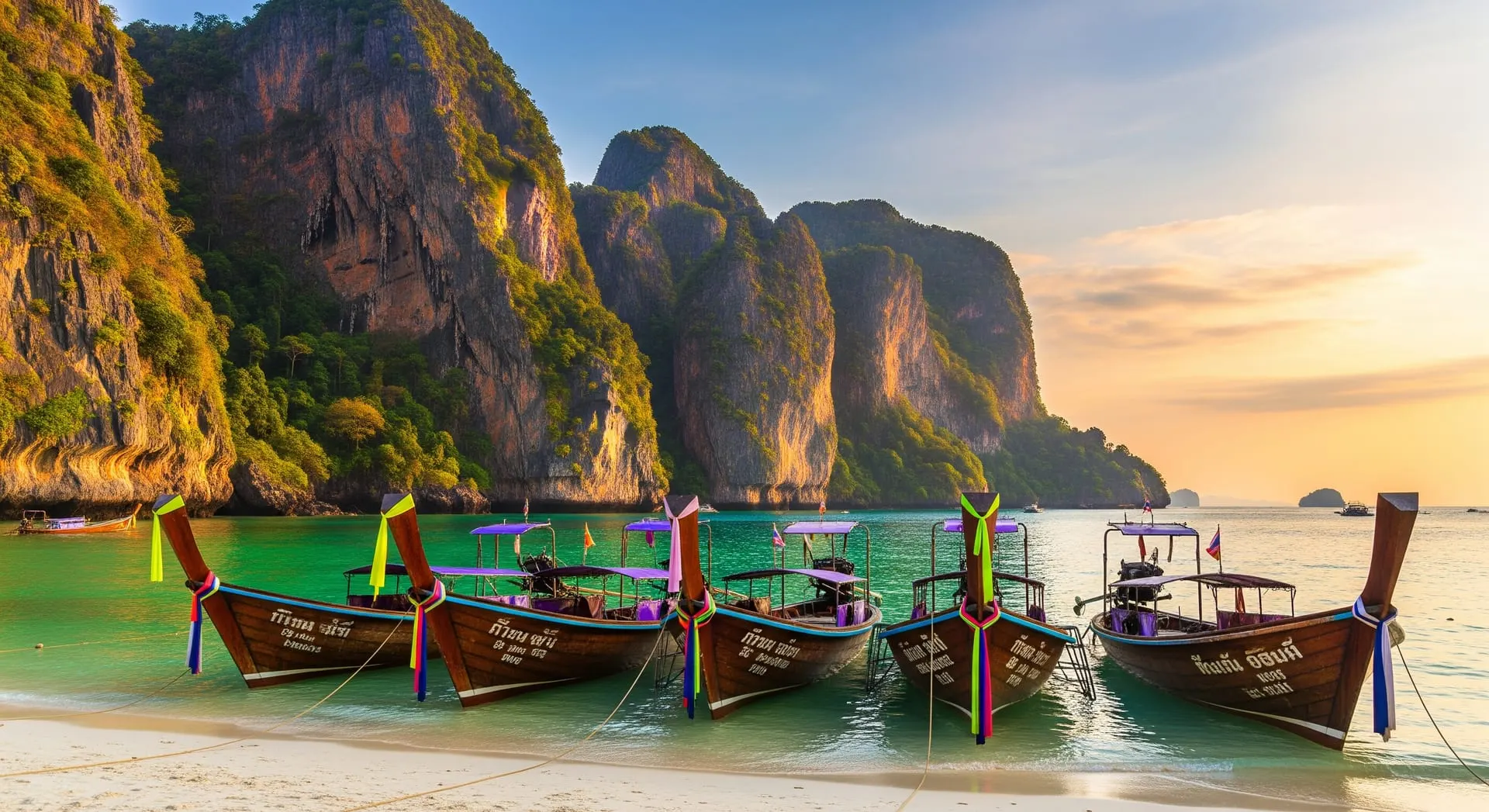
Swapping the lagoons of Mauritius for the temples, mountains and street-food markets of Thailand is easier than most Mauritians assume. The Destination Thailand Visa (DTV) is a five-year, multiple-entry visa built for remote workers, freelancers and long-stay travellers who want to base themselves in the Land of Smiles without uprooting their careers. You apply from outside Thailand, our team prepares and submits the whole file for you, and the same rules apply whether you fly from Plaisance or anywhere else. This guide covers exactly what life looks like for a Mauritian making the move — the costs, the flights, the banking and the day-to-day.

Every Mauritian citizen is eligible to apply

5

Years validity

180

Days per entry

500k

THB proof of funds

$139

Service fee from

100%

Refund if denied*

Why Mauritian citizens choose Thailand

Living in Thailand from Mauritius

Section 01

Why Mauritians Are Moving to Thailand

Mauritius is one of the most comfortable places to live in Africa, but it is also a small island where rents, imported goods and a limited job market push many ambitious people to look abroad. Thailand offers scale: the buzz of Bangkok, the creative nomad scene of Chiang Mai, and island life in the south that feels familiar to anyone raised near Flic en Flac or Belle Mare. For Mauritians who already work online — in finance, BPO, tech, design or consulting — Thailand combines a far lower cost base with world-class internet and an established expat infrastructure.

The DTV is what makes a long stay practical. Instead of stitching together tourist entries, you get a five-year multiple-entry visa that allows up to 180 days per entry, extendable once inside Thailand for another 180 days. That means you can settle, sign a lease, and travel the region freely while keeping your base in Thailand. To qualify you show proof of 500,000 THB (about $15,000) in personal funds, and our service handles the paperwork from $139.

Pro tip

Before you fly, join Facebook groups such as 'Mauritians in Thailand' and 'Bangkok Expats' to line up short-term accommodation and meet people who have already made the move from Port Louis.

Section 02

Cost of Living: Mauritius vs Thailand

The biggest draw for most Mauritians is how much further the budget stretches. In Port Louis or the smart Quatre Bornes corridor, a modern one-bedroom apartment runs roughly 18,000–28,000 MUR a month. In central Bangkok you can rent a comparable furnished condo with a pool and gym for around 12,000–18,000 THB, and in Chiang Mai the same quality of life drops to 6,000–10,000 THB. Because the Mauritian rupee and the Thai baht sit fairly close in value (very roughly 1 THB ≈ 1.3 MUR), the savings are easy to feel in everyday spending.

Food is where the gap really shows. A plate of pad thai or a rice-and-curry from a Thai street vendor costs 50–80 THB, less than a dholl puri-and-soft-drink lunch back home once you factor in imported ingredients. A mid-range restaurant dinner for two lands around 600–900 THB, beer is cheap, and fresh tropical produce — much of it the same mangoes, lychees and pineapples you know from Mauritius — is sold by the kilo for pocket change at local markets.

  • Furnished 1-bedroom condo: ~12,000–18,000 THB/month in Bangkok, ~6,000–10,000 THB in Chiang Mai.
  • Local meal: 50–80 THB; mid-range dinner for two: 600–900 THB.
  • Co-working desk: from ~3,000 THB/month; fast home fibre: ~600 THB/month.
  • Getting around: Bangkok BTS/MRT rides 17–62 THB; a Grab or motorbike taxi a few dozen baht across town.
  • ATM withdrawal fee for foreign cards: around 220 THB per transaction, so withdraw larger amounts less often.

Budget benchmark

A single Mauritian remote worker lives comfortably in Chiang Mai on roughly 35,000–45,000 THB a month including rent, food, transport and a co-working membership — typically well below the equivalent lifestyle in Quatre Bornes or Grand Baie.

Section 03

Getting to Thailand from Mauritius

Almost every journey starts at Sir Seewoosagur Ramgoolam International Airport (MRU) near Plaisance, in the south-east of the island. The most direct option is Air Mauritius's seasonal/scheduled service to Bangkok, which runs roughly 8–9 hours non-stop when operating. When a direct flight does not suit your dates, the convenient one-stop routings go via Middle Eastern and Asian hubs, and total door-to-door time usually lands somewhere between 11 and 16 hours including the layover.

  • Most direct: MRU → BKK with Air Mauritius (~8–9 hours when scheduled).
  • Via the Gulf: MRU → DXB → BKK (Emirates) or MRU → DOH style one-stops, ~13–16 hours total.
  • Via Asia: MRU → KUL → BKK (Malaysia Airlines) or MRU → SIN onward, often the cheapest fares.
  • Thailand is 3 hours ahead of Mauritius (Thailand UTC+7 vs Mauritius UTC+4), so most of the working day still overlaps.
Beat the jet lag

With only a three-hour shift forward, jet lag is mild. Aim to land in Bangkok in the late afternoon, stay awake until a normal local bedtime, and you will usually be on Thai time within a day.

Daily life in Thailand — where Mauritian citizens settle on the DTV
Life in Thailand — your home base on the 5-year DTV
Section 04

Where Mauritian Expats & Nomads Settle

Most Mauritians cluster in three areas. Bangkok suits those who want a true metropolis — finance and BPO professionals feel at home around Sukhumvit, Sathorn and Ari, with their cafés, gyms and international schools. Chiang Mai is the digital-nomad capital: cooler, greener and cheaper, with the Nimmanhaemin district packed with co-working spaces and a tight-knit remote-work community. Phuket, Koh Samui and Krabi appeal to those who miss island life and the beach — the rhythm feels close to home, but the cost of long-term renting is far lower than in Grand Baie. Many newcomers spend a month in each before deciding where to sign a longer lease.

Section 05

Money & Banking from Mauritius

Thailand still runs heavily on cash for small purchases, but the PromptPay QR system is everywhere and most shops, taxis and markets accept it. Your Mauritian Visa or Mastercard works at Thai ATMs, though the local network typically charges around 220 THB per foreign-card withdrawal — so take out larger sums at once. For moving your savings, services like Wise or a SWIFT transfer from your Mauritian bank usually beat airport exchange counters; sending in a major currency such as USD or EUR and converting in Thailand often gives a cleaner rate than exchanging rupees directly.

Remember that the DTV requires proof of 500,000 THB (about $15,000) in personal funds, so plan how you will document and, if needed, transfer that balance before you apply. Many expats open a Thai bank account only after they have arrived and settled on a long-term visa, then keep a foreign account for income.

Currency hack

Avoid converting Mauritian rupees to baht directly, which carries wide spreads. Hold or transfer in USD/EUR via Wise and convert in Thailand, and always choose to be charged in THB (not MUR) when a card terminal offers the choice.

Section 06

Documents & Translation

This is one area where Mauritians have a clear advantage. English is the language of administration, courts and education in Mauritius, so official documents — bank statements, employment letters and the like — are typically issued in English and accepted as-is for the DTV. If a particular document happens to be in French or Mauritian Creole, you will need a certified English translation to satisfy Thai requirements, but most applicants from Mauritius find their paperwork is already in the right language. Our team reviews your file before submission and flags anything that needs translating, so there are no surprises.

How the application works

You stay in Mauritius (or anywhere outside Thailand) while we prepare and submit the entire DTV application on your behalf. Service starts from $139, and with the optional Denial Protection add-on you receive a 100% refund if your application is denied.

Section 07

Daily Life & Community

Day-to-day living in Thailand is comfortable and well connected. Private hospitals in Bangkok and Chiang Mai are internationally accredited with English-speaking doctors, and treatment costs are a fraction of private care in Mauritius, which is why the country is a medical-tourism hub. Internet is fast and cheap, making video calls back to family in Curepipe or business calls to clients seamless. The food scene is endless, the transport is easy, and Thailand remains one of the safer countries in Southeast Asia for everyday life.

  • Healthcare: JCI-accredited private hospitals with English-speaking staff and short waits.
  • Connectivity: nationwide 5G and home fibre from around 600 THB/month.
  • Food: street stalls, fresh markets and international restaurants in every neighbourhood.
  • Community: active expat and nomad groups in Bangkok, Chiang Mai and Phuket make it easy to find friends fast.

Mauritian community

The Mauritian community in Thailand is small but growing, concentrated in Bangkok and Phuket. Most newcomers connect through expat and nomad groups, shared-interest meetups and cultural events rather than a single formal association.

Mauritius — your starting point before relocating to ThailandMauritius
From Mauritius to Thailand

Make the move from Mauritius

Trade Mauritius for up to five years in Thailand on the DTV. We prepare and submit your entire application from wherever you are — proof of funds, category evidence and passport — so you can focus on the move, not the paperwork.

Check eligibility
Step by step

How Mauritian citizens apply for the DTV

1

Check you qualify

Almost every nationality can apply. Take our free 60-second eligibility checker to confirm your route — remote work, soft power, medical or family.

2

We prepare everything

We assemble and review your documents: proof of 500,000 THB (~$15,000), your category evidence and passport — so nothing gets rejected.

3

We submit for you

You apply from outside Thailand. We file at a Thai embassy or consulate (such as Hanoi, Ho Chi Minh, Jakarta, Vientiane or London) within one business day.

4

Get approved & move

On approval you get the 5-year, multiple-entry DTV — up to 180 days per stay, extendable once. Then make Thailand home.

Questions

DTV FAQ for Mauritian citizens

Do Mauritians need a special visa to live in Thailand long-term?

Yes. The Destination Thailand Visa (DTV) is ideal for Mauritians — it is a five-year, multiple-entry visa allowing up to 180 days per entry, extendable once inside Thailand for a further 180 days.

How much money do I need to show for the DTV?

You show proof of 500,000 THB (about $15,000) in personal funds. This can sit in a Mauritian bank account or equivalent; we help you present it correctly.

Can I apply for the DTV while I'm already in Thailand?

No — the DTV must be applied for from outside Thailand. The good news is you can stay in Mauritius while we prepare and submit the entire application for you.

Are there direct flights from Mauritius to Thailand?

Air Mauritius operates a non-stop Port Louis (MRU) to Bangkok service of roughly 8–9 hours when scheduled. When that does not fit your dates, convenient one-stop routes via Dubai, Kuala Lumpur or Singapore take around 11–16 hours total.

Is the time difference a problem for working with Mauritius?

Not really. Thailand is just 3 hours ahead of Mauritius (UTC+7 vs UTC+4), so most of the working day overlaps and real-time calls with clients or colleagues back home are easy.

How does the cost of living compare to Mauritius?

Thailand is noticeably cheaper, especially outside Bangkok. Rent, eating out and transport all cost less, and a single remote worker can live well in Chiang Mai on roughly 35,000–45,000 THB a month.

Will my Mauritian bank statements need translation?

Usually not. English is the language of administration in Mauritius, so documents issued in English are accepted as-is. Anything issued only in French or Creole will need a certified English translation, which we will flag for you.

What happens if my DTV application is denied?

With the optional Denial Protection add-on, you receive a 100% refund of our service fee if your application is denied — so the process is effectively risk-free.

Is there a Mauritian community in Thailand?

Yes — small but growing, mainly in Bangkok and Phuket. You will find fellow Mauritians and a wider expat network through online groups, meetups and cultural events.

What does your service include and how much does it cost?

Our service starts from $139 and covers document preparation, application submission and full support throughout. You apply from outside Thailand and we handle the rest.

Ready to move to Thailand from Mauritius?

Check your eligibility in under a minute, or let our team prepare and submit everything — with a 100% refund if your application is denied (with the optional paid Denial Protection add-on).