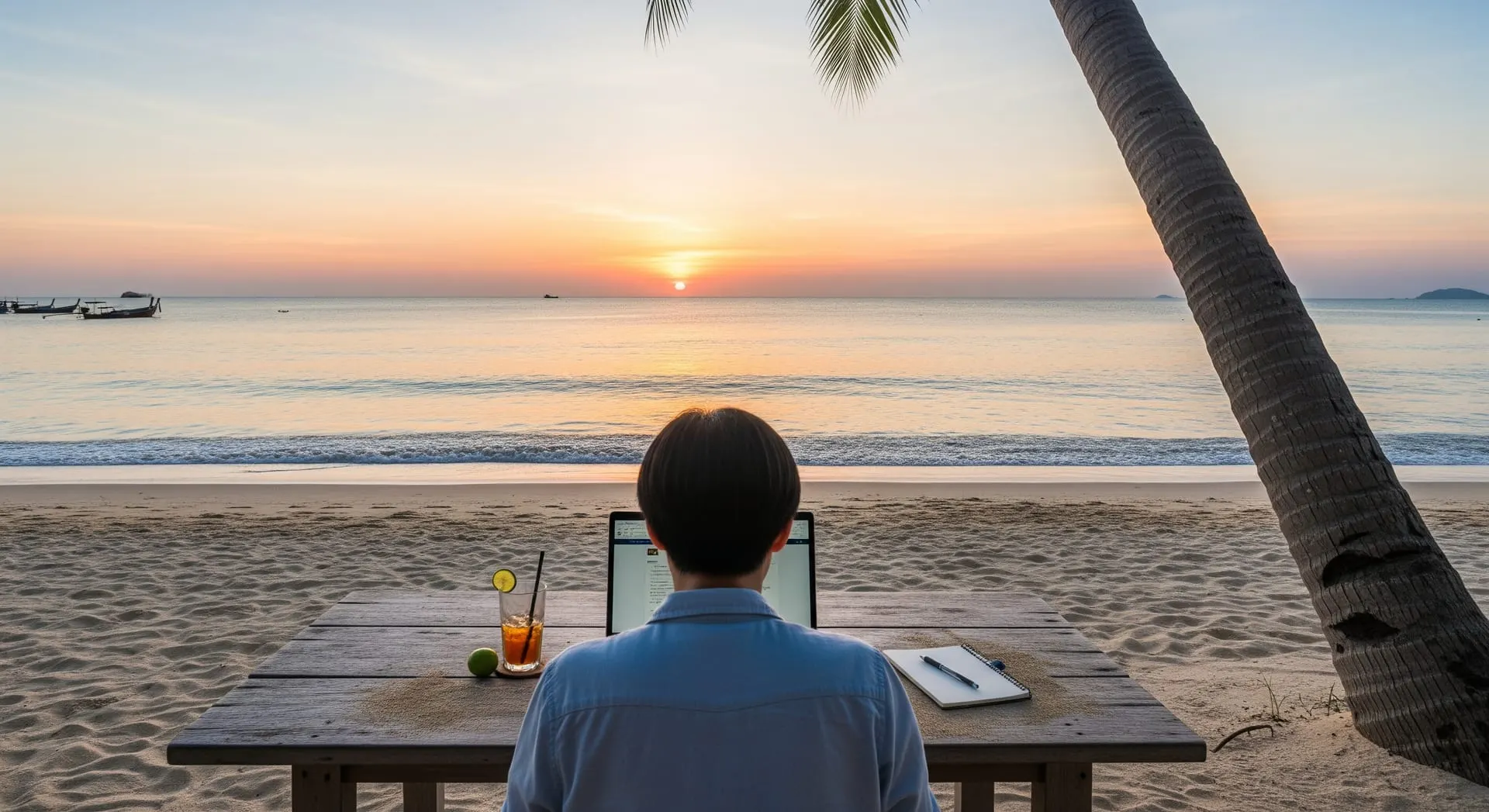
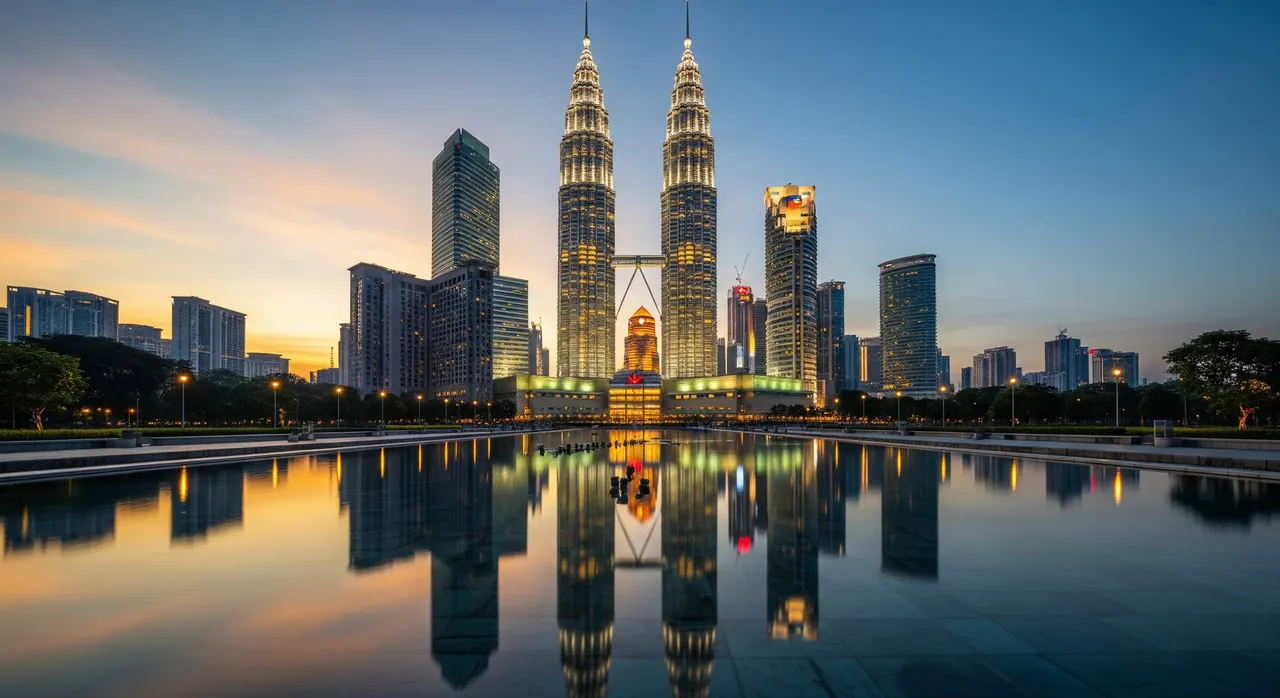
For Malaysian professionals, entrepreneurs and remote workers, Thailand is one of the easiest international moves you can make. A direct flight from Kuala Lumpur to Bangkok takes only about two hours, the climate and food culture feel instantly familiar, and the cost of living often comes in below what you already pay in KL or Penang. The Destination Thailand Visa (DTV) turns a long-held "someday" into a concrete plan: a 5-year, multiple-entry visa built for people who earn their income remotely. This guide covers the realities of relocating from Malaysia, from rent and flights to banking and building a community in the Land of Smiles.
Thailand's appeal to Malaysians starts with sheer proximity. The two countries share a 600-kilometre land border, KL is a short hop from Bangkok, and the southern Thai city of Hat Yai has been a long weekend escape for Malaysians from Penang, Kedah and Perlis for decades. Beyond the convenience, many are drawn by a relaxed pace of life, excellent and affordable private healthcare, and a lower cost base that stretches a remote salary further. The DTV lets you put down roots for up to five years while keeping your overseas clients and employer, so you can swap city congestion for Chiang Mai's mountain air or a Phuket beachfront without giving up your career.
Section 02
Cost of Living: Malaysia vs Thailand
Kuala Lumpur is already one of Asia's better-value capitals, so the savings in Thailand are real but nuanced rather than dramatic. The biggest wins for Malaysians tend to be in rent for furnished condos, eating out, and domestic travel, while imported goods and alcohol can actually run higher than at home. Here is a rough side-by-side, with prices in Thai baht (THB) and Malaysian ringgit (RM):
Rent: A modern one-bedroom condo in central Bangkok runs roughly THB 18,000–30,000 per month; an equivalent in central KL is around RM 2,000–3,500. Chiang Mai is cheaper still, often THB 9,000–15,000.
Street food: A plate of pad kra pao or khao man gai costs around 50–70 THB (about RM 6–9), broadly in line with — and sometimes cheaper than — a hawker meal in Penang.
Coffee and cafes: A flat white in a Bangkok specialty cafe is THB 90–130, similar to KL prices, but you are rarely far from a good workspace.
Transport: A Bangkok BTS Skytrain ride is THB 17–62, and Grab and Bolt fares are typically lower than equivalent trips in KL.
Groceries: A single person's monthly basket lands around THB 6,000–9,000, comparable to RM 800–1,200, though Western and Malaysian imports add up quickly.
Currency at a Glance
Malaysia uses the ringgit (RM/MYR); Thailand uses the baht (THB/฿). One ringgit has recently traded at roughly 7.5–8 baht, so RM 1,000 is about THB 7,500–8,000. Exchange rates move, so treat any baht figures here as ballpark planning numbers rather than fixed prices.
Section 03
Getting to Thailand from Malaysia
Few relocations are as easy to fly as this one. Kuala Lumpur (KUL) to Bangkok (BKK or DMK) is about 2 hours 10 minutes in the air, with dozens of daily departures on Malaysia Airlines, Thai Airways, AirAsia, Batik Air and Thai Vietjet. Penang and Johor Bahru also have direct Bangkok flights, and AirAsia connects several Malaysian cities to Phuket, Chiang Mai and Krabi in around 1.5–2.5 hours. Overland, you can ride the train or drive from the northern states across the border to Hat Yai, then continue north — a popular option for those bringing more luggage or making a slow first move.
Mind the One-Hour Time Difference
A common surprise: Malaysia runs on UTC+8 while Thailand runs on UTC+7, so Thailand is one hour behind home. When it is 9:00 am in KL it is 8:00 am in Bangkok. It is a small gap, but worth setting in your calendar so you do not miss early calls with Malaysian colleagues or family back home.
Life in Thailand — your home base on the 5-year DTV
Section 04
Where Malaysians Settle in Thailand
Bangkok is the default landing spot, offering international schools, top private hospitals, a deep coworking scene and the country's best flight connections back to KL. Chiang Mai is the long-standing favourite for digital nomads who want a lower cost base, a tight-knit remote-work community and cooler weather. Beach lovers head for Phuket, Koh Samui or the Krabi coast, while Hua Hin draws those wanting a quieter, family-friendly pace within easy reach of Bangkok. For Malaysians who want to stay close to home, Hat Yai in the south keeps you a short drive from the border and surrounded by familiar Malay-Muslim food and culture.
Section 05
Money & Banking
Day-to-day spending in Thailand is increasingly cashless thanks to the PromptPay QR system, though cash is still king at markets and street stalls. Your Malaysian debit and credit cards work at most ATMs, but be aware that Thai banks charge a withdrawal fee of around 220 THB per foreign-card transaction on top of your home bank's fees, so larger, less frequent withdrawals make sense. Many Malaysians use multi-currency apps like Wise or Revolut to hold baht and cut conversion costs. For the DTV itself, you do not need a Thai bank account — you simply show personal savings, which keeps the financial side of the application straightforward.
DTV Proof of Funds
The DTV requires proof of 500,000 THB (about $15,000) in personal funds. This is a savings threshold you demonstrate with bank statements, not a fee you pay or money that gets locked up — it stays yours to spend once you are settled in Thailand.
Section 06
Documents & Translation
Check Your Statement Language
Malaysia's official language is Malay (Bahasa Malaysia), so any supporting documents not in English or Thai may need a certified English or Thai translation for your DTV application. The good news: most major Malaysian banks — Maybank, CIMB, Public Bank and others — issue statements in English, which are generally accepted as-is. Check yours early, and arrange a certified translation only if needed.
Beyond bank statements, you will want a passport with at least six months of validity, a recent photo, and evidence supporting your DTV category — typically a remote employment contract, freelance client agreements, or proof of business ownership. You apply from outside Thailand, and the company prepares and submits the full package for you, so you are not navigating government portals or chasing paperwork alone.
Section 07
Daily Life & Community
Settling in is unusually smooth for Malaysians. The food is a familiar comfort — Bangkok and Chiang Mai both have halal eateries and pockets of Malay and Indian-Muslim cuisine, and dishes like nasi lemak and roti canai are not hard to find. Mobile data is fast and cheap, fibre internet is widely available for remote work, and private hospitals such as Bumrungrad and Bangkok Hospital match the standard Malaysians expect from KL's medical scene. There are active Malaysian and wider Southeast Asian expat groups on Facebook and in coworking hubs, plus shared festivals and a mutual love of food and family that make integration feel natural rather than daunting.
Malaysia
From Malaysia to Thailand
Make the move from Malaysia
Trade Malaysia for up to five years in Thailand on the DTV. We prepare and submit your entire application from wherever you are — proof of funds, category evidence and passport — so you can focus on the move, not the paperwork.
Almost every nationality can apply. Take our free 60-second eligibility checker to confirm your route — remote work, soft power, medical or family.
2
We prepare everything
We assemble and review your documents: proof of 500,000 THB (~$15,000), your category evidence and passport — so nothing gets rejected.
3
We submit for you
You apply from outside Thailand. We file at a Thai embassy or consulate (such as Hanoi, Ho Chi Minh, Jakarta, Vientiane or London) within one business day.
4
Get approved & move
On approval you get the 5-year, multiple-entry DTV — up to 180 days per stay, extendable once. Then make Thailand home.
Questions
DTV FAQ for Malaysian citizens
What is the Destination Thailand Visa (DTV)?
The DTV is a 5-year, multiple-entry visa designed for remote workers, digital nomads, freelancers and those pursuing long-stay activities in Thailand. It lets you live in Thailand while continuing to earn from clients or an employer based outside the country.
How long can I stay in Thailand on each entry?
Each entry allows a stay of up to 180 days, and that stay can be extended once for a further 180 days. With the visa's 5-year multiple-entry validity, you can leave and return as often as you like, with each fresh entry granting a new 180-day window.
How much money do I need to show for the DTV?
You need to show proof of 500,000 THB (approximately $15,000) in personal funds, typically via bank statements. This demonstrates you can support yourself in Thailand; it is a savings threshold, not a fee, and the money remains yours.
Can I apply for the DTV from Malaysia?
Yes. You apply from outside Thailand, and that includes from within Malaysia. The company prepares and submits the entire application on your behalf, so you do not have to deal with government portals or paperwork yourself.
How much does the DTV service cost, and is there a guarantee?
The service starts from $139. With the optional Denial Protection add-on, you receive a 100% refund if your application is denied, so you can apply with confidence.
How long does it take to fly from Malaysia to Thailand?
Kuala Lumpur to Bangkok is about 2 hours 10 minutes nonstop, with dozens of daily flights. Penang and Johor Bahru also have direct Bangkok services, and there are short hops to Phuket, Chiang Mai and Krabi, making trips home quick and easy.
Is there a time difference between Malaysia and Thailand?
Yes — a one-hour difference. Malaysia is on UTC+8 and Thailand is on UTC+7, so Thailand is one hour behind. When it is 9:00 am in Kuala Lumpur, it is 8:00 am in Bangkok. The small gap rarely disrupts remote work with Malaysian teams.
Will my Malaysian bank statements need translation?
Malaysia's official language is Malay, so documents not in English or Thai may need a certified translation. However, most major Malaysian banks issue statements in English, which are usually accepted as-is. Check your statement language before applying and translate only if necessary.
Where do most Malaysians choose to live in Thailand?
Bangkok is the most popular for its connectivity and amenities, while Chiang Mai is favoured by digital nomads for its lower costs and strong community. Phuket and Koh Samui suit beach lovers, and Hat Yai keeps you close to the Malaysian border and familiar Malay-Muslim culture.
Can I bring my family on the DTV?
The DTV allows eligible dependents, such as a spouse and children, to be included with the main applicant. Requirements apply, so it is best to confirm your family's specific situation when you start your application.
What happens if my DTV application is denied?
If you have added the optional Denial Protection, you receive a 100% refund of your service fee in the event of a denial. This removes the financial risk and lets you apply with peace of mind.
Where you apply
The Thai mission for Malaysia
You submit the DTV online via the Thai e-Visa portal — but the office below covers applicants in Malaysia and may review your file.
Check your eligibility in under a minute, or let our team prepare and submit everything — with a 100% refund if your application is denied (with the optional paid Denial Protection add-on).




 Malaysia