
Skip to content
Asia

DTV Visa for Laotian Citizens
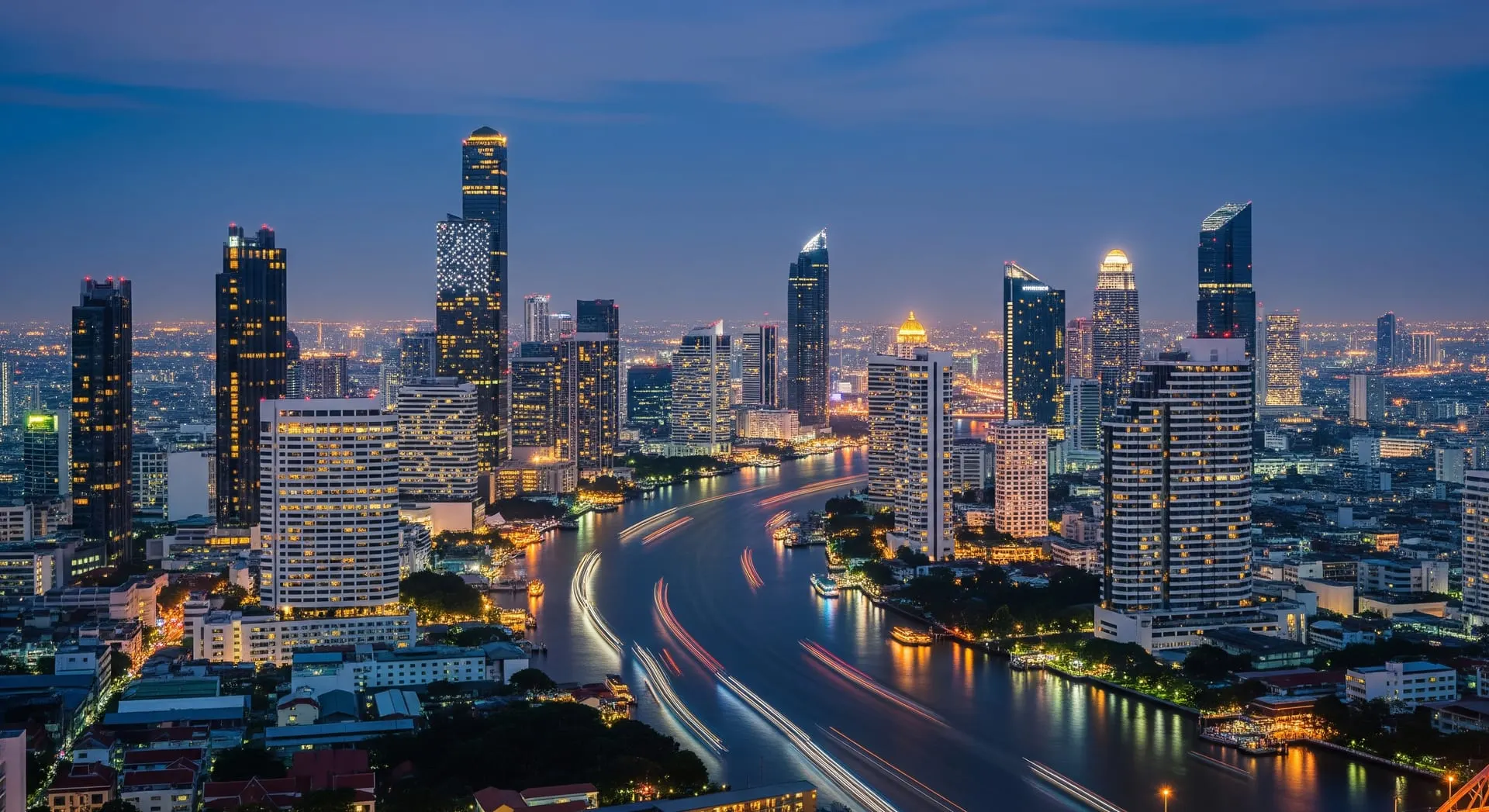
For Laotian citizens, Thailand has long been a familiar neighbour just across the Mekong — and the Destination Thailand Visa (DTV) now makes it possible to turn short weekend getaways into a genuine long-term base. Whether you are a remote worker, freelancer, online entrepreneur, Muay Thai student or someone simply seeking a wider stage, Thailand pairs the same tropical climate you already know with stronger infrastructure, world-class healthcare and far better international connectivity. With a shared time zone, flights of barely an hour and a large, established Laotian community already settled in Bangkok and the northeast, the move from Vientiane is one of the smoothest relocations in the region.

Every Laotian citizen is eligible to apply

5

Years validity

180

Days per entry

500k

THB proof of funds

$139

Service fee from

100%

Refund if denied*

Why Laotian citizens choose Thailand

Living in Thailand from Laos

Section 01

Why Laotians Are Moving to Thailand

Laotians are drawn to Thailand for deeply practical reasons, not just its beaches and city energy. The climate is almost identical — hot, humid and shaped by the same monsoon — but Thailand's roads, hospitals, mobile networks and airports operate a clear step above what is available at home. For professionals, the appeal is earning in a stronger, freely convertible currency while keeping everyday costs low. Online sellers and freelancers gain access to fast logistics, reliable payment platforms and clients across the region. Families value safe neighbourhoods and international schools, while younger Laotians come for university courses, fitness training and the sheer variety of opportunity. The DTV ties it all together: a five-year, multiple-entry visa that lets you stay up to 180 days per entry, extendable once for another 180 days, with no more constant border runs across the Friendship Bridge.

Section 02

Cost of Living: Laos vs Thailand

The first thing most Laotians notice is how predictable and transparent prices are in Thailand. While Vientiane is not an expensive city, its rental market is thin and quality varies wildly; in Thailand you have real choice at every budget. A furnished one-bedroom condo with a pool and gym in a mid-range Bangkok neighbourhood runs roughly 12,000–18,000 THB per month, and in Chiang Mai you can find similar comfort for 8,000–14,000 THB. Street food starts around 50 THB a plate, a mid-range restaurant meal lands under 200 THB, and a monthly coworking membership in Bangkok or Chiang Mai costs about 2,000–4,000 THB. Fast fibre internet, ride-hailing apps like Grab and modern supermarkets such as Big C and Lotus's are everywhere. Many Laotians find that, dollar for dollar, their money simply stretches further and buys a more comfortable, better-serviced lifestyle than the same spend in Vientiane.

Eating Out for Less

A hot local meal from a Thai street stall costs around 50 THB, while a comparable bowl of khao piak or noodles in Vientiane often runs 30,000–40,000 LAK. Thai supermarkets also offer steadier prices on imported goods, which can be scarce and heavily marked up back home.

Section 03

Getting to Thailand from Laos

Thailand is quite literally next door, so travelling back and forth is fast and cheap. From Vientiane's Wattay International Airport, direct flights to Bangkok's Suvarnabhumi (BKK) take only about 1 hour 15 minutes, with Lao Airlines and Thai AirAsia operating the route. Luang Prabang and Pakse also offer direct hops to Bangkok of around 1.5 hours, and Luang Prabang connects to Chiang Mai for those heading to the north. Overland travel is hugely popular too: the First Thai–Lao Friendship Bridge links Vientiane to Nong Khai, where you can pick up a sleeper train or bus straight to Bangkok, and the high-speed rail line now whisks travellers from Vientiane to the Chinese border in the other direction. Best of all, Laos and Thailand share Indochina Time (UTC+7), so there is zero jet lag — your daily routine and any calls with people back home stay perfectly in sync.

Pro Tip: Land Border Entry

If you enter Thailand on a visa exemption before your DTV is issued, the Friendship Bridge to Nong Khai is the cheapest and most scenic route. Cross-border buses from Vientiane to Udon Thani are inexpensive and run several times a day, putting you near an airport with frequent budget flights onward.

Daily life in Thailand — where Laotian citizens settle on the DTV
Life in Thailand — your home base on the 5-year DTV
Section 04

Where Laotian Expats and Nomads Settle

The Laotian presence in Thailand is large and long-established, especially in the northeastern Isan provinces, where the language and food are almost interchangeable with home. Bangkok is the obvious magnet, offering endless work, cosmopolitan energy and pockets — around Ramkhamhaeng and the city's northern suburbs — known for Lao-run shops and restaurants. For a cooler, calmer pace, Chiang Mai delivers mountain air, the region's biggest digital-nomad scene and noticeably lower rents. Isan cities such as Udon Thani, Nong Khai and Khon Kaen feel especially homely, sit a short hop from the border, and have growing expat amenities. And for those from landlocked Laos who have always dreamed of the sea, Phuket, Hua Hin and Koh Samui put the coast within easy reach. Wherever you land, a supportive Lao network is rarely far away.

Section 05

Money and Banking from Laos

Managing money across the border is manageable, but it pays to plan ahead. Thai banks generally let foreigners open an account with a passport and a valid long-stay visa such as the DTV, sometimes alongside proof of address. The key consideration for Laotians is currency: the Lao kip (LAK) is not freely convertible and has been volatile, so it is wise to move savings into Thai baht or US dollars before you relocate rather than relying on converting kip later. International transfer services like Wise typically beat bank counter rates and carry lower fees. ATMs are everywhere in Thailand but charge a flat 220 THB fee per withdrawal on foreign cards, so use a fee-friendly card and withdraw larger amounts less often. Once settled, a Thai mobile-banking app and PromptPay will make rent, bills and everyday QR payments effortless.

Smart Transfers

For the best value, convert savings to baht through a service like Wise before you arrive, then top up locally as needed rather than carrying large amounts of kip. Avoid airport exchange kiosks, where the spread on LAK is poor, and skip last-minute conversions when rates move against you.

Section 06

Documents and Translation

Because the official language of Laos is Lao rather than English, your supporting documents will usually need certified English (or Thai) translations before they can be used in a DTV application. That applies to bank statements proving your funds, employment or freelance contracts showing remote income, and any academic records for soft-power activities such as study or training. Use a reputable provider that issues sworn or certified translations, and make sure figures and names match your passport exactly to avoid avoidable hold-ups. The whole appeal of the DTV is that you apply from outside Thailand and the company prepares and submits the entire package for you — so once your originals are ready, the heavy lifting and document assembly are handled on your behalf.

  • Bank statements — translated into English or Thai, evidencing personal funds of 500,000 THB (~$15,000).
  • Employment or freelance contracts — translated to confirm your income comes from outside Thailand.
  • Academic transcripts or course enrolment — certified translations for study or training-based applications.
  • Passport — valid with ample remaining validity, used as the reference for spelling all translated names.
Section 07

Daily Life and Community

Day-to-day life in Thailand feels at once familiar and noticeably more convenient than home. Private hospitals in Bangkok and Chiang Mai offer English-speaking doctors and short waits at a fraction of Western prices, which is a major reason many Laotians already cross over for treatment. Internet and mobile coverage are among the best in Southeast Asia, with widespread 5G that keeps remote workers productive. The food is a delicious bridge between the two cultures — sticky rice, larb and som tam are everywhere, and Isan restaurants make homesickness hard to sustain. Thailand is a safe, Buddhist-majority society where Lao visitors blend in easily, and connecting is simple: Facebook groups like "Laos in Thailand," temple events and Isan community gatherings will plug you into a ready-made network within weeks of arriving.

Healthcare You Can Trust

Hospitals such as Bumrungrad International and Bangkok Hospital hold international JCI accreditation and treat large numbers of cross-border patients each year, including many Laotians. Treatment costs typically run well below Western prices while care quality stays high — a key reason families feel comfortable basing themselves in Thailand.

Laos — your starting point before relocating to ThailandLaos
From Laos to Thailand

Make the move from Laos

Trade Laos for up to five years in Thailand on the DTV. We prepare and submit your entire application from wherever you are — proof of funds, category evidence and passport — so you can focus on the move, not the paperwork.

Check eligibility
Step by step

How Laotian citizens apply for the DTV

1

Check you qualify

Almost every nationality can apply. Take our free 60-second eligibility checker to confirm your route — remote work, soft power, medical or family.

2

We prepare everything

We assemble and review your documents: proof of 500,000 THB (~$15,000), your category evidence and passport — so nothing gets rejected.

3

We submit for you

You apply from outside Thailand. We file at a Thai embassy or consulate (such as Hanoi, Ho Chi Minh, Jakarta, Vientiane or London) within one business day.

4

Get approved & move

On approval you get the 5-year, multiple-entry DTV — up to 180 days per stay, extendable once. Then make Thailand home.

Questions

DTV FAQ for Laotian citizens

What exactly is the Destination Thailand Visa (DTV)?

The DTV is a long-term, multiple-entry visa valid for 5 years. Each entry lets you stay up to 180 days, and that stay can be extended once inside Thailand for a further 180 days — so you can spend almost a full year per visit without leaving.

Can I apply for the DTV while I am inside Thailand?

No. Applications must be submitted from outside Thailand. The company prepares and submits the entire package on your behalf, so you can apply from Laos or any other country where you are legally present.

How much money do I need to show for the DTV?

You must provide proof of personal funds of 500,000 THB (about $15,000 USD). For Laotian applicants, supporting bank statements will usually need a certified English or Thai translation before they can be used.

What happens if my DTV application is denied?

With the optional Denial Protection add-on, you receive a 100% refund of the service fee if your visa is not approved — so you take on no financial risk on the service itself.

How much does the DTV service cost?

The service starts from $139 and covers document preparation, review and submission. You can add the optional Denial Protection guarantee for extra peace of mind.

Is it easy to travel between Laos and Thailand?

Very. Direct flights from Vientiane, Luang Prabang or Pakse to Bangkok take roughly an hour to ninety minutes, and overland crossings via the Friendship Bridge are even cheaper. Both countries share UTC+7, so there is no jet lag and no schedule disruption when coordinating with people back home.

Do I need a visa to enter Thailand before getting the DTV?

Laotian passport holders can typically enter Thailand under the visa exemption scheme for a short stay, which is handy for scouting locations first. Remember that you must be outside Thailand to actually submit the DTV application.

Can I keep working for a Lao employer or clients while living in Thailand?

Yes. The DTV is built for remote workers and freelancers. As long as your income comes from sources outside Thailand — such as a Lao employer or overseas clients — you can base yourself in Thailand and keep working as before.

How does the cost of living in Thailand compare with Laos for one person?

It is broadly comparable and often more affordable outside central Bangkok, while offering better quality and choice. A comfortable single lifestyle covering rent, food, transport and coworking can sit around 25,000–35,000 THB per month, frequently matching or undercutting an equivalent standard in Vientiane.

Will I find a Laotian community in Thailand?

Easily. Thailand has a large, welcoming Lao and Isan population, especially in Bangkok and the northeast around Udon Thani, Nong Khai and Khon Kaen. Shared language, food and temples make it simple to find restaurants, social groups and friends who ease the transition.

Where you apply

The Thai mission for Laos

You submit the DTV online via the Thai e-Visa portal — but the office below covers applicants in Laos and may review your file.

Ready to move to Thailand from Laos?

Check your eligibility in under a minute, or let our team prepare and submit everything — with a 100% refund if your application is denied (with the optional paid Denial Protection add-on).