
Skip to content
Thai Embassy Document Request · Work & Business

Business / Company Registration for the DTV

Worried about the DTV business registration document request? See exactly how to submit your company’s registration certificate correctly and keep your application on track.
DTVDTVThaiVisa 13 min read

You’ve just received a “Request for Further Document” asking for a copy of your company’s registration certificate for the Destination Thailand Visa (DTV). This is a routine verification step, not a rejection. The officer simply needs your official dtv business registration document to confirm your employer’s legal existence before approving the Workcation track. Below, we’ll show you exactly what to provide, how to prepare it, and how to avoid the common mistakes that can lead to refusal.

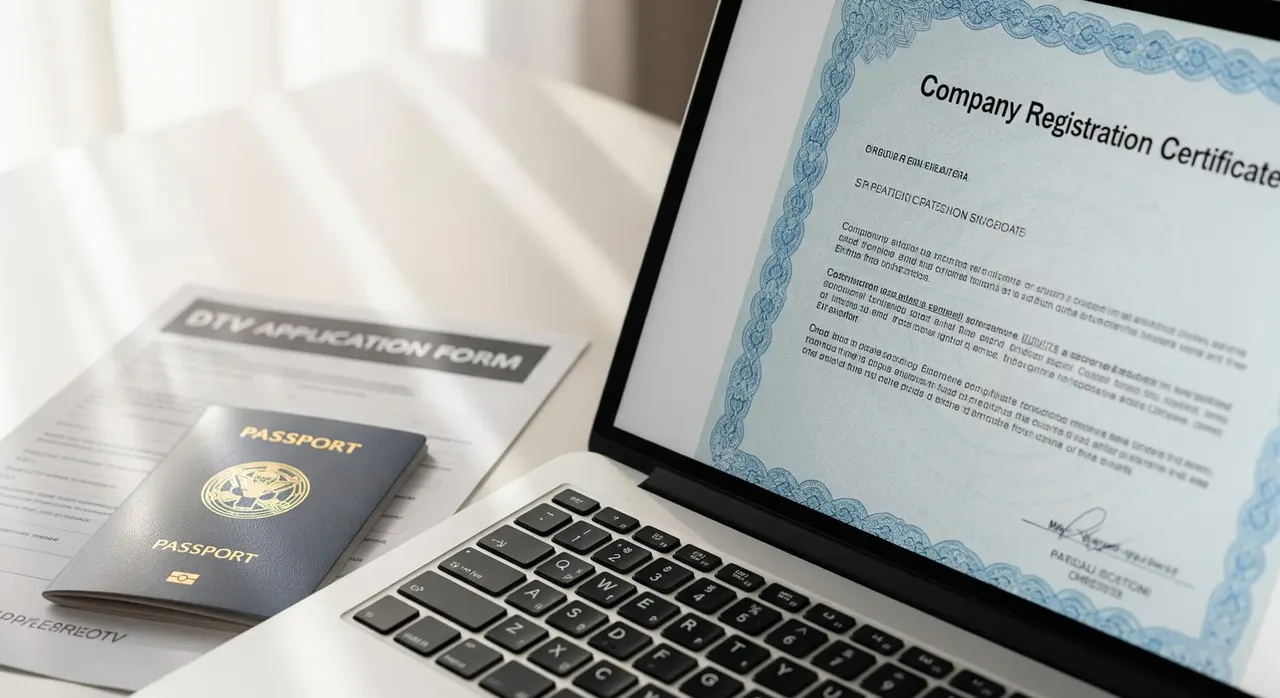
Applicant reviewing a company registration certificate on a laptop screen with passport and DTV application form beside it.

What the embassy asked

The reviewing officer has sent you a targeted request: they need to see the official government registration document of the company you work for (or own) to verify its legal existence and your connection to it.

“Please provide a copy of your company's registration certificate.”

Why the embassy asks for this

The DTV Workcation track requires proof that the foreign company you represent actually exists and lawfully engages you. The registration certificate anchors your other evidence — employment letter, contract, bank statements — to a real, traceable legal entity. This request often comes when the company’s existence, your link to it, or its location outside Thailand could not be confirmed from the initial documents alone. It is a routine quality-assurance step, not a denial.

How to provide it correctly

  1. Identify the exact entity the embassy named — your employer or your own company — and obtain its official registration/incorporation certificate from the national registrar (e.g., UK Companies House certificate of incorporation, US Secretary of State filing, Singapore ACRA Business Profile).
  2. Ensure the certificate clearly shows the registered company name and legal representative/director (or registration number). For owners, your name must appear as the registered person.
  3. Check the issue date: provide the most current extract you can. For example, the Royal Thai Embassy in Singapore asks for an ACRA Business Profile issued not more than 3 months ago — use the freshest copy available from your registrar.
  4. If the certificate is not in Thai or English, obtain a certified translation and have it notarised/legalised by a notary or diplomatic/consular mission. Upload the original foreign-language certificate together with the certified translation.
  5. Scan or export the document as a clean, complete, full-colour PDF (all pages, registrar stamp/seal and signature visible). Keep the file within the e-Visa portal’s size limit and never crop the header or seal.
  6. Re-upload only the registration certificate via your existing DTV application on thaievisa.go.th, replying in the same “Request for Further Document” thread — do not start a new application.
  7. Submit exactly the document requested; do not add unrequested extras such as tax returns, payroll records, or other companies’ documents.
  8. Before sending, confirm that the company name on the certificate matches exactly the name on your employment letter, contract, and cover letter, so the officer sees one consistent entity.
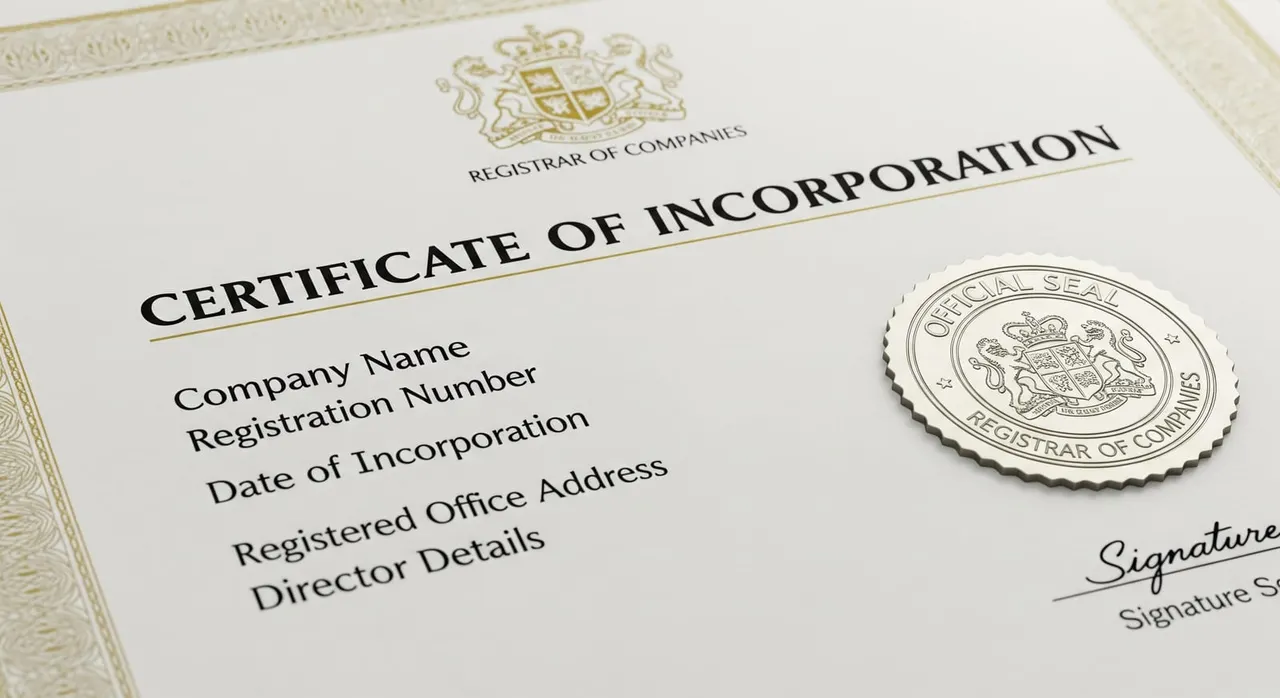
Sample company registration certificate with registrar seal, company name, and director details clearly visible.

Common mistakes that cause rejection

  • Confusing the registration certificate with an employment letter or contract — uploading the wrong document again.
  • Submitting a foreign-language certificate without a certified, notarised translation into English or Thai.
  • Adding unrequested documents like tax filings or payroll, violating the “submit only what was asked” rule.
  • Name or entity mismatches — the certificate shows a different legal entity than the one on your employment letter.
  • Opening a new e-Visa application instead of replying through the existing request thread.
  • Providing an old, incomplete, or unreadable copy without a registrar seal or signature.

Frequently asked questions

The embassy asked for “a copy of your company’s registration certificate” — is my employment letter enough?

No. The employment letter proves your role, but this request is specifically for the official registrar-issued registration/incorporation certificate showing the company name and legal representative. You must upload both documents: the employment letter you already submitted and now the registration certificate.

My registration certificate is not in English — what do I do?

Documents must be in Thai or English for the DTV application. Obtain a certified translation, then have it notarised/legalised by a notary or the relevant diplomatic/consular mission. Upload the original certificate together with the translation as one combined file or two separate files in the same response.

I’m self-employed / the business owner — which document satisfies this?

Provide your own company’s business registration or incorporation certificate that clearly shows your name as the owner or legal representative. This directly links your identity to the entity. If the registration does not name you, the officer cannot verify your connection to the company.

Does the certificate have to be recently issued?

Yes, provide the most current extract you can obtain. As a benchmark, the Royal Thai Embassy in Singapore often requests an ACRA Business Profile issued not more than 3 months ago. A stale document may trigger a request for a fresh copy, so it’s safest to submit a recent one.

Where do I send the document after getting this request?

Log into your existing DTV application on the official Thai e-Visa portal (thaievisa.go.th). Reply directly within the “Request for Further Document” message thread and upload the certificate there. Do not start a new application or email it separately — the DTV process is entirely online.

Should I add extra paperwork to be safe?

No. The golden rule for any RFD is to submit exactly what was asked. Adding unrequested documents like tax returns, company profiles, or other entities can confuse the reviewing officer and potentially create inconsistencies. Send only the registration certificate that was requested.

Get this document right the first time

Let our team prepare and check your response to the embassy — apply from $139, with a 100% refund if denied (with the optional Denial Protection add-on).

Start your application

General guidance only — not legal advice. Thai embassy requirements vary by office and change over time; always confirm the exact wording in your own request email, or let our team check it for you.

Related document requests