Skip to content
DTV Thailand Visa

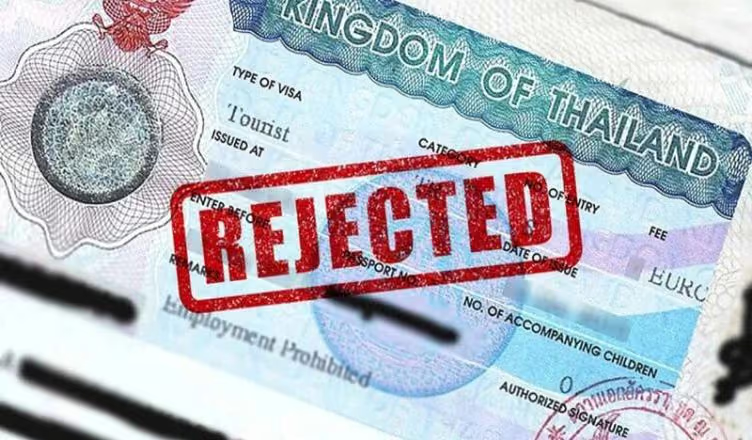
Understanding Why Your Thailand Destination Visa (DTV) Application May Get Rejected and How to Avoid It
DTV DTVThaiVisa January 1, 2025 Updated June 4, 2026 7 min read
Understanding Why Your Thailand Destination Visa (DTV) Application May Get Rejected and How to Avoid It

The Thailand Destination Visa (DTV) is one of the most exciting long-stay options to emerge for digital nomads, remote workers, and culture lovers who want to make Thailand their base — whether that means coding from a Chiang Mai café, training Muay Thai in Phuket, or learning to cook a perfect green curry in Bangkok. But like any visa, the DTV comes with real requirements, and an application that looks fine to you can still be refused by a reviewing officer who is missing a single piece of context.

If your DTV has already been rejected — or you simply want to get it right the first time — this guide breaks down exactly why applications fail and, more importantly, how to build a file so complete that the embassy never needs to come back with questions. The single biggest lever, as you'll see, is going beyond the bare minimum: a strong file with extra proof of remote work, a polished LinkedIn profile and CV, and clear evidence of your cultural plans dramatically improves your odds of a clean approval.

Common Reasons for DTV Rejection

To avoid getting your application rejected, it's crucial to understand the common reasons behind a refusal. While each case is unique and individual consulates apply their own discretion, a handful of recurring issues are responsible for the majority of refusals — and almost all of them are preventable with better preparation.

1. Insufficient Proof of Remote Work

One of the primary requirements for the DTV is proof that you can support yourself financially while living in Thailand, without needing to rely on local employment. This means you must demonstrate that you have an income that allows you to live comfortably in the country.

While providing bank statements showing sufficient funds is a good start, applicants also need to provide evidence of the remote work they are doing. For freelancers, remote workers, or digital nomads, proof could include a portfolio, a contract with an overseas employer, or project details. A vague description of "working remotely" can be insufficient. It's important to provide as much detail as possible to avoid further requests from the embassy. A LinkedIn profile or CV that outlines your experience, current job, and skills can go a long way in proving that your remote work is legitimate and sustainable.

2. Lack of Cultural Activity Enrollment

For applicants wishing to engage in Thailand's cultural programs, such as Muay Thai training or cooking classes, failing to provide proof of enrollment or participation in these programs is another common cause of rejection. The DTV is designed to promote Thailand's cultural soft power, so you need to show that you are actively engaging in this aspect of Thai life. If you haven't already enrolled in a program or arranged your participation, it's essential to do so before applying. An official acceptance letter or certificate from the training center will demonstrate your commitment to engaging with Thai culture and increase your chances of a successful application.

3. Incomplete Documentation

One of the simplest yet most frequent reasons for visa rejection is failing to submit all required documents. If any required document is missing or incomplete, your application may be delayed or outright rejected. Common missing documents include:

  • Passport-sized photographs
  • Proof of financial stability (e.g., bank statements)
  • Health insurance (though not strictly required, it's highly recommended)
  • Detailed remote work documentation
  • Proof of enrollment in a cultural program

Always double-check the specific requirements for the embassy or consulate where you are applying, as some may request additional documents.

4. Misinterpretation of the Visa Purpose

Sometimes, visa applications are rejected because the applicant fails to understand or convey the true purpose of the DTV. This visa is designed for remote workers and those interested in Thai culture. If the embassy perceives that your primary reason for applying is tourism or that you have no genuine intention to work or participate in cultural activities, your application could be rejected. Make sure your application clearly shows your intent to follow through with both the remote work and cultural engagement aspects of the visa.

Myth

The DTV is basically a long tourist visa, so I just need to show I have some savings.

Fact
The DTV is a purpose-built visa for remote work and cultural engagement, not tourism. Officers look for a credible, ongoing reason to be in Thailand — proof of remote income or enrolment in a cultural program. Presenting it like a tourist application is one of the fastest ways to get refused.

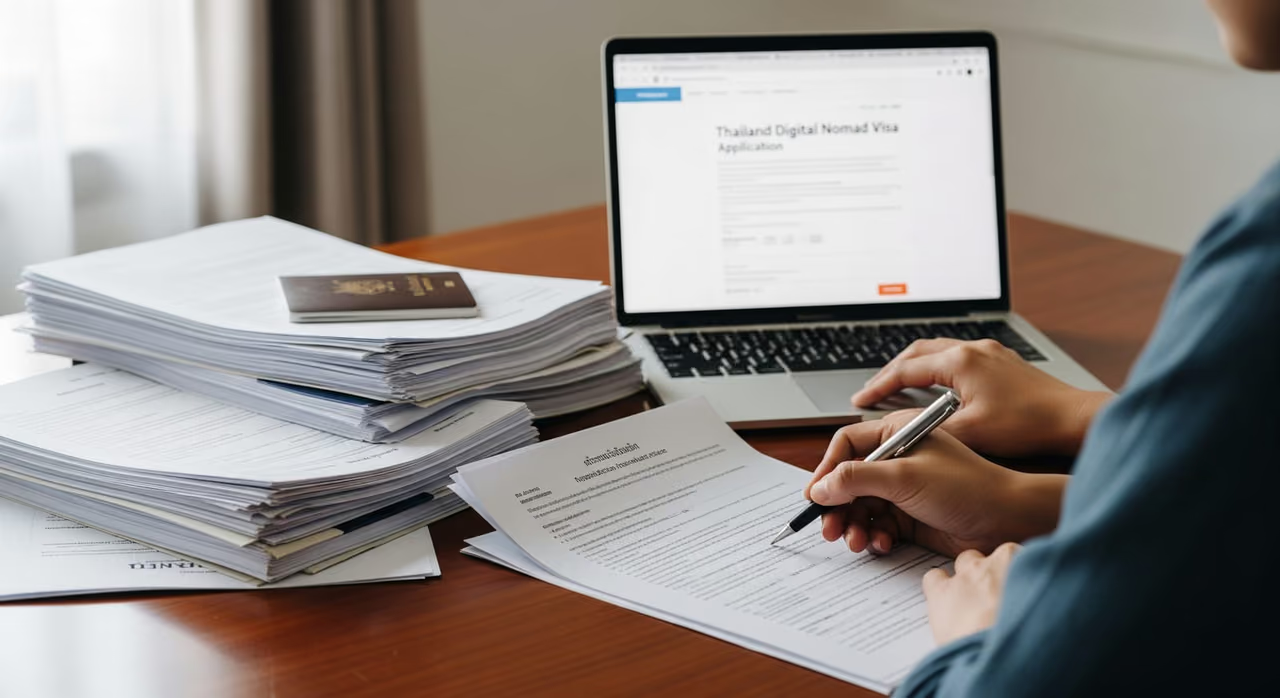
A remote worker organizing visa documents and a laptop while preparing a Thailand DTV application

Why Including More Information Than Required Is Crucial

A common mistake applicants make when applying for the DTV is submitting the bare minimum of documentation. While the basic requirements might be outlined in the official guidelines, providing additional details can help your application stand out and demonstrate that you are a serious and reliable applicant. The more information you provide, the less likely the embassy is to request further documentation or deny your application.

Building a Strong Case for Your Remote Work

While it is necessary to provide evidence of your financial stability and remote work, providing even more proof can be beneficial. A LinkedIn profile is a great way to demonstrate your professional credibility, as it showcases your work history, endorsements, and connections. If you are a freelancer or digital nomad, your LinkedIn profile can serve as a digital portfolio, providing potential employers or clients with additional insight into your professional background.

A CV is also crucial in providing a comprehensive picture of your experience. In addition to listing previous employment or projects, make sure your CV is tailored to highlight your remote work experience. Include details about the clients you've worked with, the skills you bring to the table, and the projects you are currently working on.

Avoiding Requests for Additional Information

The Thai embassy may request additional documents or clarification if your application seems incomplete or lacks sufficient proof. While you can always provide additional information later, this can cause delays, and further requests for clarification may lead to confusion or even frustration. By proactively providing as much information as possible upfront, such as a detailed CV, proof of current remote work, and a professional online profile (like LinkedIn), you reduce the likelihood of the embassy needing to ask for more documents.

Proving Your Intentions

The DTV is not just a visa for remote workers; it is also a cultural exchange program. To prove that you are committed to the cultural aspects of the visa, you need to show that you're genuinely interested in learning Muay Thai or taking cooking classes. Providing documentation of your enrollment in these programs and offering detailed information about your plans to engage in cultural activities will demonstrate your dedication to Thailand's soft power initiatives. Again, providing more details upfront will reduce the chances of a rejection due to perceived lack of intent.

Creating a More Comprehensive Profile

When applying for a visa, especially for a long-term stay like the DTV, the embassy is looking for applicants who will be financially stable, law-abiding, and genuinely interested in Thailand. By submitting additional information, such as detailed resumes or cover letters that explain your reasons for applying and your plans for the future, you help create a more complete profile. This makes it easier for the embassy to evaluate your application and can ultimately increase your chances of success.

The Bare-Minimum File vs. the Strong File

ElementBare-Minimum ApplicationStrong Application
Proof of income Bank statement only Bank statement plus contract, invoices, or portfolio
Professional background Not included Tailored CV and an up-to-date LinkedIn profile
Cultural engagement Mentioned vaguely Official acceptance letter or enrollment certificate
Stated purpose Left for the officer to infer Clear cover letter explaining work and cultural plans
Likely outcome Requests for more documents or refusal Clean review with fewer follow-up questions

How to Avoid DTV Rejection: Best Practices

To prevent your Thailand Destination Visa application from being rejected, keep these tips in mind:

  1. Double-check the documentation : Ensure that you have all the required documents, including passport photos, financial proof, and evidence of remote work. Don't leave anything to chance.
  2. Provide more than required : Don't just stick to the basic requirements—provide your LinkedIn profile, CV, and proof of cultural activity enrollment to make your application more robust.
  3. Be clear about your intentions : Make sure that your application clearly explains why you are applying for the DTV and how you plan to live and work in Thailand. Show that you are committed to both remote work and cultural engagement.
  4. Be proactive : Don't wait for the embassy to ask for additional documents. Provide as much relevant information as possible upfront to avoid delays.
  5. Check embassy-specific requirements : Some embassies may have slightly different requirements, so always check the specific embassy or consulate's website to make sure you submit everything needed.

A digital nomad celebrating an approved Thailand DTV visa while sitting at a co-working space

What to Do If You've Already Been Rejected

A rejection is frustrating, but it is rarely the end of the road. In most cases a refusal reflects a gap in the file rather than a permanent disqualification — which means a carefully improved second application can succeed. The key is to treat the rejection as feedback and address the likely cause directly rather than simply resubmitting the same documents.

A practical recovery plan

  1. Identify the gap: review which requirement was weakest — usually remote-work proof, cultural enrollment, or incomplete paperwork.
  2. Strengthen the evidence: add a contract, invoices, an enrollment certificate, or a clearer financial statement to close that gap.
  3. Add a cover letter that directly explains your purpose and addresses any ambiguity in the first attempt.
  4. Re-check embassy-specific requirements, since the consulate you apply through can change what is expected.
  5. Consider expert help if you are unsure why the file was refused or want a second set of eyes before reapplying.

“Most DTV refusals aren't about who you are — they're about what the officer couldn't see. Show your work, and you give them every reason to approve you.”

— DTVThaiVisa Team

Frequently Asked Questions

Can I reapply for the DTV after a rejection?

Yes. A rejection does not usually bar you from reapplying. The best approach is to understand why your application was refused, strengthen the weakest part of your file — often remote-work proof or cultural enrollment — and submit a more complete application.

Do I really need a LinkedIn profile and CV?

They aren't always listed as mandatory, but they are among the most effective ways to prove your remote work is real and sustainable. Including a polished LinkedIn profile and a tailored CV reduces the chance the embassy comes back with requests for more information.

Is health insurance required for the DTV?

Health insurance is not strictly required for the DTV, but it is highly recommended. Including proof of coverage strengthens your file and shows you are prepared for a long stay in Thailand.

What counts as proof of cultural activity?

An official acceptance letter, enrollment confirmation, or certificate from a recognized provider — such as a Muay Thai gym or a Thai cooking school — is the clearest evidence that you intend to engage with Thailand's cultural programs.

Why do requirements seem to differ between embassies?

Individual embassies and consulates apply their own discretion and may ask for slightly different supporting documents. Always check the specific requirements of the consulate where you plan to apply before submitting.


Conclusion

The Thailand Destination Visa is an incredible opportunity for remote workers, digital nomads, and culture enthusiasts to live and work in one of the most vibrant and beautiful countries in the world. However, to ensure your application is successful, you need to submit more than just the basic documentation. Providing additional information—such as your LinkedIn profile, CV, proof of cultural activity, and detailed remote work evidence—will not only reduce the chances of rejection but also demonstrate your commitment to both working remotely and engaging with Thai culture. By following these guidelines and offering a complete application, you can increase your chances of securing your DTV and start your exciting journey in Thailand.

Ready to get your 5-Year DTV?

Configure your package with live pricing — apply from $139, with a 100% refund if denied (with Denial Protection).

Start your application
Tags:#thailand-destination-visa#thailand-dtv-rejection#dtv-rejected#remote-work-visa-thailand#thailand-visa-tips#avoid-visa-rejection-thailand#thailand-cultural-visa#digital-nomad-visa-thailand#muay-thai-visa-thailand#thai-cooking-classes-visa#thailand-visa-application-tips#thailand-visa-documentation#dtv-application-process#remote-work-in-thailand#digital-nomads-in-thailand#visa-requirements-thailand

Comments

Be the first to leave a comment.