Skip to content
DTV Thailand Visa

Retirement Visa Thailand vs DTV: Why Smart Retirees Choose DTV in 2025
DTV DTVThaiVisa July 29, 2025 9 min read
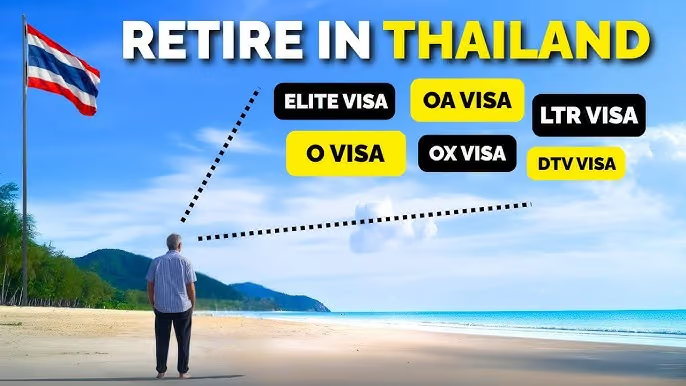
Retirement Visa Thailand vs DTV — comparing long-stay options for retirees in Thailand

Thailand's new Destination Thailand Visa (DTV) is a genuine shift for retirees — offering more financial flexibility, far less bureaucracy and real lifestyle freedom compared with the traditional retirement visa. The classic retirement route, with its annual renewals, 800,000 THB capital lock-up and heavy paperwork, was built for an earlier generation. Today's retirees increasingly value mobility, optional income and simpler compliance — and the DTV's 5-year validity, multiple-entry design and work permissions deliver exactly that.

Financial freedom replaces capital lock-up

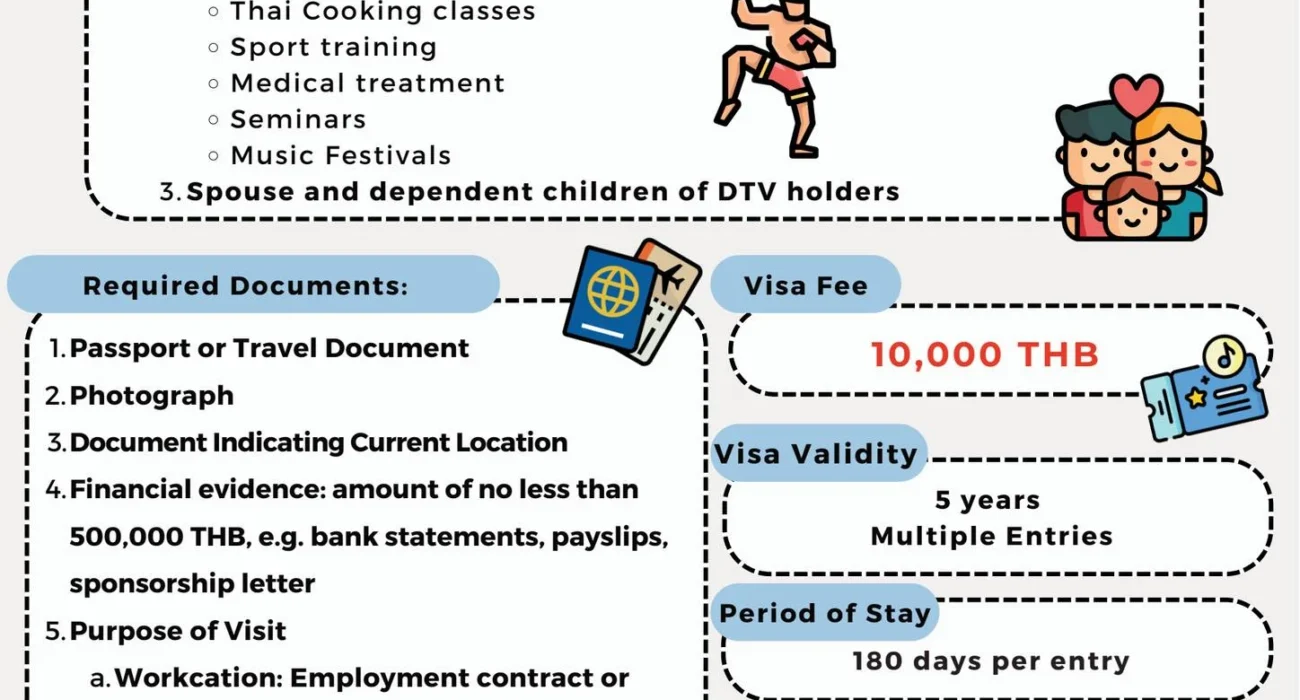
The headline advantage is how the DTV treats your money. Retirement visas typically require 800,000 THB locked in a Thai bank account earning very little. The DTV asks only for proof of 500,000 THB (~$15,000) in any international account — funds that stay fully liquid and investable.

Over a 10-year period, the difference adds up. Retirement-visa holders can face total costs in the region of 650,000+ THB once you include renewals, mandatory health-insurance premiums, re-entry permits and the opportunity cost of locked capital. DTV holders, by contrast, spend roughly 58,000 THB over the same period for visa fees and optional extensions — while keeping their capital free to grow.

Five-year simplicity vs annual renewals

Traditional retirement visas mean annual renewals , quarterly 90-day reporting , re-entry permits for any travel and constant documentation upkeep — work that many retirees describe as draining even when it goes smoothly. The DTV's 5-year validity removes the annual renewal entirely. You still file the 90-day report during continuous stays, but the yearly cycle of extensions, permits and bank-letter chasing is gone.

Travel freedom and re-entry permits

Retirement-visa holders must buy a re-entry permit (1,000 THB single, 3,800 THB multiple) before each departure, or the visa is cancelled. The DTV's multiple-entry design removes re-entry permits altogether : you can come and go across the five years, each entry granting up to 180 days (extendable once by a further 180). That suits 'snowbird' retirees splitting the year between Thailand and home.

DTV vs retirement visa: travel

FeatureDTVRetirement Visa
Re-entry permits Never required Always required
Travel planning Spontaneous Advance planning
Annual travel cost Zero 3,800–19,000 THB
Cancellation risk if forgotten None High

Work permissions for modern retirees

Many retirees still consult, manage investments or run a small location-independent venture. Retirement visas prohibit employment of any kind , creating grey areas for any income activity. The DTV explicitly permits remote work for foreign companies and clients — so you can keep a consulting practice or freelance work running legally, with the intellectual and social benefits that come with it.

Family inclusion

Retirement visas can create awkward family situations — a younger spouse may need a different visa type with its own renewal cycle. The DTV provides unified five-year visas for spouses and children under 20 , with each family member on identical terms, cutting both cost and coordination.

Health insurance: optional, not mandatory

The O-A retirement visa mandates health insurance — commonly a minimum of 3,000,000 THB in coverage including COVID-19 — an ongoing premium and compliance burden tied to renewal eligibility. The DTV has no mandatory health-insurance requirement , turning cover into a personal choice. You can pick international coverage that fits your needs rather than a visa-dictated minimum.

Can a retiree qualify for the DTV?

Yes, in most cases. The DTV is granted on the basis of remote-work capability or enrolment in approved Thai soft-power activities — cultural classes, medical treatment or sports training such as Muay Thai. Financially, you maintain the equivalent of 500,000 THB for the required period before applying. That is lower than retirement-visa demands and keeps your capital liquid.

  • Lower funds: 500,000 THB proof vs 800,000 THB locked.
  • No annual renewal: five years on one visa.
  • No re-entry permits: travel freely.
  • Insurance optional: no mandatory 3,000,000 THB policy.
  • Work allowed: remote work for foreign clients is permitted.

Retirement visa vs DTV FAQ

Frequently asked questions

Do I have to be 50 to get the DTV?

No. The DTV has no age limit. It is granted on the basis of remote-work capability or an approved Thai soft-power activity, plus proof of 500,000 THB in funds — so retirees and younger applicants alike can qualify.

How much money do I need to show for the DTV?

Proof of 500,000 THB (about $15,000) in a personal account. Unlike the retirement visa's 800,000 THB Thai-bank deposit, these funds stay liquid and can remain invested.

Is health insurance required for the DTV?

No. The DTV has no mandatory health-insurance requirement, whereas the O-A retirement visa typically requires a minimum of 3,000,000 THB in coverage. Insurance on the DTV is your personal choice.

Can I still travel in and out of Thailand?

Yes, freely. The DTV is multiple-entry with no re-entry permits, so there is no permit to buy and no risk of cancelling the visa by forgetting one — ideal for splitting the year between Thailand and home.

Can I do consulting or remote work as a retiree on the DTV?
Yes. The DTV permits remote work for foreign companies and clients, so consulting, freelancing and managing your own location-independent business are allowed — something retirement visas prohibit.

Ready to retire to Thailand on the DTV?

Check your eligibility in a minute, or let our team prepare and submit everything — apply from $139, with a 100% refund if denied (with Denial Protection).

Check your eligibility

Comments

Be the first to leave a comment.